Quick Answer
If you have a shorter beard or want to distribute beard oil evenly, a sandalwood beard comb is your best bet. For longer, thicker beards that need daily detangling and shaping, a beard brush offers more control.
Why Material Matters: Wood vs Bristle
The material of your grooming tool affects how your beard feels and behaves. Wood combs, like those made from red or brown sandalwood, naturally resist static buildup—a common problem with plastic combs. This means fewer flyaways and a smoother finish, especially in dry climates.
Beard brushes typically use boar bristles, which are stiff enough to tame coarse hair but gentle on the skin. Bristles also help exfoliate the skin beneath your beard, which can reduce itchiness and ingrown hairs. However, brushes can create static if used too aggressively, so a light touch is key.
Length and Texture: Matching the Tool to Your Beard
Short beards (under 1 inch) are easier to manage with a comb. A comb allows precise control when trimming and helps train the hair to grow in a consistent direction. It also reaches the skin easily, making it ideal for applying beard oil from root to tip.
Once your beard grows past a couple of inches, a brush becomes more effective for detangling and shaping. The bristles penetrate deeper into the hair, distributing natural oils and beard balm more evenly. Brushes also help train the beard to lie flat, reducing the 'wiry' look that long beards often develop.
The Trade-Off: Portability vs Durability
Combs, especially compact ones like the 4.75-inch brown sandalwood comb, are easy to carry in a pocket or dopp kit. They're also less likely to shed bristles over time. But a comb can snap if you apply too much pressure on a thick, tangled beard.
Brushes are sturdier for heavy-duty grooming but are bulkier and harder to travel with. They also require periodic cleaning to remove trapped hair and oil buildup. If you're often on the go, a comb might be the more practical daily companion.
How to Choose: Comb vs Brush
- Beard Length: Use a comb for beards under 1 inch; switch to a brush for longer beards that need detangling and shaping. If your beard is in between, try both to see which feels more comfortable.
- Grooming Goal: Choose a comb for precise styling and even oil application; choose a brush for daily detangling, exfoliation, and training the beard to lie flat. You can use both: comb to distribute oil, then brush to style and smooth.
- Portability: A compact comb is easier to carry; a brush is bulkier but more durable for heavy use. If you travel often, keep a small comb in your bag and a brush at home.
Sandalwood Combs We Recommend
-
Red Sandalwood Beard Comb 7.5" x 2": Handmade in the USA from red sandalwood, these combs have a slight wood fragrance and unique markings—no two are alike. The natural wood reduces static and distributes oils evenly, making it a great all-around comb for daily grooming.
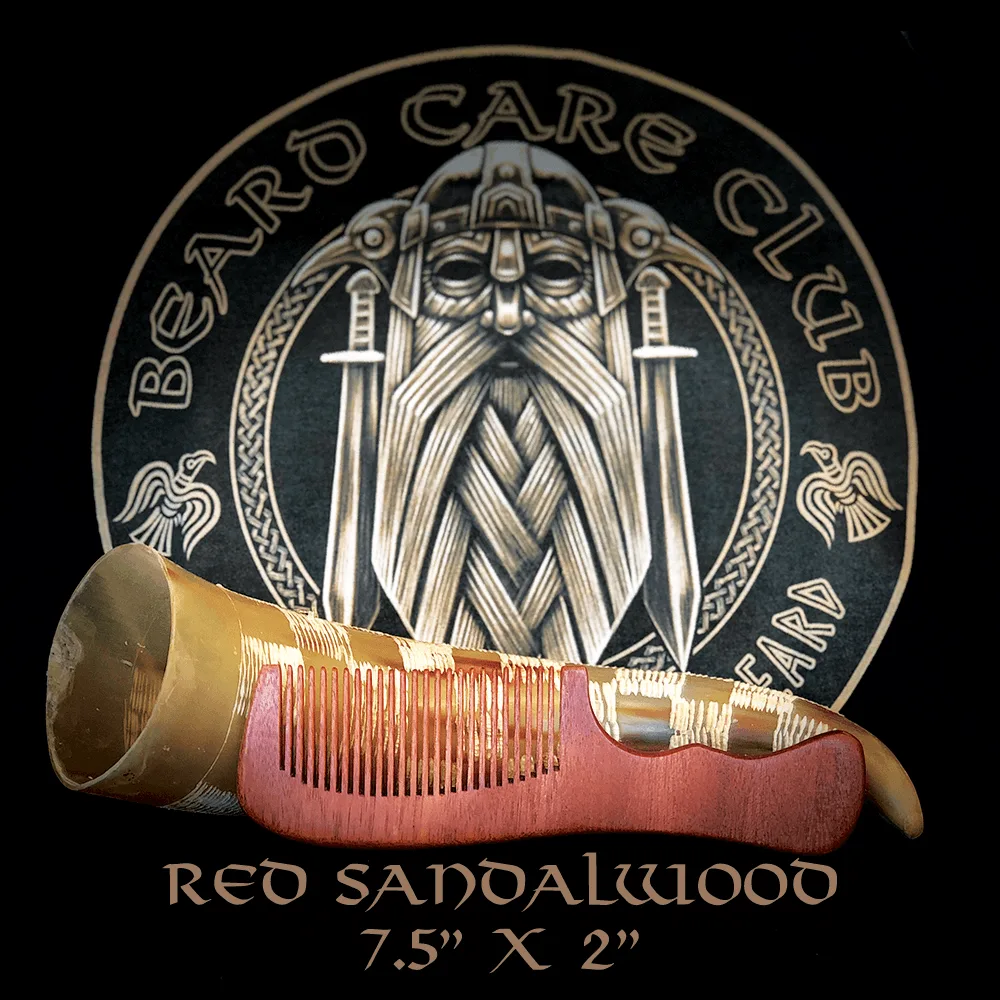
Red Sandalwood Beard Comb 7.5" x 2"
-
Brown Sandalwood Beard Comb 4.75" x 2": A compact 4.75-inch brown sandalwood comb with medium teeth, also handmade in the USA. Its smaller size is perfect for travel or quick touch-ups, while still providing the same anti-static and oil-distribution benefits.
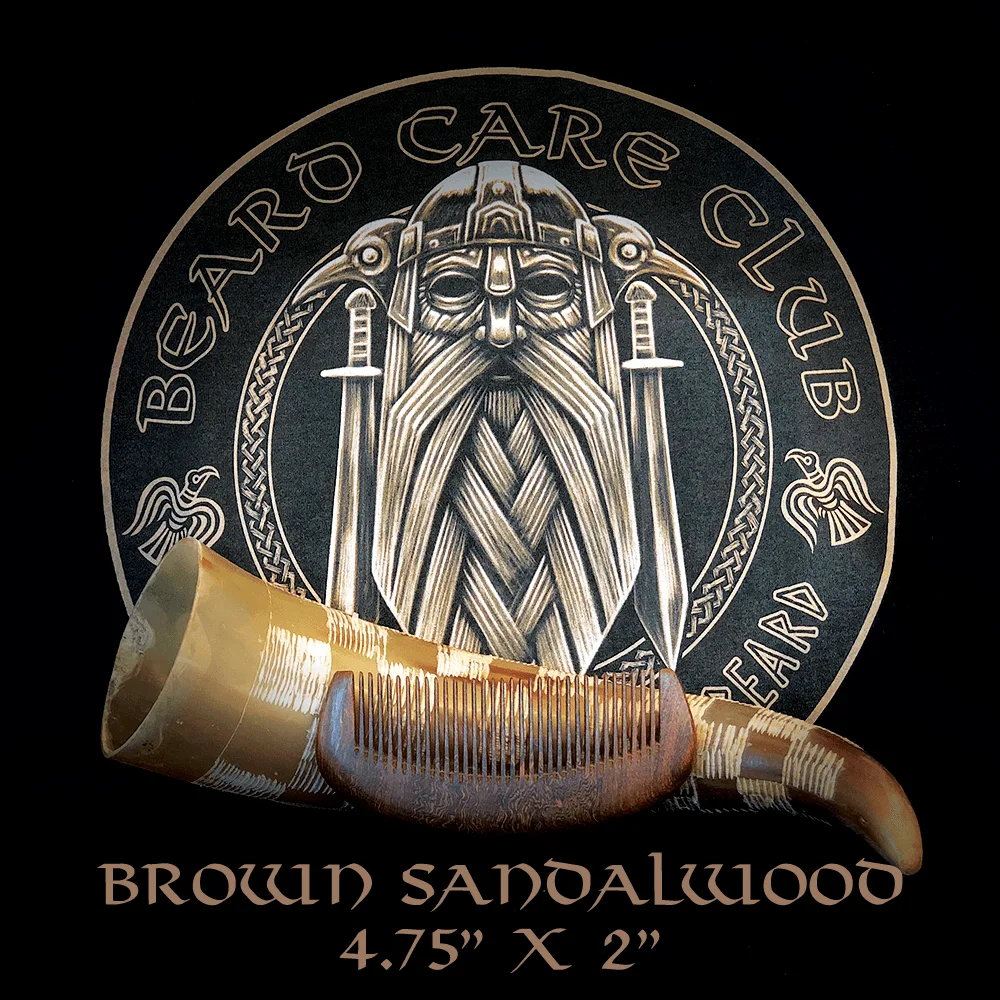
Brown Sandalwood Beard Comb 4.75" x 2"
Who Should Use Which?
Best for
- Those with short or patchy beards who want precise control and even oil distribution
- Travelers who need a compact, pocket-friendly grooming tool
Not for
- Those with long, thick beards that require daily detangling and shaping—a brush will serve you better