Placement decides more than style
Where you put a bedroom TV console affects how the room feels and how well the piece works day to day. The Mid Century TV Console and the Taylor TV Console share a category but differ in materials, finish, and design details that matter for placement. The catalog does not list dimensions or load limits for either console, so treat size and TV compatibility as things you must confirm before buying. This comparison focuses on what the supplied records do tell you and how to use that information to choose a spot.
What each console is made of
-
Mid Century TV Console: Rubberwood solids and Acacia veneers with an acorn brown finish. The warm acorn tone and visible grain suit bedrooms with warm or cool decor, and the materials give you a clear idea of the surface you will place under a TV.
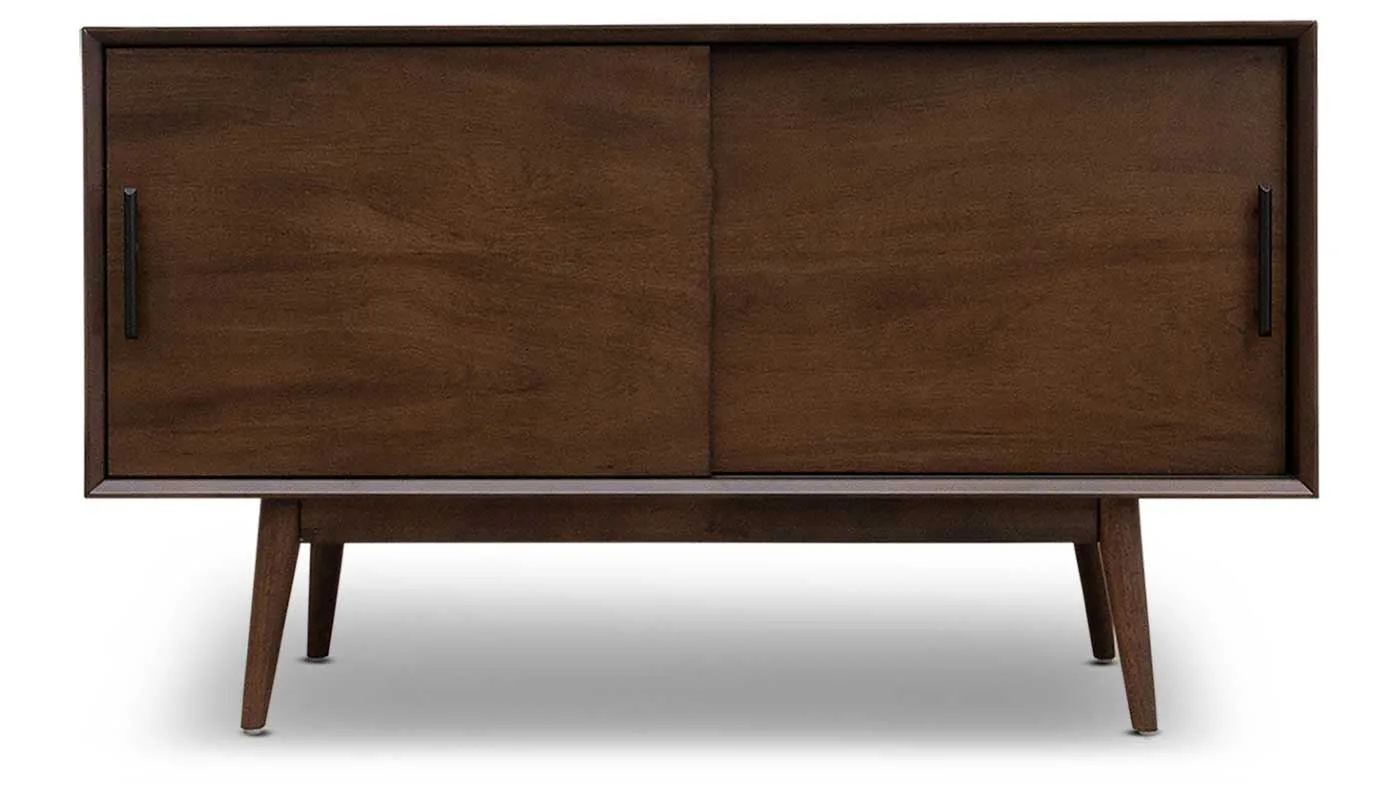
Mid Century TV Console
-
Taylor TV Console: Rubberwood solids with Oak veneer, only available in Oak. The oak veneer and single finish option make the Taylor a more specific match, so check that the oak tone works with your bedroom before you plan placement.
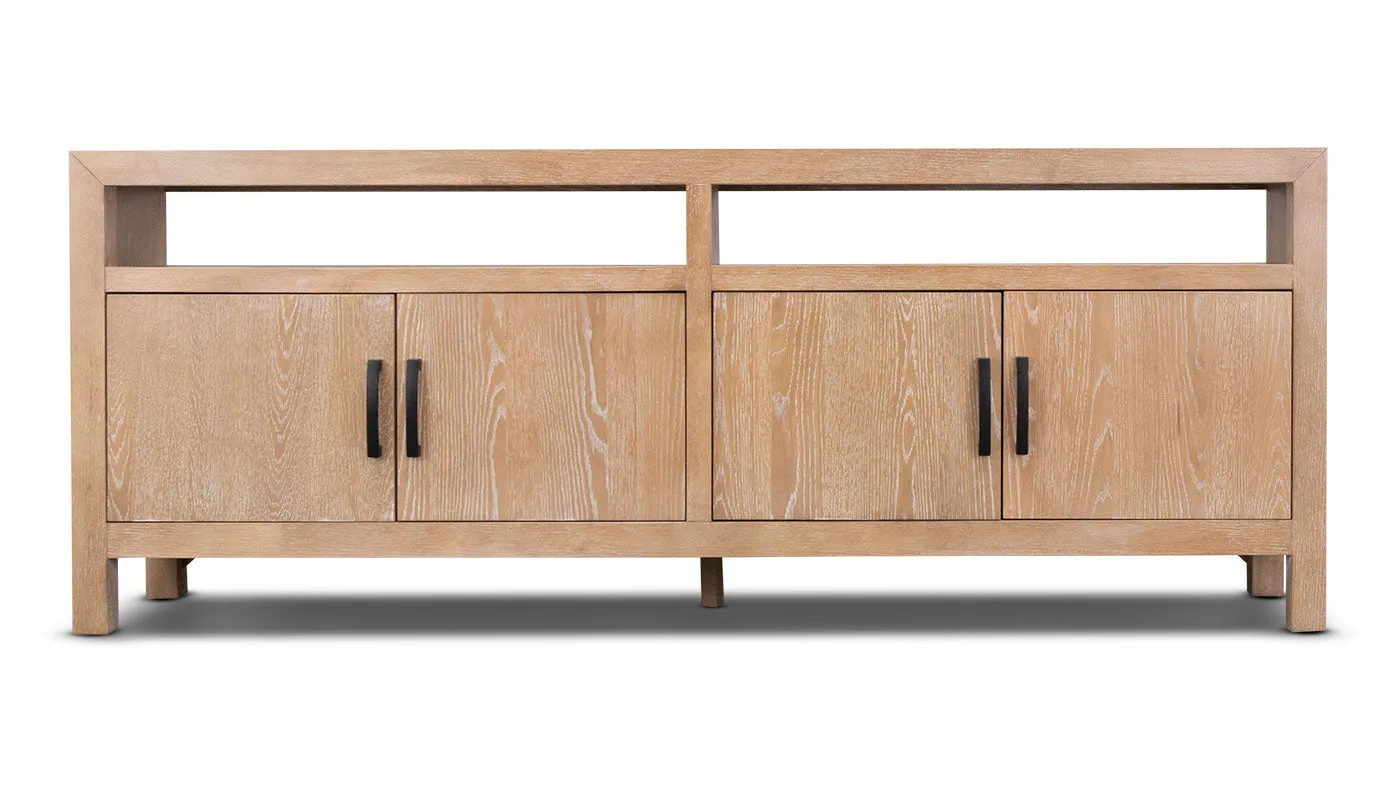
Taylor TV Console
Under a window: light, height, and visual weight
A TV console under a window can free up wall space, but the window sill and any radiators or curtains may limit how tall the console can be. Neither product record lists a height, so measure from the floor to the window sill and compare that with the console height once you have it. The Mid Century console has four splayed legs and an uncluttered design that maximizes visual space, which can help a console under a window feel less blocky. The Taylor console is part of a full bedroom collection with matching case goods, so it may read as more substantial in a tight spot. If the window is the only long wall, choose the console that leaves the most clearance around the sill and curtains.
Small bedroom TV stand: which console takes less visual room
In a small bedroom, the console's footprint and visual weight matter as much as its width. The Mid Century console's clean lines and minimalist aesthetic are described as maximizing visual space while adding style, which makes it a natural candidate for a compact room. The Taylor console belongs to a collection that includes a 9-drawer dresser, 5-drawer chest, floor mirror, nightstand, bench, and console, so it is designed to be part of a coordinated set rather than a standalone piece. If you want one console to do the work without matching case goods, the Mid Century is the simpler starting point. If you are already building a Taylor bedroom, the console keeps the finish consistent.
How the two consoles compare on the details that affect placement
- Finish and palette: Mid Century: acorn brown finish that complements warm and cool decor schemes. Taylor: Oak only, so the surrounding wood tones need to work with oak.
- Design language: Mid Century: four splayed legs and a 1950s–60s silhouette with period-accurate details. Taylor: part of a full bedroom collection with matching case goods, including a nightstand with USB and LED light.
- Construction cues: Both use rubberwood solids and veneers. The Taylor collection also lists French and English dovetail construction and ball-bearing glides on its case goods, which tells you about the collection's joinery approach but not about the console's internal storage.
- Catalog price: Mid Century: USD 238.80 (comparison price USD 398.00). Taylor: USD 535.33 (comparison price USD 799.00). Neither record includes dimensions, so price is not a proxy for size.
A placement check you can do before ordering
Because the supplied records do not include dimensions, weight capacity, or assembly instructions, these steps focus on what you can verify yourself.
- Measure the wall and the window: Note the width of the wall, the height from floor to window sill, and how far curtains extend. Leave room for the console to sit clear of both.
- Confirm the console dimensions: Ask for the console's width, depth, and height before you buy. The catalog does not list them, so this is a required check rather than an optional one.
- Check the TV footprint: Compare your TV's base width and depth with the console top once you have the console dimensions. Do not assume a load limit; confirm it with the seller if you need one.
- Plan the cord path: Decide where the outlet is relative to the console. Neither record lists cable management features, so plan for visible cords or a nearby outlet.
When the Mid Century is the better fit
Choose the Mid Century TV Console if you want a warm acorn finish that works with either warm or cool decor, a lighter visual footprint from the splayed legs and minimalist lines, and a lower catalog price. It suits a bedroom where the console stands alone rather than matching a full suite. The trade-off is that the record does not confirm matching case goods, so you will coordinate other furniture yourself.
When the Taylor is the better fit
Choose the Taylor TV Console if you are already furnishing a Taylor bedroom and want the console to share the oak finish and collection details. The Taylor collection includes a nightstand with USB and LED light, which can be useful if the console wall is also where you charge devices. The trade-off is the higher catalog price and the single Oak finish, which narrows your decor options compared with the Mid Century's acorn brown.