Quick answer
Keep your 150g pot cool, dry and tightly closed, start with a small spoonful a day, and stir it into yogurt, smoothies or granola rather than eating it dry by the handful.
Why storage decides whether your pollen stays pleasant
Bee pollen is a natural, moist ingredient, so heat and humidity make it clump, darken and lose its fresh taste faster than a dry pantry staple would. A sealed pot in a cool cupboard is fine for everyday use; if your kitchen runs warm or you plan to keep the pot for months, the fridge is the safer choice. Let the pot come to room temperature before opening it, because condensation from a cold jar can introduce moisture.
The 150g size is small enough to finish while it is still fresh, which is an argument for buying the pot you will actually use rather than decanting it into a larger container. If you do transfer it, use a clean, completely dry jar with a tight lid.
Serving size: start small, then adjust
There is no universal official serving size printed on the pot, so treat any number as a starting point rather than a rule. A teaspoon to a tablespoon a day is a common way to begin, and many people stay there because bee pollen has a strong, floral taste that can overwhelm a dish if you add too much. Increase gradually if you enjoy it and tolerate it well.
Bee pollen is a bee product, so anyone with pollen or bee-sting allergies should be cautious and speak to a healthcare professional before trying it. This is a genuine limitation of the ingredient, not a reason to avoid the guide altogether.
Where bee pollen works best in everyday food
Bee pollen keeps its texture best when it is added at the end rather than cooked. Stir it into thick yogurt or porridge after the heat is off, scatter it over granola just before serving, or blend it into a smoothie at the end of the cycle so it does not sit in the blades. In smoothies, a tablespoon disappears into the flavour of banana, berries or mango while still adding a subtle honeyed note.
For a granola topping, mix it with a little cinnamon or coconut and sprinkle it over the bowl rather than baking it into the granola, where it can turn bitter. The same rule applies to hot drinks: let the cup cool slightly first.
Daily bee pollen routine: step by step
- Check the pot and store it correctly: On arrival, make sure the lid is tight and the pollen is dry and free-flowing. Keep the pot in a cool, dark cupboard or the fridge, away from the steam of the kettle and hob. Never store the pot next to a hot appliance or in direct sunlight.
- Measure a small starting serving: Begin with one teaspoon a day, using a dry spoon. If you like the taste and feel fine, build up to a tablespoon over a week or two. Use a dry spoon every time; a wet spoon introduces moisture that shortens the pot's life.
- Add it to a cool or warm dish, not a hot one: Stir the pollen into yogurt, porridge or a smoothie at the end of preparation, or scatter it over granola just before eating. Avoid boiling liquids and prolonged cooking. Add pollen last so it keeps its texture and flavour.
- Seal and return the pot immediately: Close the lid as soon as you have taken your serving, and put the pot back in its storage spot. Do not leave it open on the counter during breakfast. A quick close keeps out humidity and kitchen odours.
- Watch the texture and finish the pot: If the pollen becomes damp, sticky or smells off, discard it. Aim to finish the 150g pot within its recommended period rather than saving it for special occasions. Treat the pot as a daily ingredient with a shelf life, not a long-term pantry ornament.
Product facts
-
Bee Pollen 150g: A 150g pot of Bee Pollen described as great sprinkled on cereals, mixed in yoghurt or added to smoothies. The pot size suits daily use and the suggested uses match the serving methods in this guide, so you can start without buying extra equipment.
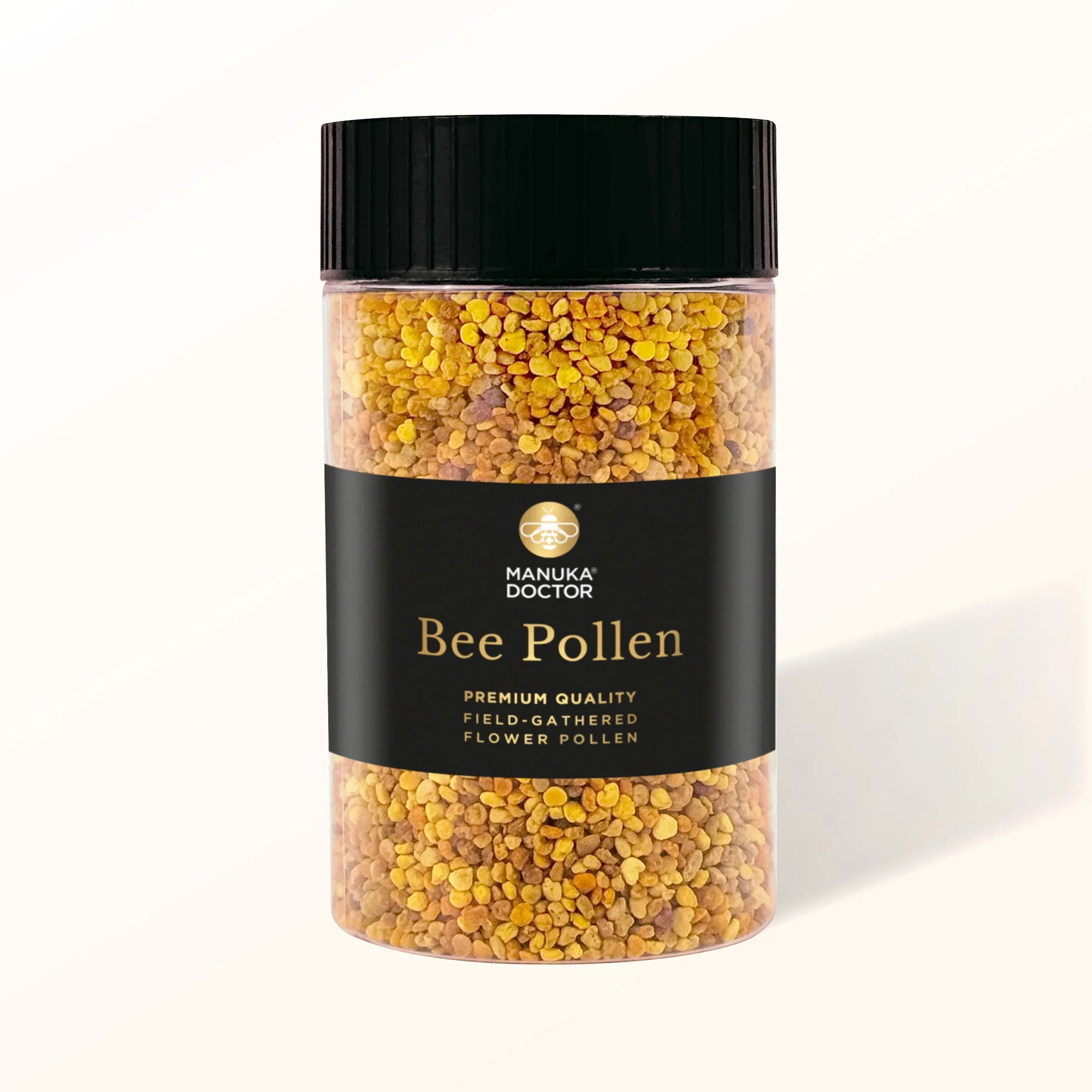
Bee Pollen 150g