Why Beechwood Deserves a Little Extra Care
Beechwood is a dense, fine-grained hardwood that resists absorbing flavors and odors, which is why it's a favorite for kitchen utensils. But like any natural wood, it responds to moisture and temperature changes. With a few simple habits, you can keep your beechwood serving spoons looking clean and feeling smooth through years of daily use.
What the Catalog Says About Your Spoons
-
Beechwood Serving Spoons: Made from natural beechwood for a clean, classic look. Designed for everyday serving and kitchen use. The material is unfinished, so it will benefit from occasional oiling to maintain its appearance and prevent drying.
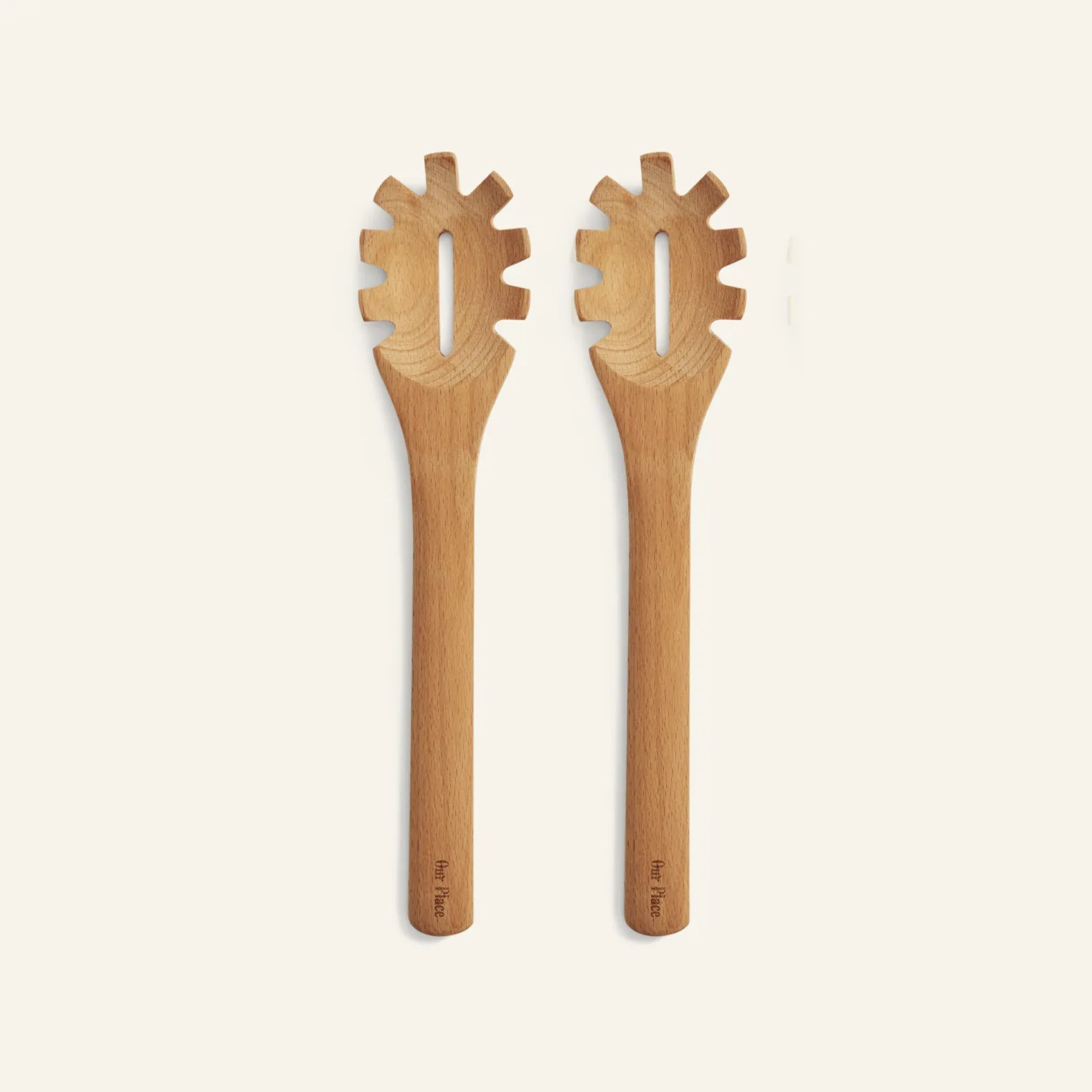
Beechwood Serving Spoons
How to Clean Beechwood Serving Spoons
Wood is porous and can warp or crack if soaked. The gentlest method preserves both the spoon and its finish.
- Wash by hand right after use: Rinse with warm water and a mild dish soap. Use a soft sponge or cloth. Never put beechwood spoons in the dishwasher — the heat and detergent will dry out the wood and cause splits.
- Dry immediately: Pat dry with a clean towel, then let them stand upright in a dish rack or on a counter. Avoid leaving them wet in the sink or lying flat on a damp surface.
- Tackle stubborn bits gently: If food sticks, soak for no more than a few minutes in warm soapy water, then scrub with a non-abrasive pad. Extended soaking can raise the wood grain and weaken the spoon.
How to Season and Protect the Wood
Seasoning — also called oiling — replaces natural oils lost during washing and keeps the wood from drying out. It is not required by the manufacturer, but it is a common practice that extends the life of unfinished beechwood utensils.
- Choose a food-safe oil: Mineral oil, walnut oil, or fractionated coconut oil work well. Avoid vegetable oils that can turn rancid. Apply a small amount to a soft cloth.
- Rub the oil into the grain: Work the oil along the length of the spoon, not across. Let it soak in for a few hours or overnight. Wipe off any excess with a clean cloth.
- Repeat when the wood looks dry: If the surface feels rough or looks pale, it is time for another light oiling. For spoons used daily, once a month is usually enough.
Storage Habits That Prevent Cracking
Store your beechwood serving spoons in a dry place away from direct heat sources like the stovetop or oven vent. A utensil crock on the counter works well, but make sure the spoons are completely dry before you put them in. If you keep them in a drawer, use a divider so they don't knock against metal utensils. Avoid stacking heavy items on top of them.
What to Avoid
The supplied information does not include a list of prohibited uses, but general wood-care knowledge applies: do not leave beechwood spoons in hot liquids for extended periods, do not use them for acidic foods that can stain the wood, and do not expose them to open flames. If a spoon develops a small crack, stop using it for wet tasks and oil it thoroughly — the wood may swell back together. Deep or splitting cracks mean it is time to replace the spoon.