Getting Started with Beehive Lacing
The Guidecraft Beehive Lacing set turns a simple threading task into a playful scene. It includes a solid rubberwood beehive with holes, plus three bees attached to multi-colored lacing strings. The bees lace through the hive, giving preschoolers a clear goal: get each bee into its home.
This activity is designed for children age 3 and up. The pieces are easy for little hands to grasp, so kids can focus on the lacing motion rather than struggling with tiny parts. No batteries, no screens—just a quiet, hands-on task that builds focus and coordination.
How to Use the Beehive Lacing Set
Follow these simple steps to introduce the activity. Let your child set the pace and repeat as many times as they like.
- Set up the hive: Place the rubberwood beehive on a flat surface in front of your child. Show them the holes where the bees will go.
- Hold the bee: Hand your child one bee on its lacing string. Let them grasp the bee or the string tip—whichever feels easier.
- Thread through the hole: Guide the string and bee into one of the hive holes. Pull the string through until the bee sits snugly in place.
- Repeat and explore: Lace the remaining bees through different holes. Your child can also pull them out and start over, practicing the motion again and again.
What the Beehive Lacing Set Includes
-
Beehive Lacing: Set includes a solid rubberwood beehive with holes for the three bees on multi-colored lacing strings to lace through it. The rubberwood hive is sturdy and won't tip over easily, making it a stable base for small hands working on threading. The colored strings help kids distinguish each bee and add visual interest.
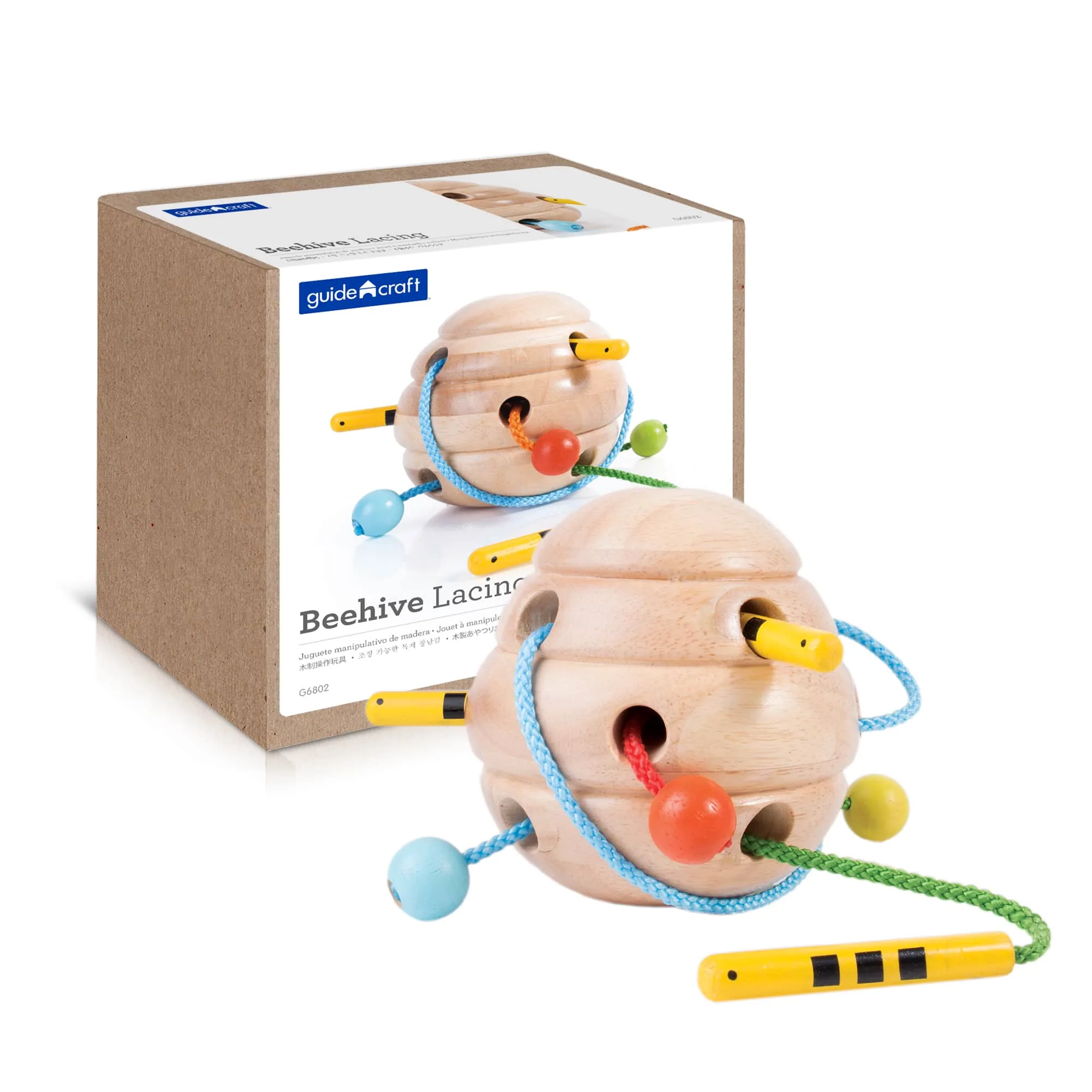
Beehive Lacing
Skills This Activity Supports
The Beehive Lacing set is designed to help develop dexterity, hand-eye coordination, visualization, and process skills. Lacing requires a child to align the string with a hole, then push or pull it through—a motion that strengthens finger muscles and improves control. The dramatic play element (putting bees in a hive) gives the task meaning, so kids stay engaged longer.
Because the set is open-ended, children can invent their own stories: the bees are returning home, hiding from rain, or gathering nectar. That mix of fine motor work and imagination is what makes this toy a good fit for preschool playtime.
Tips for Getting the Most Out of the Activity
Let your child hold the lacing string however is comfortable—some kids prefer pinching the bee, others grip the string tail. If threading feels tricky at first, try holding the hive steady while your child pushes the bee through. Once they succeed, praise the effort, not just the result.
You can also incorporate counting: ask your child to lace one bee, then two, then three. Or name the colors of the strings as they work. These small additions turn the activity into a richer learning moment without adding complexity.