Quick Answer
Choose beige nylon coil zippers when you want a low-contrast, blend-in look for light fabrics and everyday bags, and choose navy nylon coil zippers when you want a crisp, intentional contrast that hides wear on darker projects. Both are premium zippers by the yard, so the real decision comes down to color and cost.
Why Zipper Color Changes the Whole Project
Zipper color is one of the few design choices that affects both how a project looks and how long it looks good. A beige coil recedes into cream, tan, and natural fabrics, so the zipper reads as a quiet functional detail. A navy coil becomes a visible line, which is exactly what you want when the zipper is part of the design rather than something to hide.
This matters most on bags, where the zipper sits at eye level and takes constant handling. On apparel and home decor, the same logic applies but the stakes are lower, since zippers are usually smaller and less central to the finished piece.
The Trade-Off Between Blending In and Standing Out
Beige is the safer choice for a subtle finish, but it can look washed out against white or very pale fabric and can show soiling more readily than a mid-tone. Navy gives you definition and tends to look clean longer on dark or heavily used projects, but it will fight a light, delicate palette if you are not intentionally using it as an accent.
There is no universally better color here. The trade-off is visibility: beige minimizes contrast, navy maximizes it. Decide which one your project actually needs before you cut anything.
Cost and Sizing Considerations
The two colors are not priced identically in the current catalog, so if you are buying multiple zippers for a batch of projects, that difference adds up. Both are sold by the yard and available in multiple styles and sizes, which means you can cut the exact length you need rather than buying a fixed-length zipper and working around it.
Because both products share the same construction and options, you are not sacrificing quality by choosing one color over the other. You are only choosing a look and a price point.
Beige vs Navy: Trade-Offs at a Glance
- Visual effect: Beige blends into light and neutral fabrics for a subtle finish; navy creates a defined, high-contrast line that reads as a design feature. Lay the coil against your main fabric before cutting to confirm the contrast level you actually want.
- Everyday durability appearance: Navy tends to look cleaner longer on dark or heavily handled projects, while beige can show soiling sooner on pale fabrics.
- Cost per project: Beige is listed at USD 7.92 and navy at USD 8.83 in the current catalog, so beige costs less per zipper when you are buying in quantity. If you are stocking up for multiple projects, price the full quantity in both colors before deciding.
- Construction and options: Both are premium zippers by the yard with the same style, size, and coil color option types, so neither color limits your hardware or sizing choices.
Product Facts
-
Navy Nylon Coil Zippers: Premium zippers by the yard in navy, available in multiple styles and sizes with a catalog price of USD 8.83. The by-the-yard format lets you cut exactly the length you need, which reduces waste on custom bag and apparel projects.
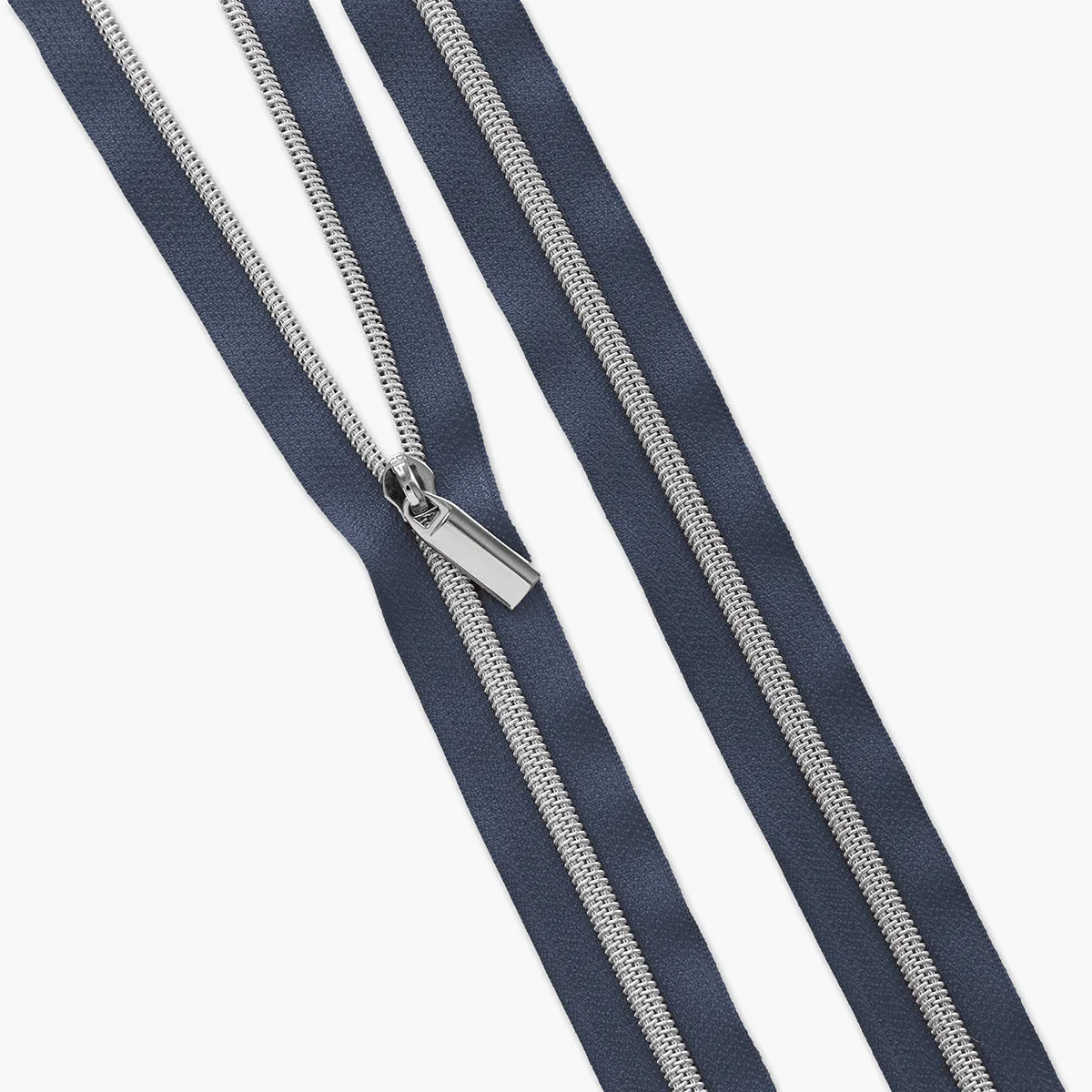
Navy Nylon Coil Zippers
-
Beige Nylon Coil Zippers: Premium zippers by the yard in beige, available in multiple styles and sizes with a catalog price of USD 7.92. The lower catalog price makes beige the more economical pick when you are buying several zippers for a batch of projects.
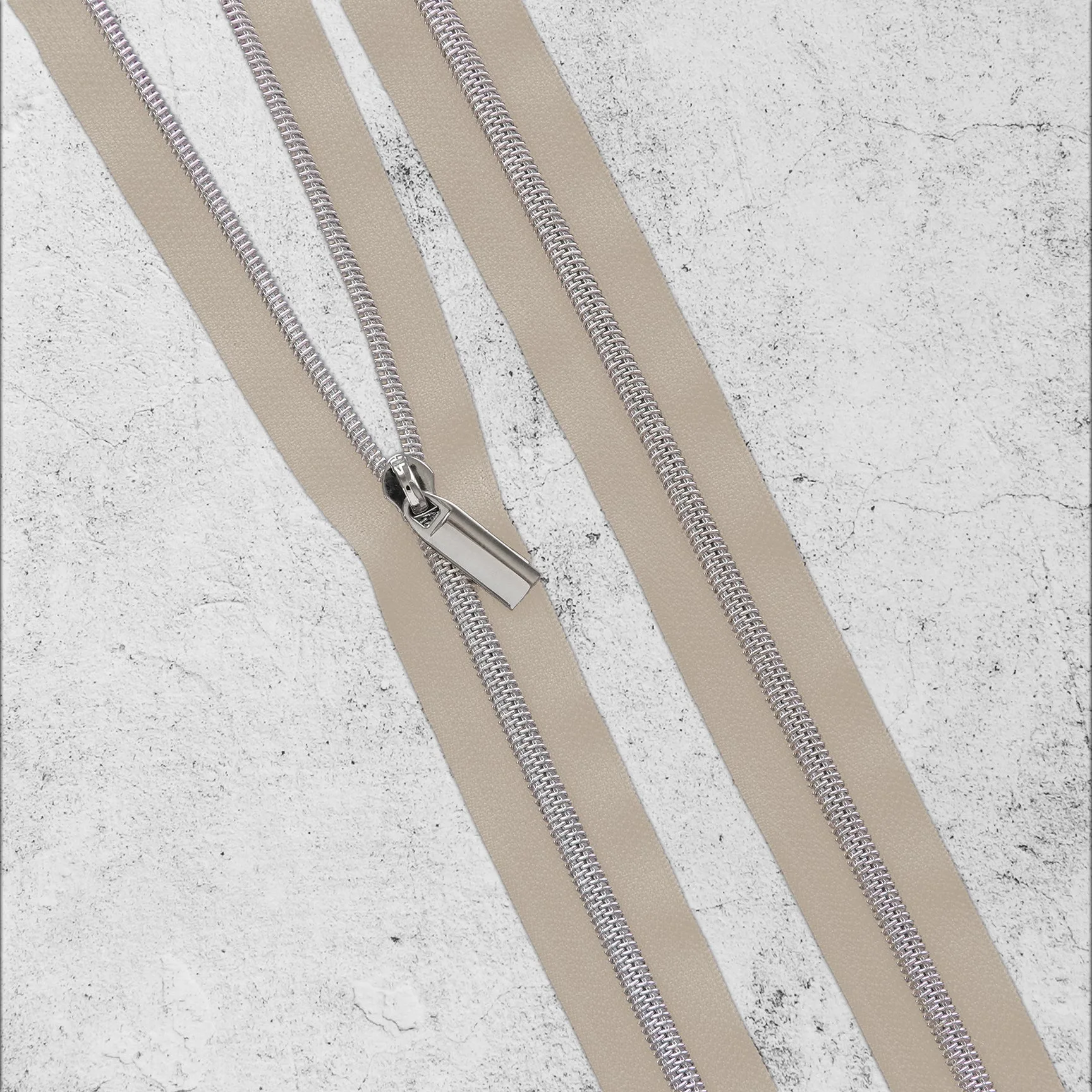
Beige Nylon Coil Zippers
Which Color Fits Your Project?
Best for
- Light, neutral, or cream-colored bags and apparel where you want the zipper to disappear into the design
- Makers buying multiple zippers who want the lower catalog price
- Projects where a soft, understated finish matters more than a visible accent
Not for
- Dark or high-contrast projects where you want the zipper to stand out
- Heavily used bags where a pale coil may show wear sooner
- Projects where navy is the intended accent color