Quick answer
Choose a bench block when you need a dead-flat, hardened steel face for punching, chasing, or planishing sheet and wire. Choose a bench anvil when you need curves, horns, or stepped edges to form rings, bracelets, and bezels. If you do both, start with a bench block and add an anvil once your work involves shaping rather than just flattening.
What a bench block actually does at the bench
A bench block is a solid, hardened steel plate, usually square or rectangular, with at least one polished flat face. Its job is to give you a stable, non-bouncing surface under a hammer or punch. When you strike a disc cutter or a doming punch on a bench block, the energy goes into the metal rather than into the bench. That is why jewellers bench block uses cluster around punching blanks, flattening wire, planishing sheet, and setting rivets. A block does not shape curves; it resists them. If your work needs a rounded form, the block is the wrong tool. Pair it with a Bench Mat, Heavy Duty Rubber to absorb noise and stop the block sliding, especially if you share a workspace.
What a bench anvil adds that a block cannot
A bench anvil is a smaller, often cast or forged steel form with a flat top plus one or more horns, steps, or rounded edges. The horn lets you form rings, bangles, and curved bezel strips by hammering metal around a radius instead of against a flat plane. The step or shoulder gives you a place to bend sheet to a consistent angle. A bench anvil set for jewellery usually includes a small anvil plus optional stakes or a vice mount, but even a basic anvil gives you shaping options a flat block cannot. The trade-off is stability: an anvil is lighter and can move or ring unless it is clamped or set on a solid base. A heavy rubber bench mat under the anvil reduces movement and noise, but it does not replace proper clamping for heavy forming.
How to match the surface to the task
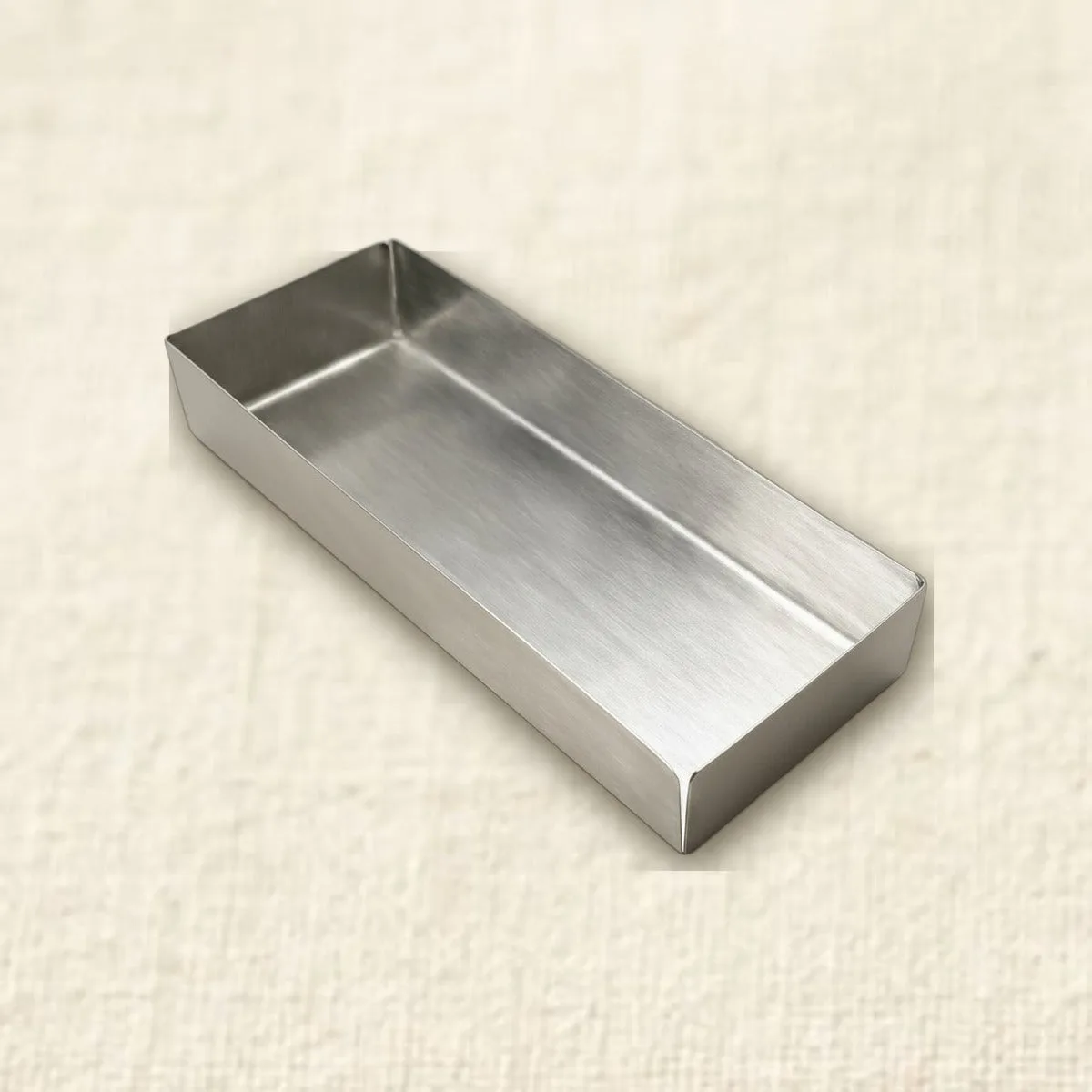
Start by listing the operations you do most. If you punch star blanks, flatten bezel wire, or planish small panels, a bench block is the primary surface. If you raise, curve, or bend, an anvil is the primary surface. Many jewellers keep both within reach and switch based on the shape of the metal, not the size of the hammer. When you use a block, check that the face is clean and free of burrs; a dented block will transfer marks to your work. When you use an anvil, work on the horn for curves and the flat top for straightening, and keep the surface polished. For holding a soldering block steady while you work near either surface, a Soldering Block Tray — Charcoal Holder, Anti-Magnetic Stainless Steel, 120 × 50 mm keeps the charcoal from shifting, so you can focus on the joint rather than the setup.
Trade-offs at a glance
- Bench block: flat and stable, but no curves: A hardened steel block gives you a true flat plane for punching, planishing, and flattening. It will not help you form a ring or a bezel curve, and a block that is too small can limit the size of your sheet. Choose a block if your work is mostly flat or you need a reliable punching surface.
- Bench anvil: shaping versatility, but less stability: An anvil adds horns and steps for bending and forming, but it is lighter than a block and may move or ring unless clamped or set on a heavy base. Its flat area is usually smaller than a full-size block. Choose an anvil if you shape curves and bends regularly, and plan how you will secure it.
- Bench mat: protects and quiets, but does not replace a solid base: A heavy-duty rubber mat absorbs shock and stops tools from sliding, which helps both block and anvil work. It does not make an unclamped anvil safe for heavy hammering. Use a mat under either surface to reduce noise and movement, but clamp the anvil for serious forming.
Product facts
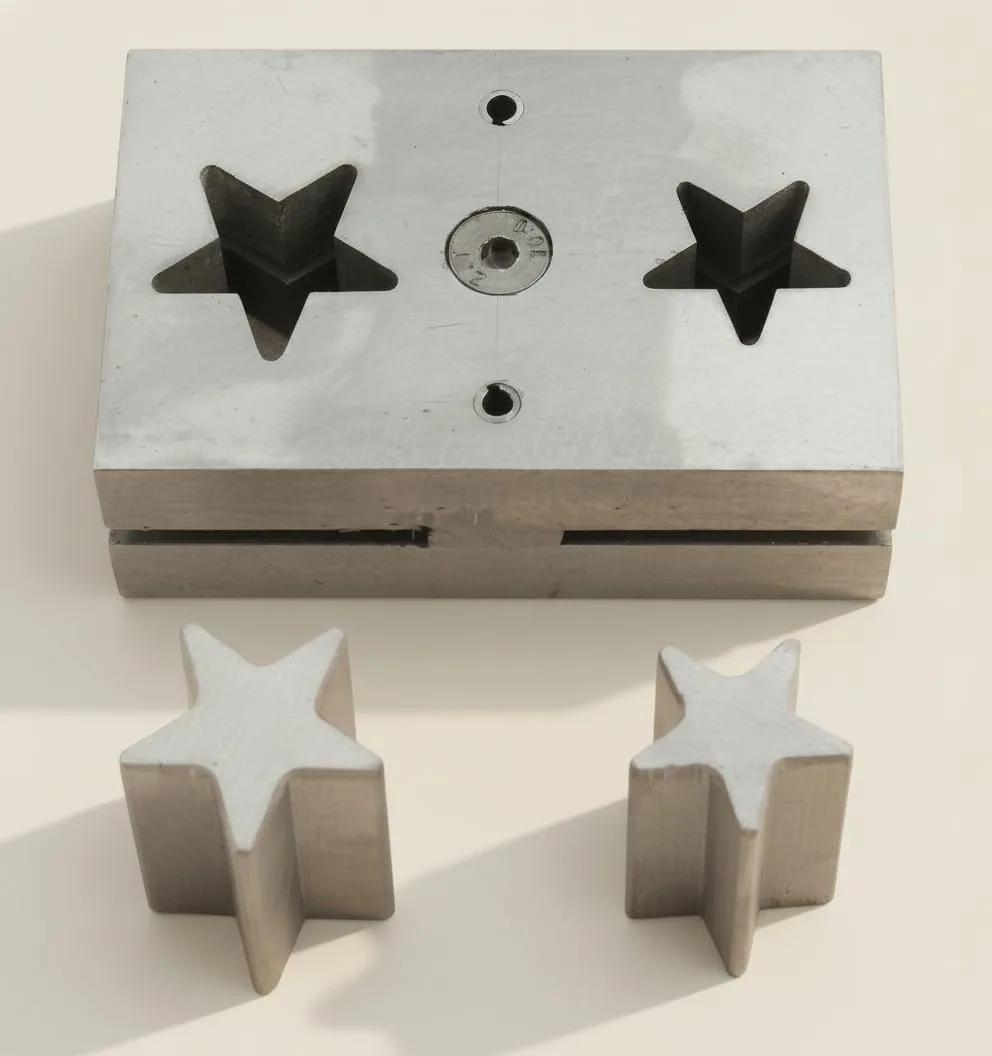
- Star Disc Cutter, Big Size — 2-Piece Steel Punch Set for Metal Sheet Jewellery Blanks: This substantial steel star cutter precisely punches large five-pointed blanks from sheet metal, streamlining component creation for statement jewellery. Applying firm downward pressure on your bench block, this tool swiftly cuts clean, uniform star shapes from non-ferrous metals up to 1mm thick. Its hardened steel die ensures crisp edges with every strike. This tool only works as intended on a hard, flat surface such as a bench block. Using it on an anvil horn or a soft surface will not produce clean stars and can damage the die.
- Bezel & Ring Forming Mallet — 1 lb (1 Pound) Brass Head, Metalsmith Jewellery Hammer: This 1lb brass mallet is essential for precise metal forming and adjustment on your workbench. It delivers controlled force to shape precious metals without leaving unsightly marks. The substantial brass head provides the necessary weight for effective metal movement, whether you're closing bezels or sinking settings. Its smooth, flat striking faces are carefully machined to ensure even contact. A brass mallet is the right hammer for both surfaces, but the surface determines the result: use it on a bench block to flatten and set, and on an anvil horn to curve and form without marring the metal.
- Soldering Block Tray — Charcoal Holder, Anti-Magnetic Stainless Steel, 120 × 50 mm: This anti-magnetic stainless steel tray provides a stable, fire-resistant platform for your soldering block. Its robust construction prevents the charcoal from shifting during intricate tasks, ensuring your work remains undisturbed. The open-top design allows for efficient heat dissipation and easy access. Soldering often happens alongside forming and punching. A tray that holds the charcoal block steady keeps your soldering setup independent from your hammering surface, so you are not constantly rebuilding the bench.
Which surface fits your bench?
Best for
- Jewellers who punch blanks, flatten wire, or planish sheet and need a dead-flat hardened face
- Silversmiths who do light forming and want a compact anvil with a horn for curves
- Anyone building a first bench who wants to start with one versatile surface and add the other later
Not for
- Heavy raising or deep forming, which needs a full-size stake or a much heavier anvil
- Work that requires both a large flat area and a horn, unless you have space for both tools
- Anyone who cannot clamp or secure an anvil and needs a stable surface for heavy hammering