Quick answer
Yes, benzoyl peroxide in a clay cleanser can help clear pores, but not by physically scrubbing them out. It treats breakouts and helps prevent new ones from forming, while kaolin and bentonite clay absorb excess oil and draw out impurities. The catch: more is not better, and overusing the mask side can irritate skin.
Why the clay matters as much as the benzoyl peroxide
Benzoyl peroxide gets the acne headlines, but in a clay formula the clays do a different job. Kaolin and bentonite clay help absorb excess oil, control shine, and draw out impurities. For oily skin, that shine control is often the reason a clay cleanser feels more comfortable than a plain acne wash.
This is also where the myth starts: because clay draws out impurities, people assume it pulls clogged pores open like a vacuum. The supplied facts describe oil absorption and impurity drawing, not pore unclogging. The benzoyl peroxide is the acne-treatment ingredient; the clays support oil control.
The real risk: clay mask overuse irritation
The most common mistake with a 2-in-1 cleanser and mask is using the mask step too often. Benzoyl peroxide is an active acne medication, and layering frequent mask use on top of daily washing can leave skin dry, tight, or irritated, especially if you are new to benzoyl peroxide.
A 2-in-1 format makes this easy to get wrong because the same tube serves two purposes. Treat the mask as an occasional deep-cleansing step, not a daily habit, and pay attention to how your skin feels the next morning. If it stings or flakes, cut back before adding anything else.
Benzoyl peroxide vs salicylic acid for pores
If your main concern is clogged pores and rough texture, salicylic acid is the more commonly chosen exfoliating acid. If your main concern is inflammatory acne, benzoyl peroxide is the acne-treatment medication in this formula. The supplied facts do not claim benzoyl peroxide exfoliates or dissolves pore plugs, so do not expect that from this cleanser.
That distinction matters when you build a routine. A benzoyl peroxide clay cleanser is a reasonable fit for oily, breakout-prone skin that wants shine control plus acne treatment. It is not a replacement for a dedicated exfoliating acid if texture is your only issue.
Myths and verdicts
- Myth: Benzoyl peroxide physically scrubs out clogged pores: Verdict: false. Benzoyl peroxide treats breakouts and helps prevent new ones from forming, but the supplied facts do not describe it as an exfoliant or pore vacuum. The clays absorb oil and draw out impurities; they do not scrub pores clean. Expect clearer-looking skin over time from acne treatment, not an instant deep-clean feeling.
- Myth: You can use the clay mask side every day: Verdict: not recommended. The product allows daily use as a face wash, but the mask is a separate deep-cleansing step. Using the mask daily on top of the wash increases the chance of dryness and irritation from the benzoyl peroxide and clays. Keep the daily wash daily and the mask occasional, especially in your first weeks.
- Myth: More clay means more shine control: Verdict: misleading. Kaolin and bentonite clay absorb excess oil, but piling on more product or leaving it longer does not add a benefit the formula does not claim. Overuse can leave skin tight and uncomfortable instead. Use the amount and timing that leave skin comfortable, not squeaky.
- Myth: Benzoyl peroxide and salicylic acid do the same thing for pores: Verdict: false. Benzoyl peroxide is the acne-treatment medication here; salicylic acid is a different ingredient with a different role. This cleanser is built around benzoyl peroxide plus clays, not around exfoliating acids. Choose based on whether your priority is inflammatory breakouts or texture, and do not expect this formula to exfoliate.
Product facts behind the verdicts
-
Neutrogena Clear Pore 2 in 1 Facial Cleanser/Face Mask with Kaolin & Bentonite Clay & 3.5% Benzoyl Peroxide Acne Treatment Medication, Daily Face Wash & Shine Control Clay Mask, 4.2 fl. oz, 3 Pack: Contains 3.5% benzoyl peroxide acne treatment medication. This is the ingredient that treats breakouts and helps prevent new ones, so the acne benefit depends on consistent, not excessive, use.
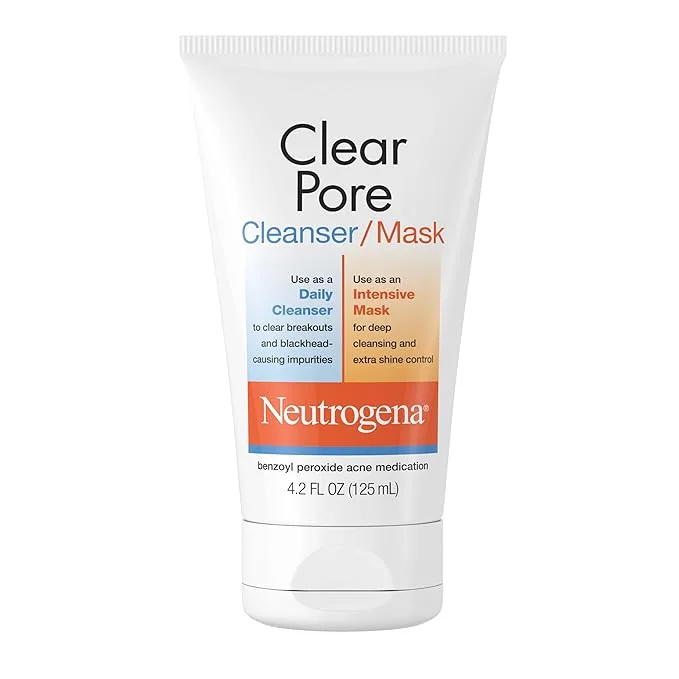
Neutrogena Clear Pore 2 in 1 Facial Cleanser/Face Mask with Kaolin & Bentonite Clay & 3.5% Benzoyl Peroxide Acne Treatment Medication, Daily Face Wash & Shine Control Clay Mask, 4.2 fl. oz, 3 Pack
-
Neutrogena Clear Pore 2 in 1 Facial Cleanser/Face Mask with Kaolin & Bentonite Clay & 3.5% Benzoyl Peroxide Acne Treatment Medication, Daily Face Wash & Shine Control Clay Mask, 4.2 fl. oz, 3 Pack: Formulated with kaolin and bentonite clay to absorb excess oil and control shine. These clays explain why the formula suits oily skin and why the mask step can feel drying if repeated too often.
-
Neutrogena Clear Pore 2 in 1 Facial Cleanser/Face Mask with Kaolin & Bentonite Clay & 3.5% Benzoyl Peroxide Acne Treatment Medication, Daily Face Wash & Shine Control Clay Mask, 4.2 fl. oz, 3 Pack: Dermatologist-tested 2-in-1 formula usable daily as an acne face wash or as a deep-cleansing clay mask. The dual format is convenient, but it also makes it easy to overdo the mask step, so separate your daily wash from your occasional mask.