Olive wood kitchen utensils bring warmth and durability to your cooking space. Their rich grain and natural antimicrobial properties make them a favorite among home cooks who value both function and aesthetics. But with so many options—and woods—on the market, knowing what to look for can save you time and money.
This guide walks you through the essentials: how olive wood compares to other woods, what to check before buying, and how to keep your tools in top shape. Whether you're after a sturdy spatula, a versatile spoon, or a full set, these tips will help you choose wisely.

the essentials
Why Choose Olive Wood for Kitchen Utensils?
Olive wood is naturally dense and resistant to absorbing odors and stains, making it ideal for everyday cooking. Unlike softer woods such as bamboo or pine, olive wood won't crack or splinter easily, even with frequent use. Its tight grain also means it's less porous, so it resists bacteria better than many other natural materials.
From a sustainability standpoint, olive wood utensils are often made from pruned branches of fruit-bearing trees, so no trees are cut down solely for the wood. This makes them a responsible choice for eco-conscious kitchens. Plus, the unique grain patterns mean every piece is one of a kind.
- Check that the utensil is made from a single piece of wood rather than glued scraps—this ensures longevity.
- Look for a smooth, sanded finish without visible cracks or rough spots.
Olive Wood vs. Other Kitchen Woods: What’s the Difference?
When comparing olive wood to beech, maple, or acacia, the main differences are hardness and grain. Olive wood ranks higher on the Janka hardness scale than beech or maple, meaning it's less likely to show wear from stirring or scraping. Acacia is also hard, but olive wood's natural oils give it a slight edge in moisture resistance.
Beech and maple are common in budget-friendly sets, but they can absorb liquids and develop cracks over time if not oiled regularly. Olive wood requires less frequent conditioning, though occasional oiling still helps maintain its luster. If you prefer a tool that ages gracefully with minimal upkeep, olive wood is a solid investment.
Another factor is weight: olive wood utensils feel slightly heavier in hand, which many cooks find reassuring. Lighter woods like bamboo may feel flimsy when stirring thick sauces or lifting heavy ingredients.
- For stirring and serving, an olive wood corner spoon is especially useful—its angled head reaches the edges of pots and pans.
- Avoid using olive wood utensils in the dishwasher; hand wash with mild soap and dry immediately.
What to Look for When Buying Olive Wood Kitchen Tools
Start by examining the wood's surface. High-quality olive wood utensils should feel smooth and free of splinters. The grain should be visible and consistent, without large knots that could weaken the tool. Also, check the handle shape: ergonomic curves reduce hand fatigue during long cooking sessions.
Consider the tool's intended use. A slotted spoon works well for serving, while a solid spatula is better for flipping. If you often cook with non-stick pans, look for rounded edges to avoid scratching. Many brands offer sets that include a spatula, spoon, and turner—perfect for outfitting a new kitchen or replacing worn tools.
Finally, think about size. Longer handles (around 12 inches) keep your hands away from hot surfaces, while shorter ones (8–10 inches) offer better control for tasks like stirring sauces or dressing salads.
- If you frequently stir thick stews or risotto, a sturdy olive wood corner spoon will help you scrape the bottom without damaging the pot.
- For a coordinated look, pair your utensils with complementary items like a Vintage Wash Tea Towel | Terracotta to keep them clean and dry.
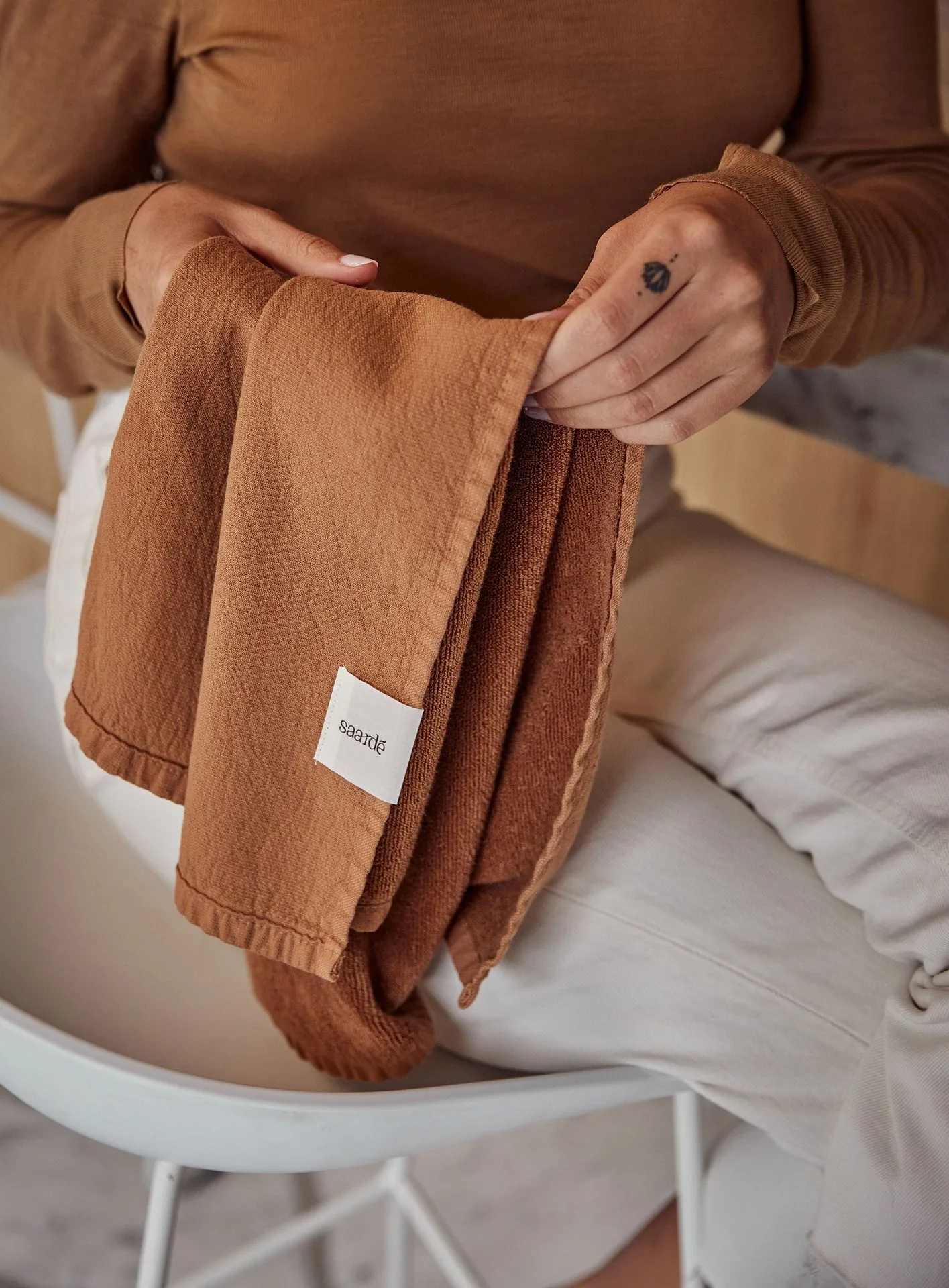
Vintage Wash Tea Towel | Terracotta
How to Care for Olive Wood Utensils So They Last
Proper care is simple but important. After each use, wash olive wood utensils by hand with warm water and mild dish soap. Avoid soaking them, as prolonged exposure to water can cause the wood to swell or crack. Dry them with a clean towel immediately, then let them air dry completely before storing.
Every few months, apply a food-safe mineral oil or beeswax conditioner to keep the wood hydrated. This prevents drying and maintains the rich color. Simply rub a small amount onto the surface, let it absorb for a few hours, then wipe off any excess. Never use vegetable or olive oil, as they can turn rancid over time.
Store utensils in a dry, well-ventilated drawer or crock. Avoid leaving them near the stove or in direct sunlight, as heat and UV rays can warp or fade the wood. With this routine, your olive wood tools can last for decades.
- If your utensil develops a rough spot, sand it lightly with fine-grit sandpaper and re-oil.
- Keep a dedicated kitchen towel handy—like the Vintage Wash Tea Towel | Terracotta—to dry utensils immediately after washing.
A Note on Sustainability and Sourcing
Olive wood is a byproduct of the olive oil industry. After fruit-bearing trees are pruned or reach the end of their productive life, the wood is repurposed into utensils, cutting boards, and other kitchen tools. This means no trees are harvested solely for lumber, making olive wood a genuinely sustainable material.
When shopping, look for brands that source from regions with ethical forestry practices, such as Italy, Greece, or Spain. Some artisans also hand-carve each piece, which supports traditional craftsmanship and reduces energy use compared to mass production. Choosing olive wood utensils is a small but meaningful step toward a more sustainable kitchen.
Olive wood kitchen utensils combine practicality, beauty, and sustainability in a way few materials can match. By selecting well-made pieces and caring for them properly, you'll enjoy reliable tools that age gracefully. Whether you're upgrading your current set or starting from scratch, olive wood is a choice you can feel good about every time you cook.