Why Wild Cards Cause Confusion
Betcha Switchup is built around wild cards that keep changing. The six wild cards in the deck make the number on the next card dealt wild for all four cards with that number, causing Betcha Switchups throughout every hand. That chain reaction is exciting, but it can also lead to disagreements about which cards are wild right now.
The good news: the game ships with tools to prevent most disputes. Each player gets a Hierarchy of Hands chart, so you can check hand rankings privately without revealing whether you have a strong hand. And the full-color instructions booklet covers the rules. When a wild card question comes up, start by checking the chart and the booklet together.
How the Number-Switch Rule Works
The core rule is simple: when a wild card is dealt, the number on the next card dealt becomes wild for all four cards with that number. For example, if a wild card is followed by a 7, then all 7s in play are wild until the next switch. This can change who has the best hand in an instant.
Because the switch applies to all four cards of that number, it affects every player who holds one. That's why the game feels like an ever-changing wild cards game—fortunes shift with each deal. The tracking board and totem help you keep score, but the wild card status is something you'll need to track mentally or with the provided score pad.
What's in the Box for Rule Disputes
-
Betcha Switchup: The Thrilling, Exhilarating Game of Ever-Changing Wild Cards: Includes a full-color instructions booklet, score pad, and six Hierarchy of Hands charts—one per player. Having a chart for each player means no one has to share and risk revealing their hand strength, which reduces arguments about hand rankings.
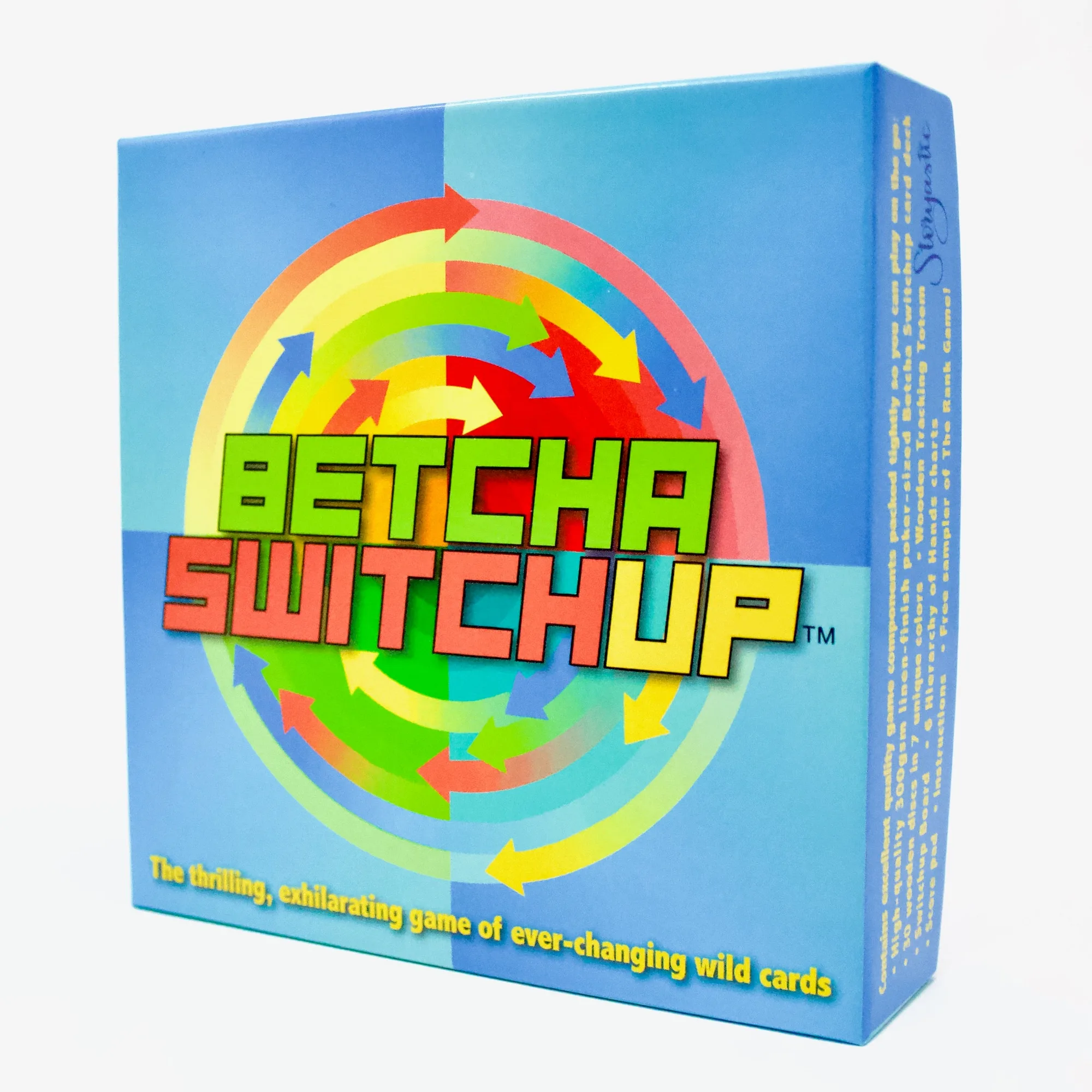
Betcha Switchup: The Thrilling, Exhilarating Game of Ever-Changing Wild Cards
-
Betcha Switchup: The Thrilling, Exhilarating Game of Ever-Changing Wild Cards: The deck contains six wild cards that make the next card's number wild for all four cards of that number. Knowing there are exactly six wild cards helps you anticipate switches and understand that multiple switches can happen in one hand.
Settling a Wild Card Dispute at the Table
When players disagree about whether a card is wild, follow these steps to resolve it quickly and keep the game moving.
- Pause and identify the last wild card dealt: Trace back to the most recent wild card. The number on the card immediately after it is the wild number. If multiple wild cards have been dealt, the most recent one takes precedence.
- Check the Hierarchy of Hands chart: Each player has their own chart. Use it to confirm how wild cards affect hand rankings—without showing your hand to others.
- Consult the instructions booklet: The full-color booklet covers the official rules. If the chart doesn't resolve the question, the booklet is the final authority.
- Agree on a house rule for next time: If a situation isn't covered, decide as a group and note it on the score pad. Consistency matters more than perfection.
Using the +1 Wafer Without Causing Chaos
Each player has a 'nuclear option': a +1 wafer that grants an extra card. But you only get two for the entire game, so timing is everything. Use one when a wild switch could complete your hand—or when you need to disrupt another player's apparent lead. Because the wafer is limited, players often debate whether it can be used after a switch. The instructions booklet should clarify the exact timing; if it's ambiguous, agree before the game starts.
Component Quality That Supports Smooth Play
- Betcha Switchup: The Thrilling, Exhilarating Game of Ever-Changing Wild Cards: Cards are 300gsm air-cushion linen-finish poker-sized, and the game includes 30 wooden disks in 7 colors, a magnetic tracking board, and a wooden tracking totem with magnetic base. Durable cards and a magnetic board reduce accidental disruptions, so you can focus on the wild card rules rather than fiddling with components.
- Betcha Switchup: The Thrilling, Exhilarating Game of Ever-Changing Wild Cards: The compact two-piece box has no wasted air space. Easy to store and carry, making it simple to bring to game night and keep the rules booklet handy.
Quick Tips to Prevent Wild Card Arguments
- Announce each wild card clearly: When you deal a wild card, say 'wild card' and place it visibly. Then announce the next card's number as the wild number.
- Keep the Hierarchy of Hands chart in front of you: Don't pass it around—each player has their own for a reason. Glance at it privately when needed.
- Use the score pad to note house rules: If you make a ruling that isn't in the booklet, write it down so future games are consistent.
- Agree on +1 wafer timing upfront: Decide before the first hand whether wafers can be played after a switch or only at the start of your turn.
When the Rules Aren't Clear
The supplied information doesn't detail every edge case—like what happens if two wild cards are dealt in a row or how the +1 wafer interacts with a switch. In those moments, the best approach is to make a group decision and move on. The goal is to keep the game fun and fast, not to litigate every possibility.
Betcha Switchup was created by former Walt Disney Imagineer Dana Brown and former Disney Studios producer Chip Brown to help families and friends tech less and talk and play more. That spirit is a good guide: when in doubt, choose the ruling that keeps everyone talking and laughing.