Quick answer
Most poster curl comes from moisture, heat, or being stored rolled too tightly. Flatten a curled poster by reverse-rolling it loosely around a wide tube, then pressing it flat under even weight for a few days. If the curl returns or the paper feels brittle, stop and reframe or store it flat instead of forcing it.
What curling looks like on a poster
Curl usually shows up as edges that lift away from the wall, a wavy surface inside a frame, or a tube-shaped memory that returns as soon as you unroll the print. On foil or coated posters, the curl can feel stiffer and may crease if you bend it against the grain. Check whether the curl is only at the edges or runs through the whole sheet; edge curl is easier to relax, while a full-tube memory needs longer flattening.
Why posters curl in the first place
Paper responds to humidity and heat by expanding and contracting. If a poster is stored in a damp basement, a hot car, or a room with direct sun, the fibers take on a set that pulls the edges inward. Tight rolling around a narrow tube makes that set stronger over time. Framing a curled poster without flattening it first traps the wave behind glass, which is how poster frame wrinkles and shadow lines appear.
How to flatten a poster safely
Work on a clean, hard surface covered with a soft cloth or clean kraft paper. Place the poster face down and roll it loosely around a wide cardboard tube at least 3 inches in diameter, with the artwork facing outward. Let it rest that way for 24 to 48 hours, then unroll and lay it flat. Cover it with a clean board and add even weight, such as books or a flat panel, for another two to three days. Avoid heat tools, irons, and direct sunlight, which can damage ink and coating.
- Reverse-roll loosely around a wide tube; never force a tight roll.
- Flatten under even weight on a hard, dry surface.
- Keep the poster out of humid rooms while it relaxes.
- Stop if the paper cracks, the ink lifts, or the curl snaps back harder.
Poster storage tips that prevent curl from returning
Store posters flat whenever possible, layered between clean paper or board in a dry, stable room. If you must roll, use an archival tube with a wide diameter and avoid compressing the roll with rubber bands. Keep stored posters away from exterior walls, floor vents, and direct sun. For posters you plan to display, flatten first, then frame with a mat or spacer so the paper is not pinched at the edges.
When to stop and choose another option
If a poster has been rolled tightly for years, the curl may be permanent. Forcing it flat can cause creases that show through the artwork. In that case, take it to a framer who can mount it properly, or display it in a frame with enough depth to hold a slight wave without damaging the edges. If the poster is a foil or specialty print, ask the framer to use conservation mounting rather than dry mounting, which can alter the finish.
Diagnosis: match the symptom to the fix
- Edges lift off the wall: Usually caused by humidity or a frame that is too shallow. Flatten under weight for 2-3 days, then reframe with a spacer so the edges are not pinched. If edges still lift after flattening, the frame depth is the problem.
- Wavy surface inside the frame: The poster was framed while still curled. Remove it, reverse-roll loosely for 24-48 hours, flatten under weight, then reframe. Never force a curled poster into a frame; the wave will return.
- Tube-shaped memory that snaps back: Long-term tight rolling has set the paper. Try the reverse-roll and weight method once. If the curl returns immediately, stop and consult a framer. Permanent curl is a framing job, not a DIY flattening job.
Product facts
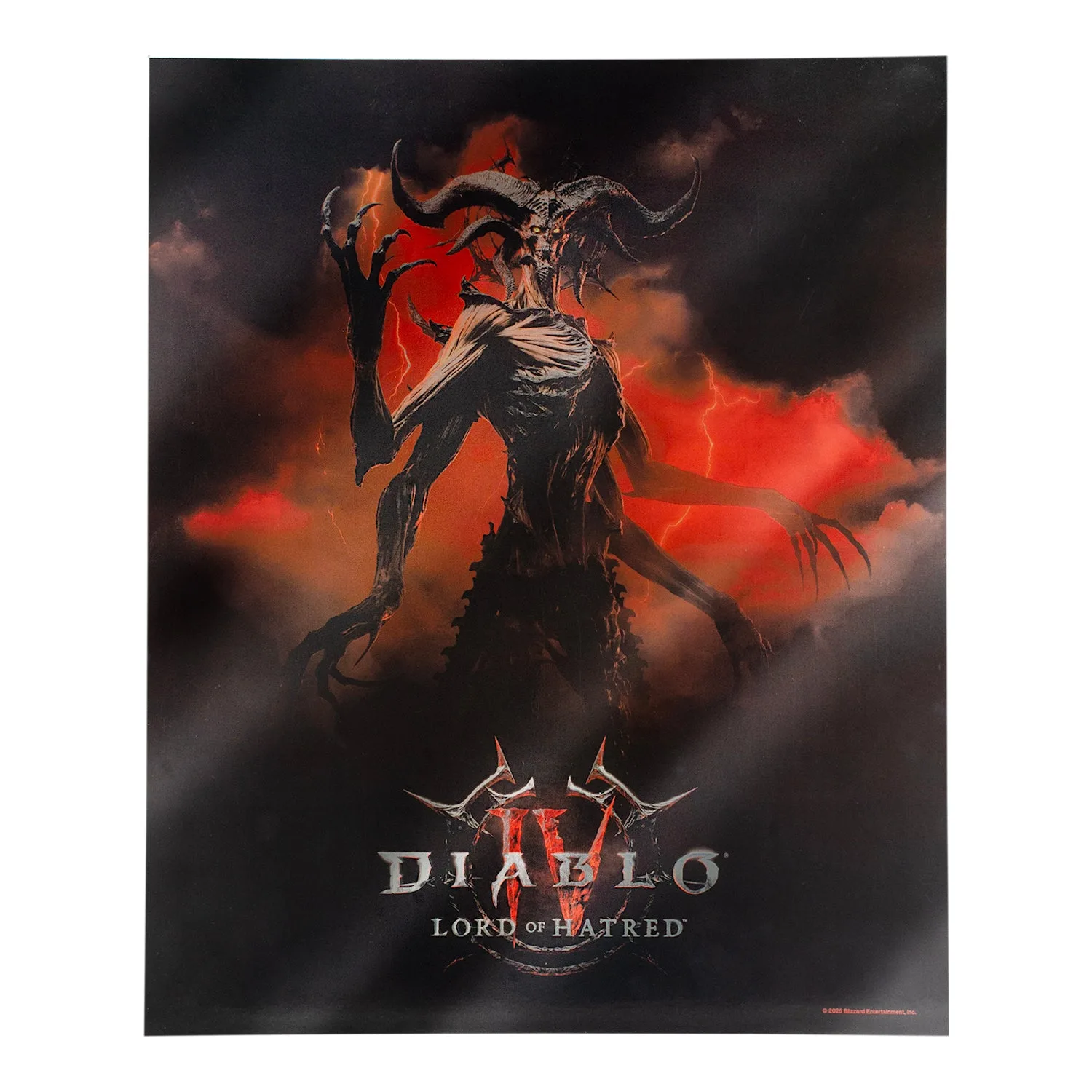
- Diablo IV: Lord of Hatred 11x13" Poster: Foil paper makes the artwork's highlights glint and stand out with a dimensional finish. Foil surfaces can crease more visibly than matte paper, so flatten this poster with gentle, even weight rather than heat or tight rolling.