Quick answer
Choose 6T for fast, rough demolition cuts, 10T for general wood and nail-embedded lumber, and 24T when you need a clean cut in metal. Buy the tooth count that matches the material first, then pick blade length for reach and access.
Why tooth count changes the cut more than blade length
Tooth count controls how the blade engages the material. Fewer, larger teeth clear chips fast and cut aggressively, which suits demolition where speed matters more than a clean edge. More, smaller teeth spread the cut across more edges, producing a smoother finish in metal but cutting slower in thick wood.
Blade length mainly affects reach and access, not cut quality. A long blade lets you cut through thick stock or reach into tight spaces, but it can flex more in hard materials. Match tooth count to the material first, then choose the shortest length that reaches the cut.
Where each tooth count earns its place
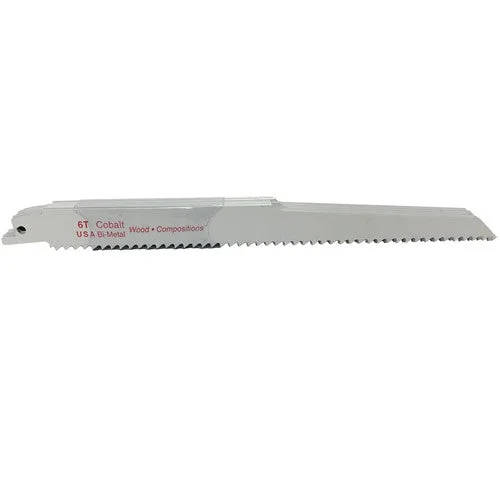
6T blades suit demolition and rough framing where you cut through wood, plastic, or mixed material and do not need a finished edge. The aggressive tooth pattern clears debris quickly, but it can leave a splintered edge and is a poor choice for thin metal.
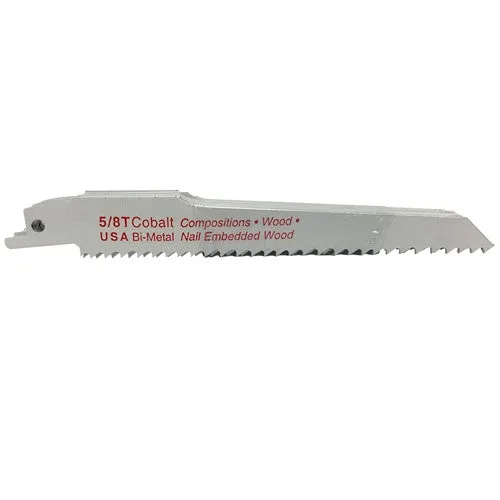
10T blades are the general-purpose choice for wood, plastic, metal, and nail-embedded lumber. They balance speed and finish, making them a sensible default when you do not know what the cut will encounter.
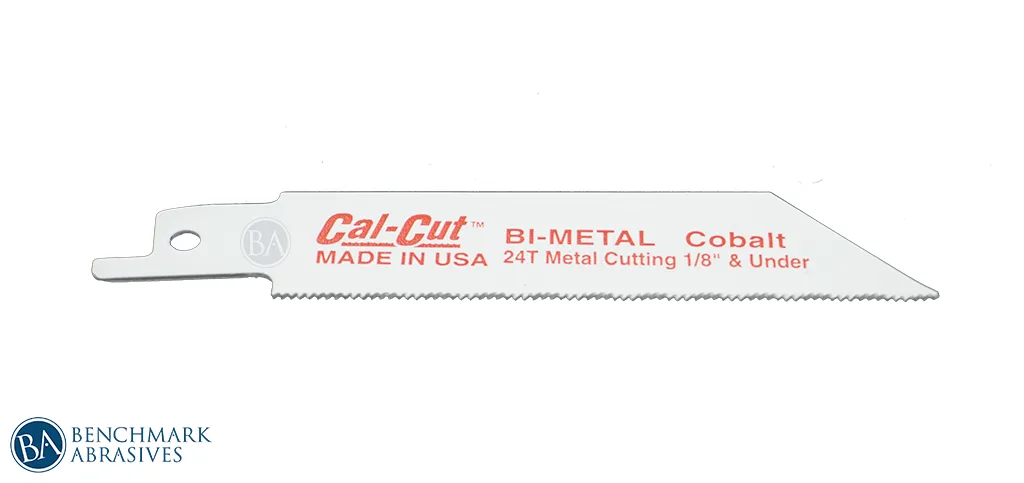
24T blades cut metal more cleanly because the higher tooth count spreads the load across more teeth. They are slower in thick wood and can clog if you force them through soft material.
The trade-off: speed versus finish
Every tooth count trades speed against finish. Lower tooth counts cut faster but rougher; higher tooth counts cut cleaner but slower and with more heat in the cut. If you need one blade for mixed scrap and demolition, accept a rougher edge. If you are cutting visible metal work, accept a slower cut for a cleaner result.
Recip blade tooth count decision rules
- Cutting demolition scrap or rough framing: Choose a 6T blade. Use it for fast, rough cuts in wood, plastic, or mixed material where a clean edge is not required. Keep a 6T blade in the saw bag for tear-out work.
- Cutting wood, plastic, or nail-embedded lumber: Choose a 10T blade. It balances speed and finish across mixed materials and handles nail-embedded lumber better than a fine-tooth blade. A 10T blade is the default when the material is unknown.
- Cutting metal that needs a clean edge: Choose a 24T blade. The higher tooth count produces a cleaner cut in metal, but expect a slower cut than a 6T or 10T blade. Use a 24T blade for visible metal work, not for thick wood.
- Choosing blade length: Pick the shortest blade that reaches the cut. Use a short blade for tight access and a long blade for thick stock or deep reach. Tooth count sets the finish; length sets the reach.
Product facts
-
6" x .050" x 10T Bi-Metal Reciprocating Blade - 10 Pack: 6" x .050" x 10T bi-metal reciprocating blade, 10 pack, made in USA. A 10T blade is a sensible general-purpose choice for wood, plastic, metal, and nail-embedded lumber when you need one blade to handle mixed materials.
6" x .050" x 10T Bi-Metal Reciprocating Blade - 10 Pack
-
4" x .035" x 24T Bi-Metal Reciprocating Blade - 10 Pack: 4" x .035" x 24T bi-metal reciprocating blade, 10 pack, made in USA. The 24T tooth count and short 4-inch length suit clean, controlled cuts in metal where access is tight.
4" x .035" x 24T Bi-Metal Reciprocating Blade - 10 Pack
-
9" x .050" x 6T Bi-Metal Reciprocating Blade - 10 Pack: 9" x .050" x 6T bi-metal reciprocating blade, 10 pack, made in USA. The 6T tooth count and 9-inch length give fast, aggressive cuts and long reach for demolition and rough framing.
Who this guide is for
Best for
- Contractors and DIYers choosing between 6T, 10T, and 24T bi-metal recip blades
- Anyone cutting mixed materials who needs a default blade choice
Not for
- Buyers who need a specific blade length or shank type not covered here
- Cutting specialist materials that require a different blade geometry