Big Knob or Classic Jigsaw: What's the Difference?
When you're choosing a first puzzle for your toddler, the handle style matters more than you might think. A big knob handle puzzle gives little fingers a clear place to grip, while a classic jigsaw piece requires a pincer grasp that many young toddlers are still developing.
The Mideer Big Knob Handle Wooden Puzzle is designed specifically for this stage. Its large wooden knobs are smooth, polished, and securely fastened, making them easy for small hands to grasp. The puzzle pieces themselves are thick and sturdy, and the entire set sits in a wooden tray that keeps everything organised.
What the Mideer Big Knob Handle Puzzle Offers
-
Big Knob Handle Wooden Baby Toddler Children Jigsaw Puzzle: The puzzle features large wooden knobs that are perfect for little hands, helping to develop fine motor skills and hand-eye coordination. The knobs give toddlers a clear target for their grip, which builds confidence before they attempt the more precise pincer grasp needed for classic jigsaw pieces.
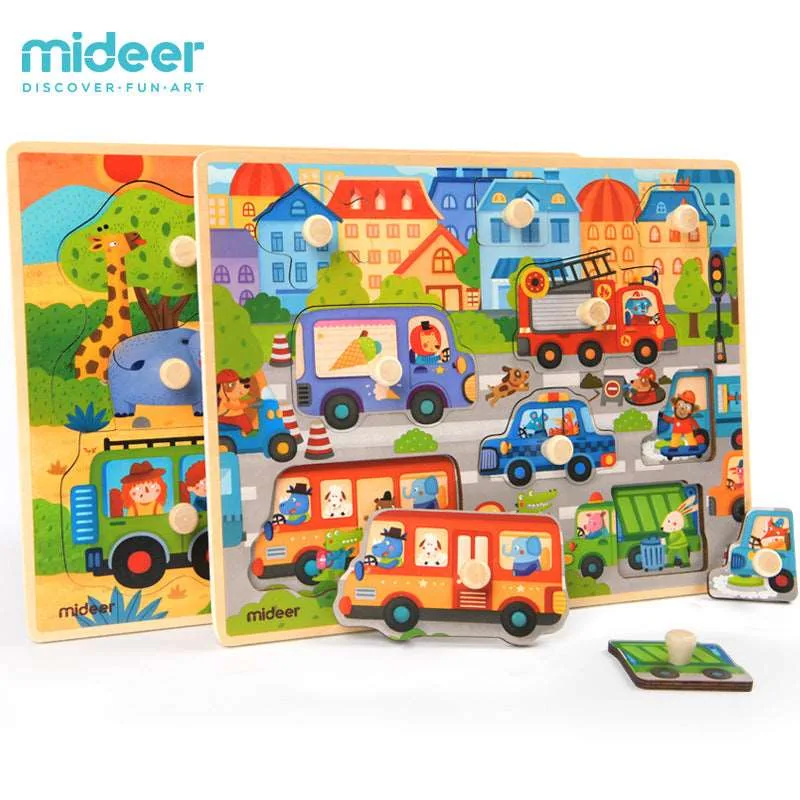
Big Knob Handle Wooden Baby Toddler Children Jigsaw Puzzle
-
Big Knob Handle Wooden Baby Toddler Children Jigsaw Puzzle: The big pieces are thick and sturdy and the perfect size for young kids to manipulate. Thick, sturdy pieces are easier for toddlers to pick up and less likely to bend or break, making the puzzle more durable for repeated use.
-
Big Knob Handle Wooden Baby Toddler Children Jigsaw Puzzle: Material: thickened cardboard paper, wooden knobs and tray. Puzzle size: 29*22.5*2 cm. The combination of cardboard pieces with a wooden tray and knobs keeps the puzzle lightweight yet stable. The tray prevents pieces from sliding around during play.
Big Knob Handle vs Classic Jigsaw: Key Trade-Offs
- Grip ease: Big knob puzzles have large, easy-to-grasp handles that require only a whole-hand grasp. Classic jigsaw pieces demand a pincer grip (thumb and forefinger), which some toddlers develop later.
- Piece count and complexity: The Mideer Big Knob Handle Puzzle includes 9 pieces in a tray, making it a low-complexity activity. Classic jigsaws often start at 4–12 pieces but may lack a tray, increasing difficulty.
- Skill progression: A big knob puzzle builds hand-eye coordination and observation skills without frustrating a beginner. Once a child masters the knob grip, they can move on to classic jigsaws that challenge their pincer grasp and spatial reasoning.
- Portability and storage: The wooden tray of the Mideer puzzle keeps all pieces contained, making it easy to play on a table or floor and store afterward. Classic jigsaws without trays require a flat surface and careful storage to avoid losing pieces.
When to Choose Each Type
If your toddler is just starting with puzzles—around the time they can pick up small objects but haven't yet mastered the pincer grip—a big knob handle puzzle is the better starting point. The Mideer puzzle's smooth knobs and thick pieces let them focus on matching shapes and colours without struggling to pick up the pieces.
Once your child can confidently grasp small objects and has completed several knob puzzles, a classic jigsaw introduces a new challenge. The absence of handles forces them to use the pincer grip, which strengthens finger muscles and prepares them for writing and other fine motor tasks.
Both styles have their place. Many parents start with a big knob puzzle and add a classic jigsaw once the child shows interest in more complex play. The Mideer puzzle comes in Animals and Traffic styles, so you can choose a theme that matches your child's interests and keep them engaged.