Quick answer
Mount the Bilton Shower Caddy on a wall plate at chest height, within easy reach of the shower but outside the direct spray, using the supplied wall plates and exposed screws. For a no-drill alternative, use a tension pole or adhesive hooks only if they are rated for the caddy's weight and your wall surface.
Why placement matters for a solid brass caddy
The Bilton is made from solid brass with a metal wire frame, so it is heavier than a plastic caddy and will not flex to fit awkward corners. That makes the wall position the single most important decision: get it right and the caddy stays put and dries quickly; get it wrong and you risk water pooling on the contents or the fixings working loose.
Blackened brass is a living finish that will develop a patina over time. Placing the caddy where water runs off it freely, rather than where water sits, helps keep that patina even and reduces the chance of white water spots.
When a no-drill option is tempting but not suitable
No-drill shower storage is convenient in rented homes or on tiles you do not want to drill, but the Bilton is designed for wall-mounting with wall plates and exposed screws. Adhesive hooks and suction cups rely on a smooth, non-porous surface and a weight limit; on textured tile, grout lines, or a damp wall they can fail suddenly.
If you cannot drill, choose a tension pole that wedges floor to ceiling and has a rated load above the caddy's weight, or use adhesive hooks only as a temporary measure and check them weekly. Do not hang the caddy from a single small hook; the wire frame needs support at two points to stay level.
Choosing the spot: height, reach and spray
Aim for the caddy's base at roughly chest height (about 1.2–1.4 m from the shower floor) so you can reach soap and a loofah without stretching or bending. Keep it at least 30 cm away from the showerhead's direct spray path; constant soaking keeps the caddy wet and speeds up spotting on the brass.
If you share the shower with someone much shorter or taller, pick a compromise height and test it before drilling. Mark the position with painter's tape and live with it for a day.
How to place and mount the Bilton Shower Caddy
- Check the wall surface and choose the fixing method: Run a hand over the tile: if it is glossy and flat, adhesive hooks may hold temporarily; if it is textured, matte, or has wide grout lines, plan to drill. For drilling, use the supplied wall plates and screws, and confirm you have a tile bit and wall plugs suitable for your wall (masonry or stud). Common mistake: drilling without checking for pipes or cables behind the tile. Use a detector before you drill.
- Mark the height and spacing with tape: Hold the caddy against the wall at your chosen height (base around chest height) and mark the two wall-plate screw holes with painter's tape. Check the marks with a spirit level; the caddy must sit level or contents will slide to one side. Checkpoint: step back and mime reaching for soap—if you have to lean or stretch, adjust the height before drilling.
- Drill and fit the wall plates: Drill at the marked points, insert wall plugs, and screw the wall plates firmly to the wall. Do not overtighten; brass screws can shear if forced. If you are using a no-drill method, fit the tension pole or adhesive hooks now and test them with a firm pull. Common mistake: using screws that are too short for the wall plug, which lets the plate work loose.
- Hang the caddy and check stability: Slot the caddy onto the wall plates and tighten any grub screws or fixings according to the instructions. Load it with your usual bottles and press down gently on one side to check for wobble. Checkpoint: if the caddy rocks, remove it and adjust the plates—do not pack it with cardboard or tape.
- Set a simple care routine for blackened brass: After showering, leave the caddy in place; the wire frame lets water drain. Once a week, wipe it with a soft damp cloth and dry with a microfibre cloth. Avoid abrasive cleaners, bleach, and acidic descalers, which strip the blackened finish. If white spots appear, use a diluted mild soap and dry immediately. Common mistake: leaving a wet loofah on the caddy for days—wring it out and hang it so air reaches both sides.
Product facts
-
Bilton Shower Caddy, Blackened Brass: Crafted from solid brass with a metal wire frame. Solid brass is heavier than plastic, so the wall fixings and placement height need to be chosen with care; the wire frame lets water drain away rather than pooling.
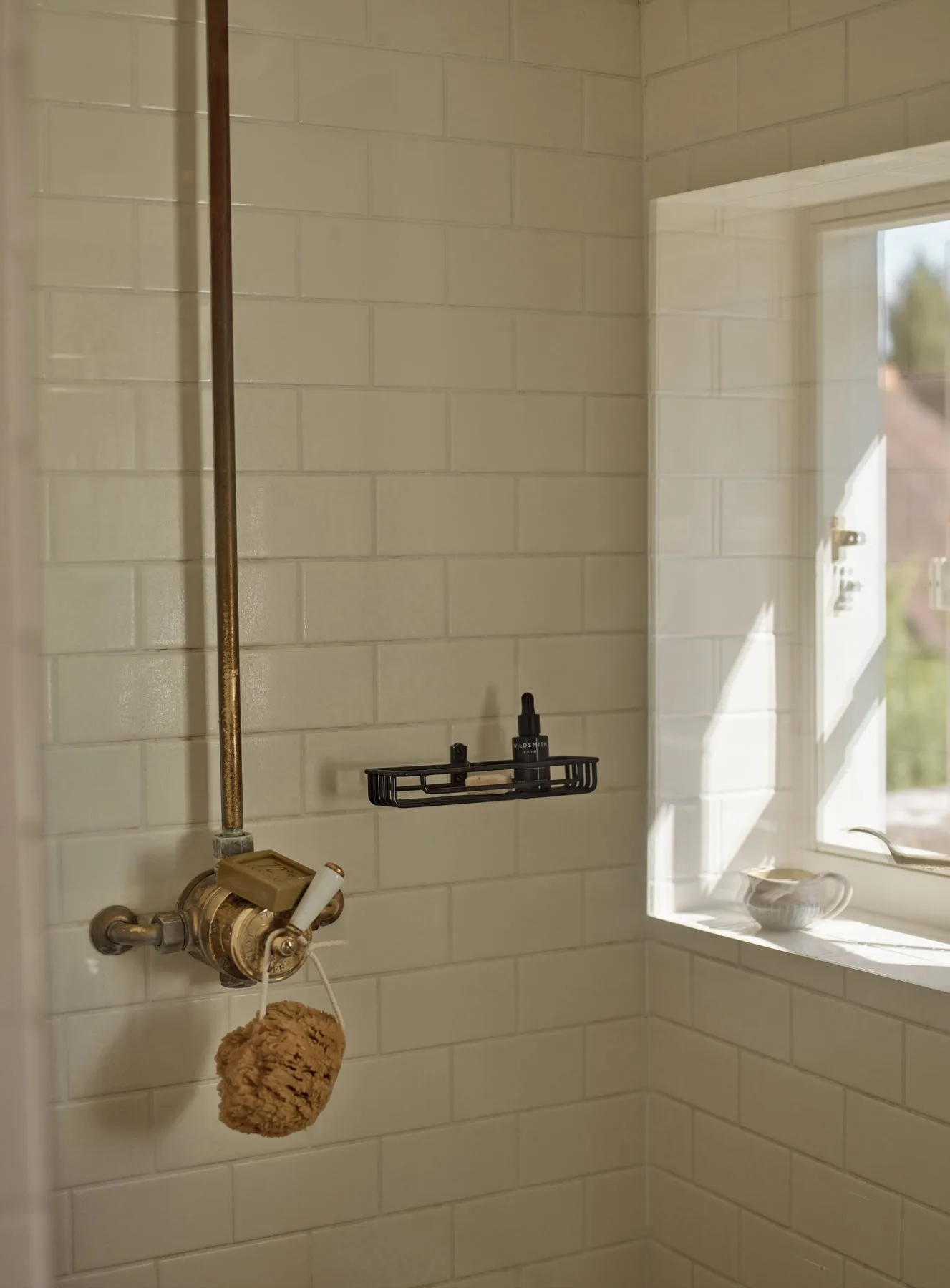
Bilton Shower Caddy, Blackened Brass
-
Bilton Shower Caddy, Blackened Brass: For wall-mounting with wall plates and exposed screws. The exposed screws are part of the look, so plan the position before drilling; moving it later leaves visible holes.