What actually changes when a wipe is biodegradable
The main difference between biodegradable eyelid wipes and standard wipes is the material and what happens after disposal. Standard wipes are often made from synthetic fibers that are not designed to break down. Biodegradable wipes are made from materials intended to degrade over time, which can reduce the long-term waste burden.
That difference matters most if you use lid wipes every day. A daily habit adds up, so the material and packaging choices become part of your routine, not just a one-off purchase.
What The Eye Doctor Biodegradable Eyelid Wipes confirm
-
The Eye Doctor Biodegradable Eyelid Wipes: Made from biodegradable materials. This is the core difference from standard wipes: the wipe itself is designed to break down rather than persist as synthetic waste.
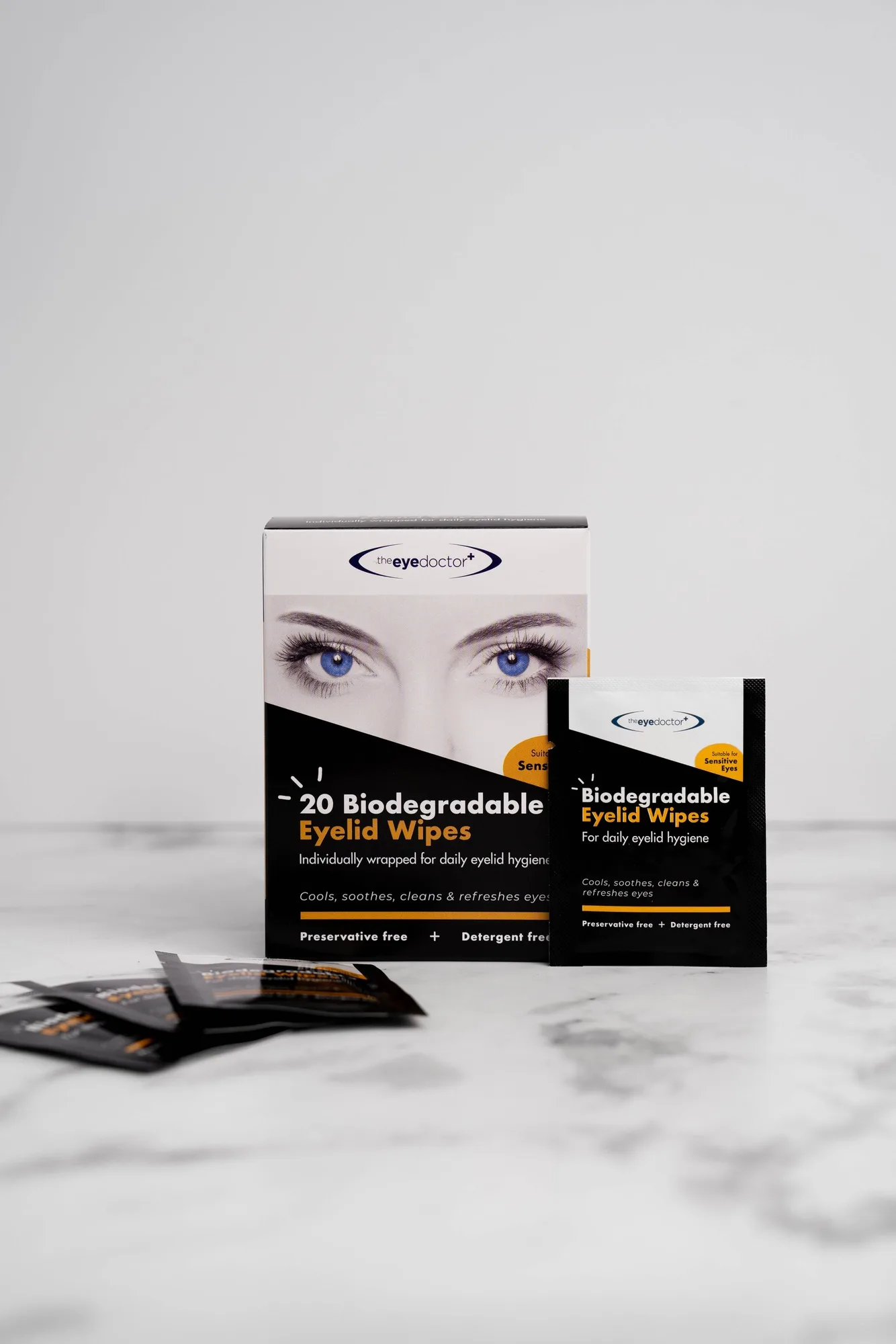
The Eye Doctor Biodegradable Eyelid Wipes
-
The Eye Doctor Biodegradable Eyelid Wipes: 20 individually wrapped eyelid wipes per pack. Individually wrapped wipes stay clean and portable, but the wrappers are a separate disposal consideration from the wipe itself.
-
The Eye Doctor Biodegradable Eyelid Wipes: Cleanses and refreshes eyelids, removing debris, allergens, and excess oils that can lead to irritation. The eco claim does not come at the expense of the basic job: removing the everyday buildup that can irritate lids.
-
The Eye Doctor Biodegradable Eyelid Wipes: Designed for mild to moderate dry eyes, blepharitis, or keeping allergens and hay fever at bay. This tells you where the wipe fits: routine lid hygiene, not a treatment for a diagnosed eye condition.
Biodegradable vs standard: a practical comparison
- Material: Biodegradable wipes use materials intended to degrade; standard wipes typically use synthetic fibers not designed to break down. The Eye Doctor wipes are confirmed as made from biodegradable materials.
- Disposal: The wipe material is the main eco difference. Check local disposal guidance for both the wipe and its individual wrapper, since packaging rules vary.
- Packaging: The Eye Doctor wipes are individually wrapped, which keeps each wipe clean and makes them easy to carry. That convenience means more packaging per wipe than a multi-wipe tub.
- Cleaning job: Both types aim to remove debris, allergens, and excess oils from the lid margin. The Eye Doctor wipes are confirmed to cleanse and refresh eyelids for mild to moderate dry eyes, blepharitis, and allergen exposure.
- Sensitive eyes: The supplied information does not list ingredients or fragrance status, so it does not confirm suitability for every sensitive-eye situation. If you react easily, check the full label before daily use.
Where the eco difference stops
Biodegradable describes the wipe material. It does not automatically mean the individual wrapper is compostable, and the supplied information does not confirm compostability for either component. If compostable eyelid wipes are your goal, treat that as a separate question to verify on the packaging.
The supplied record also does not include dimensions, ingredient list, or instructions for how long to use each wipe. Those are decision limits, not flaws: they simply mean you should read the packet before relying on the wipe for a specific eye condition.
How to choose between the two
- Choose biodegradable if daily disposal bothers you: A biodegradable wipe reduces the long-term waste from a habit you repeat every day. The Eye Doctor option pairs that with a low catalog price of USD 7.52.
- Choose standard if you need a specific ingredient list: If you already have a standard wipe whose full ingredients and instructions you trust, switching only for the eco label may not be worth it. The supplied record for The Eye Doctor wipes does not list ingredients.
- Choose individually wrapped for travel: The 20 individually wrapped wipes suit a bag, desk, or trip. If you mainly clean lids at home, a larger multi-wipe format may create less packaging.
- Check the wrapper disposal rules where you live: Eyelid wipe disposal rules differ by area. The wipe being biodegradable does not settle how the wrapper should be thrown away.