Quick Answer
Both biodegradable and bamboo cotton buds are greener than plastic, but the best choice depends on your priorities: bamboo offers a sturdier stick, while biodegradable buds emphasize compostable packaging and a lower price per bud.
What Makes a Cotton Swab Eco-Friendly?
Traditional plastic cotton buds contribute to ocean pollution and take decades to break down. Eco-friendly alternatives replace the plastic stick with natural materials like bamboo or other plant-based fibers, and the cotton tips are often organic and free from dyes or synthetics.
When comparing biodegradable and bamboo options, look at three factors: the stick material, the cotton tip, and the packaging. Both types avoid plastic, but they differ in durability, price, and how they break down at the end of their life.
Durability and Feel
Bamboo sticks are naturally strong and resistant to snapping, making them feel similar to traditional plastic buds. Biodegradable buds made from other plant materials may be more prone to bending or breaking under pressure, so they require a gentler touch.
If you use cotton buds for detailed tasks like makeup application or cleaning small crevices, a sturdier stick can be more reliable. For light personal care or crafts, a softer stick may be perfectly adequate.
Packaging and End-of-Life
Packaging matters as much as the bud itself. Some biodegradable cotton buds come in cardboard boxes that are fully compostable, including the packaging. Others use recyclable cardboard, which is still better than plastic but requires proper recycling.
Check whether the packaging is compostable or just recyclable. Compostable packaging can go into a home compost bin, while recyclable cardboard needs to be placed in the recycling stream. This difference affects how much waste you actually divert from landfill.
How to Choose
- Sturdiness vs. Gentleness: If you need a firm stick for precise tasks, choose bamboo buds that resist snapping. If you prefer a softer feel and are gentle with your swabs, biodegradable buds work fine. Test a small pack first to see which feel you prefer.
- Packaging: Compostable vs. Recyclable: If you compost at home, choose buds with compostable packaging. If you rely on curbside recycling, recyclable cardboard is still a good plastic-free option. Check your local composting and recycling rules before deciding.
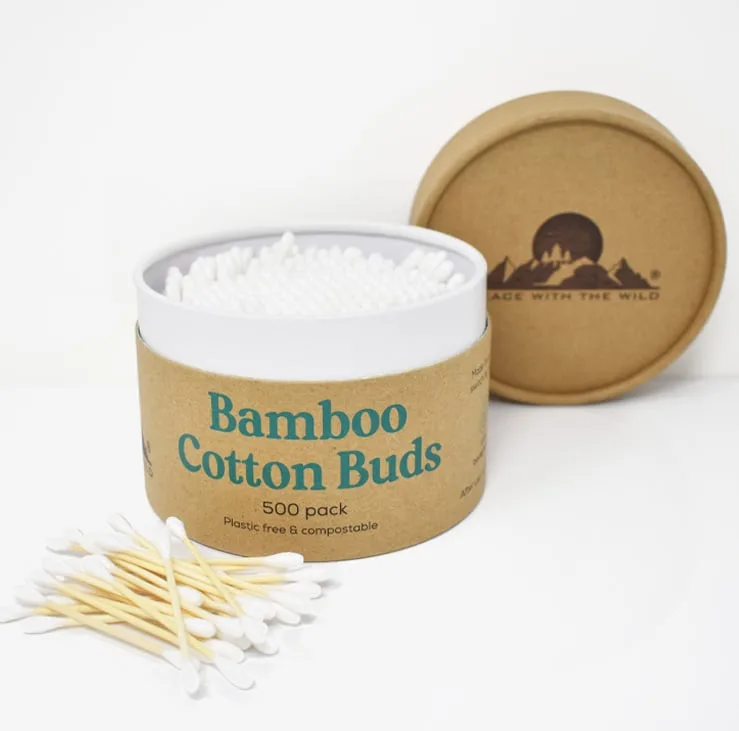
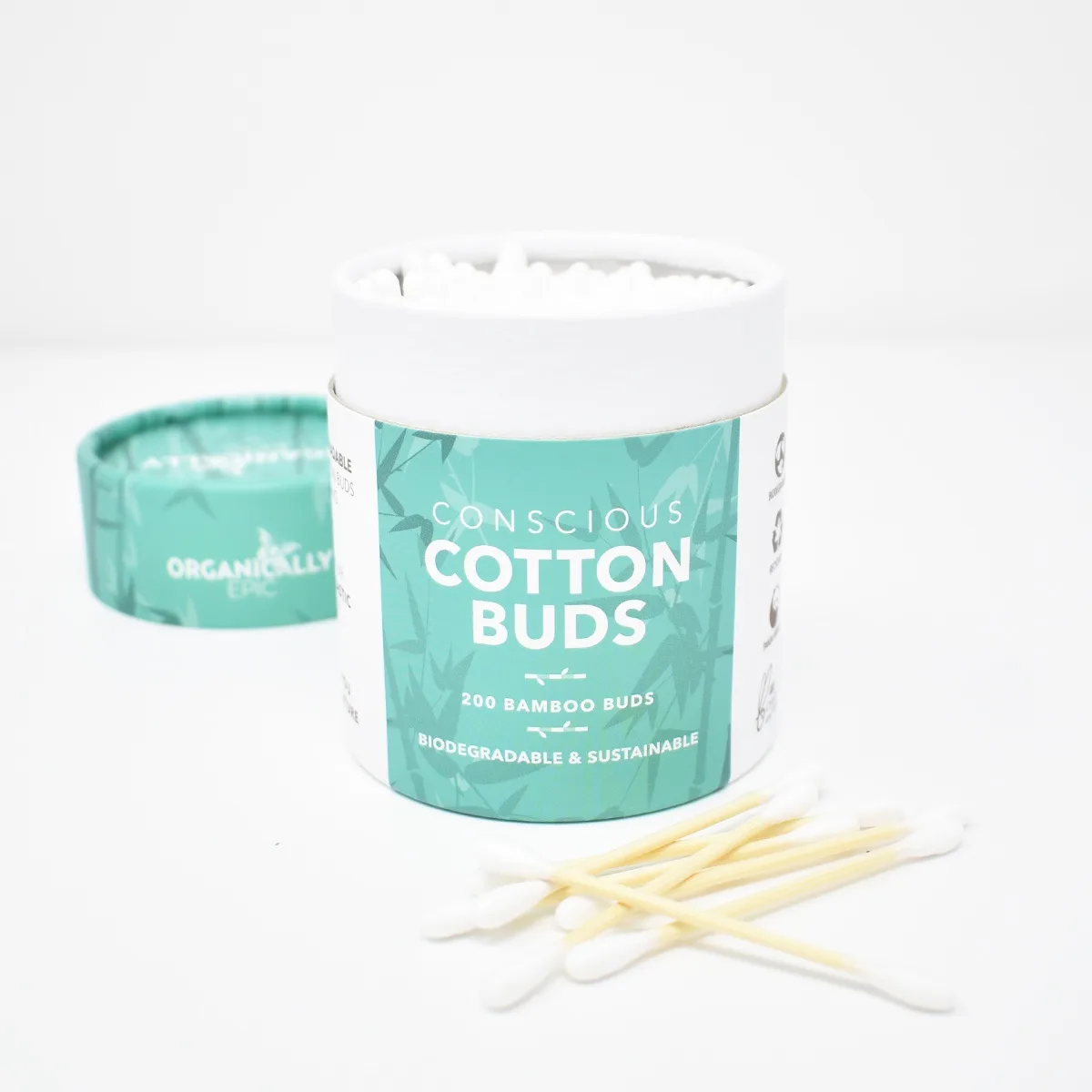
- Price per Bud: The 500-count bamboo pack at $4.75 costs less per bud than the 200-count biodegradable box at $3.02. If budget is a priority, the larger pack offers better value. Consider how many buds you use per week to estimate which size suits you.
Product Facts
-
500 Bamboo Cotton Buds: Plastic-free bamboo cotton buds made with natural bamboo sticks and soft cotton tips, packaged in recyclable cardboard, supplied in a 500-count pack. The large count and sturdy bamboo sticks make them a durable, low-waste choice for daily use and crafts.
500 Bamboo Cotton Buds
-
Biodegradable Cotton Buds – Box 200: A box of 200 organic cotton bathroom swabs made from sustainable bamboo and organic cotton, with compostable packaging and no dyes, synthetics, or plastics. The compostable packaging and organic materials make this a strong option if you want to minimize waste and avoid synthetic materials entirely.
Biodegradable Cotton Buds – Box 200
Who Should Choose Which?
Best For
- Bamboo cotton buds: frequent users who need durability and value, such as makeup artists or crafters.
- Biodegradable cotton buds: eco-conscious consumers who prioritize compostable packaging and organic materials, and who use buds gently.
Not For
- Bamboo cotton buds: those who want fully compostable packaging and prefer a softer stick.
- Biodegradable cotton buds: those who need a very sturdy stick for heavy-duty tasks or who want the lowest cost per bud.