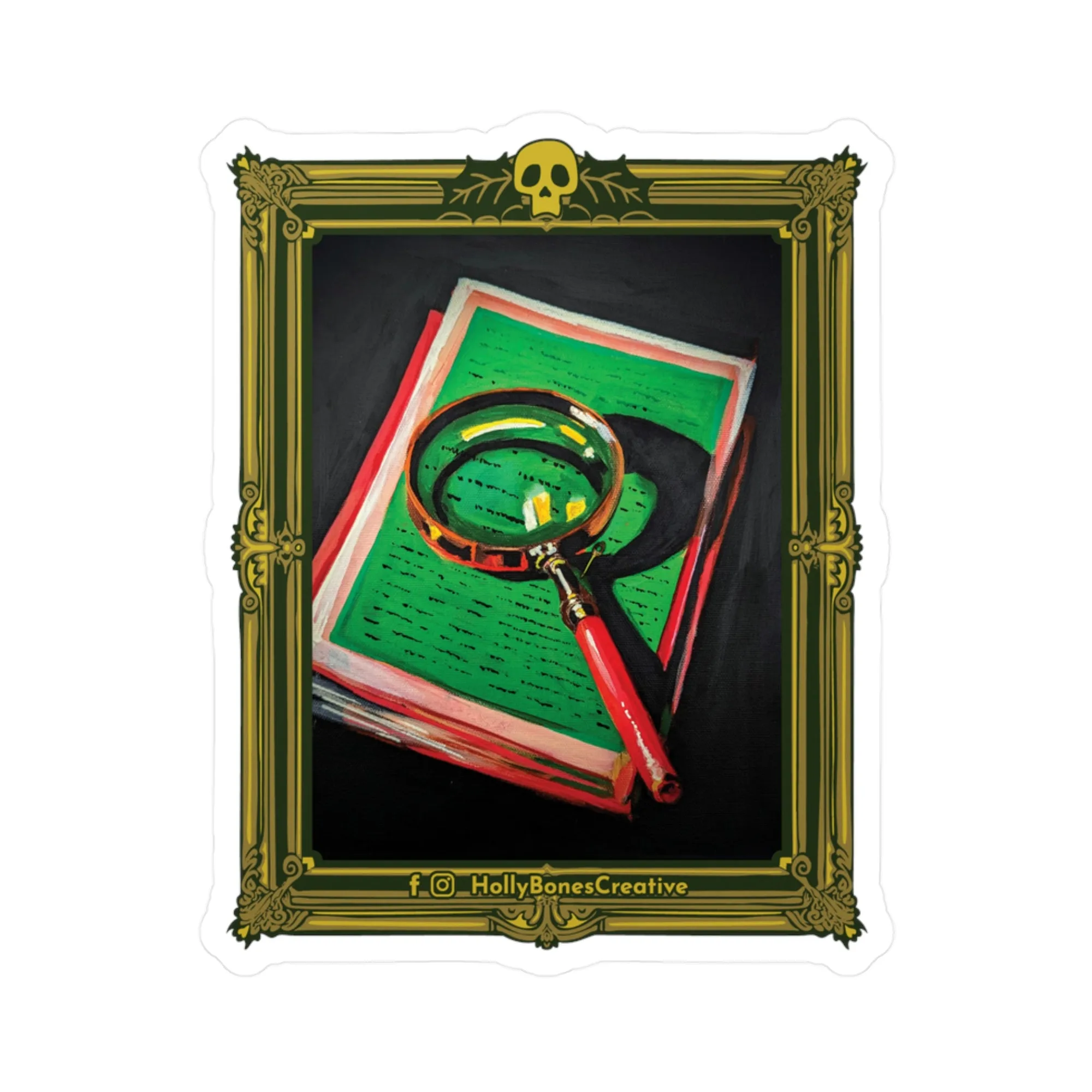
Start with the surface, not the sticker
The Bird Nerd Sticker is printed on durable vinyl with a soft satin finish and is described as scratch resistant and water resistant. That makes it a reasonable candidate for everyday gear, but the surface you choose still decides how well it sits and how long it looks good. Before you commit, check that the area is smooth, clean and dry, and that it is a spot you are happy to keep covered.
The catalog lists a 4" size, so measure your intended spot against that figure rather than guessing. A laptop lid, a water bottle panel and a field notebook cover all offer different amounts of flat space, and the sticker will look best where it is not forced around a tight curve.
What the catalog confirms about the Bird Nerd Sticker
-
Bird Nerd Sticker: Printed on durable vinyl with a soft satin finish, described as scratch resistant and water resistant. These are the material claims that make the sticker plausible for laptops, bottles and field gear, so you can match it to how you actually use your things.

Bird Nerd Sticker
-
Bird Nerd Sticker: Size: 4". Use this as your measuring reference when checking whether a lid, bottle panel or notebook cover has enough flat space.
-
Bird Nerd Sticker: Available in Orange, Blue, Brown and Cream. Color choice affects contrast against your gear, which matters more on a dark laptop lid or a clear bottle than on a plain notebook.
Placement ideas for laptops and water bottles
These are starting points, not rules. The right spot is the one that keeps the sticker flat and keeps you from covering something you need.
- Laptop lid, off-center: A single sticker placed away from the hinge and edges avoids the curves where vinyl is most likely to lift. Keep it clear of any logo or vent area you want visible.
- Water bottle, on a flat panel: Choose the flattest section of the bottle rather than wrapping the sticker around a tight curve. The catalog describes the sticker as water resistant, but that is not the same as a guarantee for every bottle finish or dishwasher cycle.
- Field notebook or guide cover: A notebook cover gives you a flat, low-risk surface and makes the sticker easy to spot in a bag. This is a good choice if you are unsure about committing to a laptop lid.
- Binocular or camera hard case: A hard case offers a broad flat area. Check that the surface is not textured or oily before applying, since the catalog does not supply surface-preparation instructions.
A simple application sequence
The catalog does not include official application instructions, so treat this as a sensible general routine rather than a manufacturer procedure. The goal is a clean, dry, flat surface and a sticker that goes down once, without repeated lifting.
- Measure the spot: Compare your intended area against the listed 4" size and leave a little margin around the edges.
- Clean and dry the surface: Wipe away dust and oils, then let the surface dry fully before applying. A dry surface is the most basic condition for vinyl to sit flat.
- Position before pressing: Set the sticker down lightly, check the alignment, then press from the center outward to push out air.
- Leave it alone: Give the adhesive time to settle before you stuff the item into a bag or start scrubbing it. The catalog does not specify a cure time, so avoid inventing one.
Color choices and what they change
The sticker comes in Orange, Blue, Brown and Cream. On a dark laptop lid, Cream and Orange will read more clearly, while Blue and Brown sit closer to the surface. On a light bottle or notebook, Brown and Blue offer more contrast. This is a visual decision rather than a performance one, but it is the choice most likely to make you happy or annoyed with the result.
If you plan to move the sticker later, remember that the catalog does not describe the adhesive as removable or repositionable. Treat placement as a long-term decision and pick a spot you are comfortable keeping.
Honest limits before you stick
The supplied record confirms the material, finish, resistance claims, size and colors. It does not include care instructions, surface-preparation steps, dishwasher or washing guidance, or a statement about residue on removal. That means you should not assume the sticker is safe for every bottle finish, every laptop coating or every washing routine.
A practical approach is to start on a lower-risk surface such as a notebook cover or hard case, see how the sticker behaves in your routine, and only then commit to a laptop lid or a bottle you use daily. That keeps the decision reversible in spirit even if the adhesive is not.