Quick answer
Choose a black and white grain elevator print when your rustic room already has warm wood, stone, or leather textures and you want a quiet, graphic focal point rather than another layer of color. Skip it if the wall is small, the light is dim, or the decor leans colorful farmhouse.
Why black and white works with rustic textures
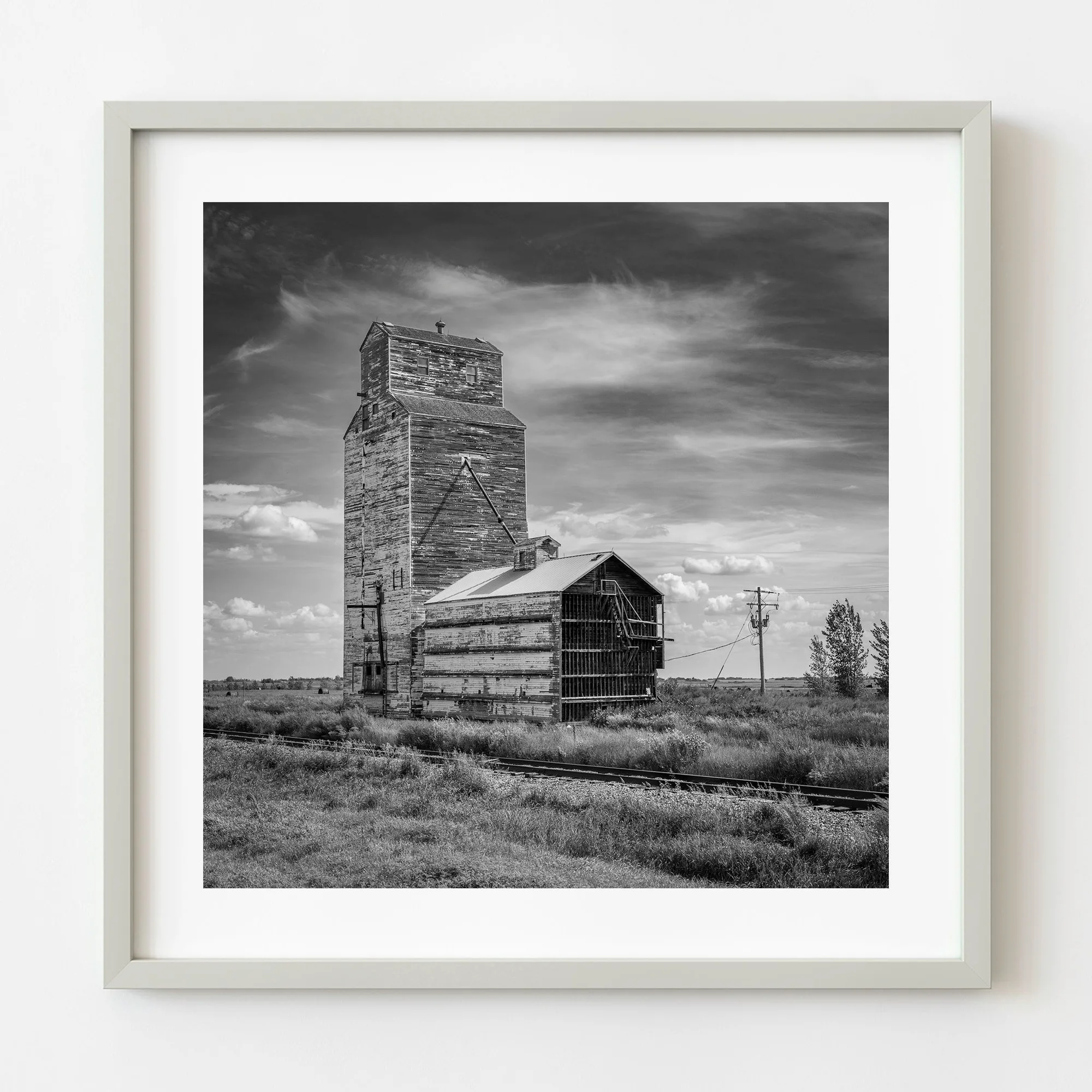
Rustic decor usually brings its own color story: honey-toned beams, aged brick, wool, and leather. A black and white prairie photograph removes color competition, so the grain elevator's silhouette and the prairie horizon do the work. That is why prairie black and white photography often reads as calm rather than busy in a textured room.
The trade-off is contrast. A black and white print can look flat against a pale wall with no texture, and it can disappear on a dark wall without enough light. Rustic rooms tend to have both texture and uneven light, so placement matters more than the frame style.
When the print becomes the problem
If the room feels cluttered after hanging the print, the cause is usually scale or repetition, not the subject. A large elevator print on a wall that already has signs, antlers, and shelves competes for attention. In that case, move it to a simpler wall or choose a smaller dimension.
Another common symptom is a print that looks gray and lifeless. That usually means the wall receives little natural light or the glass reflects a window. Correct it by relocating the piece or adding a picture light; if neither is possible, a different medium or a brighter room is the better choice.
The point to stop or choose another option
Stop considering this print if your rustic scheme depends on saturated color, if the available wall is under roughly two feet wide, or if you cannot control glare from a nearby window. In those cases, a color landscape or a smaller abstract piece will serve the room better.
Also stop if you want the elevator to read as a working, contemporary structure. This is an abandoned building print decor choice, and its appeal is the quiet ruin, not modern agriculture.
Diagnose your rustic room before you hang it
- Symptom: the wall feels busy: Count the existing objects on the same wall. If there are more than three distinct decor items, the grain elevator print will add to the noise. Clear the wall to one or two companions, or choose a smaller dimension. A single large print needs breathing room; edit the wall before you edit the frame.
- Likely cause: the print looks flat or gray: Check the light at the same time of day you will view the print. If the wall is more than six feet from a window and has no lamp, the blacks will read as muddy. Add a picture light or move the print to a brighter wall. Black and white photography depends on directional light; test the wall at night before committing.
- Corrective action: scale feels wrong: Measure the wall width and the furniture below it. The print should span roughly half to two-thirds of the furniture width. If the elevator print falls outside that range, adjust the dimension option rather than forcing the fit. Scale is the most common reason a good print looks wrong; measure before ordering.
- Stop point: choose another option: If the room is colorful, the wall is narrow, or glare cannot be controlled, stop here. A color Saskatchewan landscape print or a smaller piece will suit the space without fighting it. The right print for a rustic room is the one that does not need an apology.
Product facts
-
Canada Saskatchewan Prairie Abandoned Wooden Grain Elevator Railroad Black And White: The image shows an abandoned wooden grain elevator standing alone on the Saskatchewan prairie, rendered in black and white. The solitary silhouette gives a rustic room a strong focal point without adding color, and the black and white treatment keeps it from competing with warm wood tones.
Canada Saskatchewan Prairie Abandoned Wooden Grain Elevator Railroad Black And White