Two experimental filters, two different looks
REFLECTLENS® offers two creative filters that both add an artistic twist to your images, but they work in completely different ways. The Black Hole is a handheld filter that creates a tunnel-vision effect with motion blur around the edges, while the Star Dust is a screw-on diffusion filter that softens highlights and adds a dreamy glow. This comparison helps you choose the one that matches your shooting style and subject.
How each filter changes your image
-
Black Hole: The Black Hole takes your shots to the next level with its iconic “tunnel vision” effect. It isolates your subject, adds motion-like blur around the edges, and instantly turns any frame into a standout. If you want a dramatic, attention-grabbing look that draws the eye to the center, this handheld filter delivers that effect in-camera without post-processing.
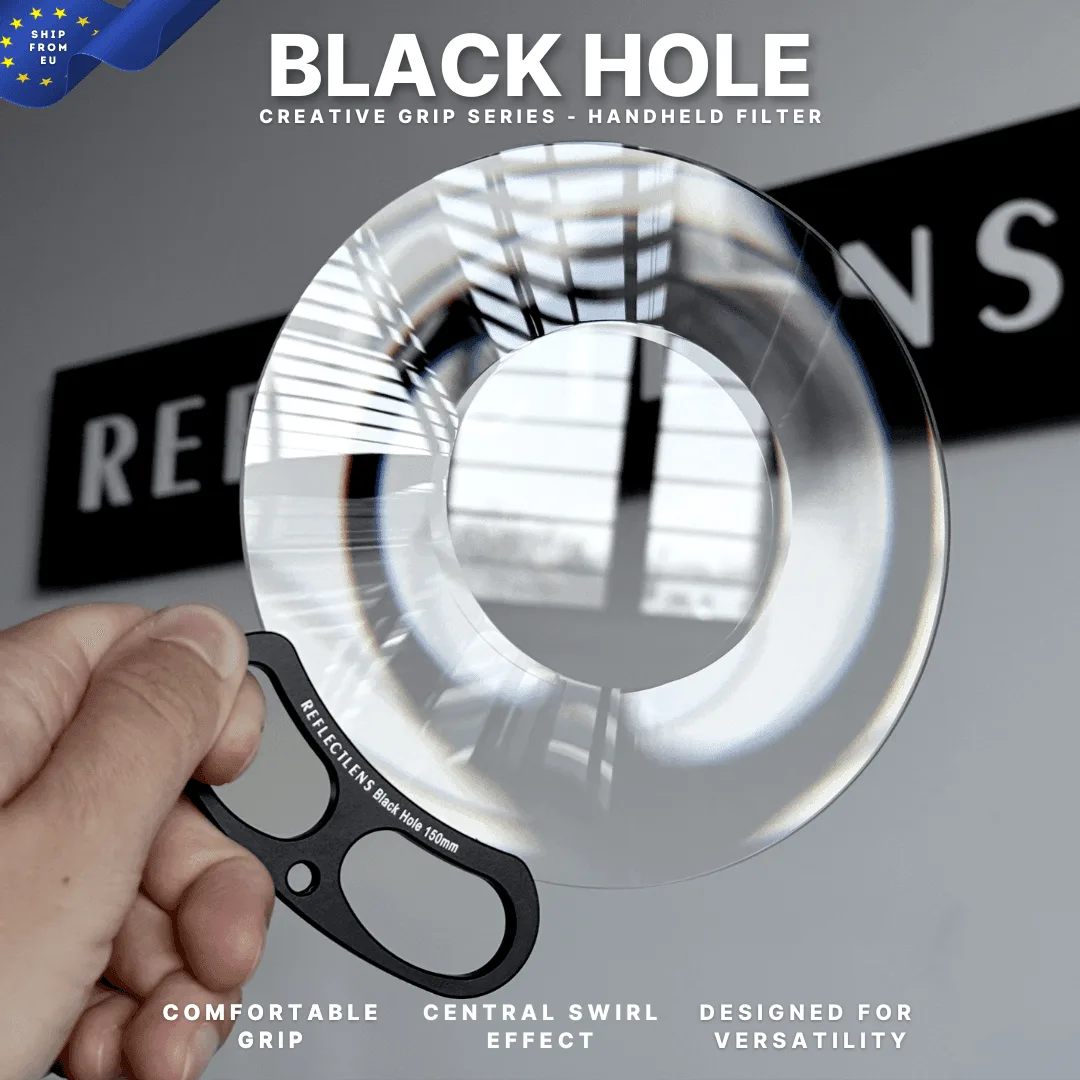
Black Hole
-
Star Dust: STAR DUST is a diffusion-style filter crafted with a unique textured glass surface that gently softens highlights and smooths details — creating a dreamy, ethereal atmosphere in-camera. For a softer, more romantic mood that flatters portraits and nature scenes, this threaded filter adds subtle magic without overpowering the subject.

Star Dust
Key differences at a glance
The core difference is how each filter attaches and what it does to your frame.
- Attachment method: Black Hole is a handheld filter (100mm or 150mm) that you hold in front of the lens — no threads required, works with all lenses and brands. Star Dust screws onto the filter thread of your lens and is available in sizes from 49mm to 95mm.
- Visual effect: Black Hole creates a tunnel-vision effect with swirling motion-like blur around the edges, isolating the center. Star Dust diffuses highlights and softens details for a dreamy, cinematic glow.
- Best use cases: Black Hole suits portraits, fashion, concerts, music videos, and moody landscapes where you want a bold, edgy frame. Star Dust is ideal for portraits, nature, and stylized scenes that call for a soft, ethereal atmosphere.
- Control and flexibility: Black Hole allows you to move the filter for custom, fluid effects — you can shift it during a shot for different blur patterns. Star Dust gives a consistent diffusion across the entire frame once mounted.
What each filter does not claim to do
The supplied information does not confirm that either filter works with specific lens brands beyond the general compatibility note. Black Hole is confirmed to work with all lenses and brands, while Star Dust is compatible with all camera brands. Neither filter adds color shifts or requires batteries. The Black Hole's effect depends on how you hold and move it, so results vary with technique. Star Dust's diffusion is fixed by the glass texture and cannot be adjusted mid-shot.
Which one should you choose?
If you want a handheld, flexible tool that creates a dramatic tunnel-vision effect with motion blur — perfect for concerts, fashion, or edgy portraits — the Black Hole is your filter. If you prefer a screw-on filter that consistently softens your entire frame for dreamy portraits or nature shots, the Star Dust is the better fit. Both are unique creative tools, but they serve different visual goals.