Quick answer
Choose black seed oil if your main concern is excess sebum, small pimples, or itchy, irritated skin. Choose jojoba oil if you want a fast-absorbing facial oil that closely matches your skin's own sebum and helps rebalance oily or blemish-prone skin.
How the two oils differ in feel and function
Black seed oil is rich in oleic acid (omega 9), which supports its soothing effect on irritated, itchy skin. It also has purifying and anti-inflammatory properties that help prevent small pimples and regulate excess sebum, making it a strong fit for teenage or blemish-prone skin.
Jojoba oil has a composition close to human sebum, so it penetrates quickly and works as a rebalancing oil. Its essential fatty acids, including omega 9 and oleic acid, help reduce the appearance of blemishes and other imperfections. The key difference is jojoba's affinity with the skin: it absorbs fast and feels lighter, while black seed oil is more targeted at purifying and calming.
When black seed oil is the better trade-off
Black seed oil makes sense when your skin is both oily and easily irritated. Its purifying action aims at excess sebum and small pimples, while its soothing side addresses itching and discomfort. The trade-off is that it is not the lightest option for simple hydration; if your skin is calm and balanced, a simpler rebalancing oil may be enough.
When jojoba oil is the better trade-off
Jojoba oil is the easier daily choice for most skin types because it mimics sebum and absorbs quickly without a heavy residue. It helps rebalance oily skin and reduce the look of blemishes, which makes it a practical jojoba oil for face routines. The trade-off is that it does not offer the same purifying and anti-inflammatory focus as black seed oil, so very reactive or itchy skin may need the latter.
Trade-offs at a glance
- Primary skin concern: If you want to regulate excess sebum, prevent small pimples, and soothe itching, pick black seed oil. If you want a fast-absorbing oil that rebalances oily or blemish-prone skin, pick jojoba oil. Match the oil to your main concern, not to the trend.
- Skin feel and absorption: Jojoba oil penetrates quickly thanks to its sebum-like composition. Black seed oil is richer in oleic acid and feels more emollient, so it suits nighttime or localized use better than a light daytime layer. If you dislike heavy films, start with jojoba.
- Sensitivity and irritation: Black seed oil is the better fit when itching and irritation accompany breakouts. Jojoba oil is gentler for simple rebalancing but does not have the same anti-inflammatory focus. For reactive, itchy skin, black seed oil is the more targeted option.
Product facts
-
Black seed oil: Endowed with purifying and anti-inflammatory properties, used to prevent small pimples and cleanse the epidermis. This makes it a targeted choice for oily, blemish-prone skin that also feels irritated.
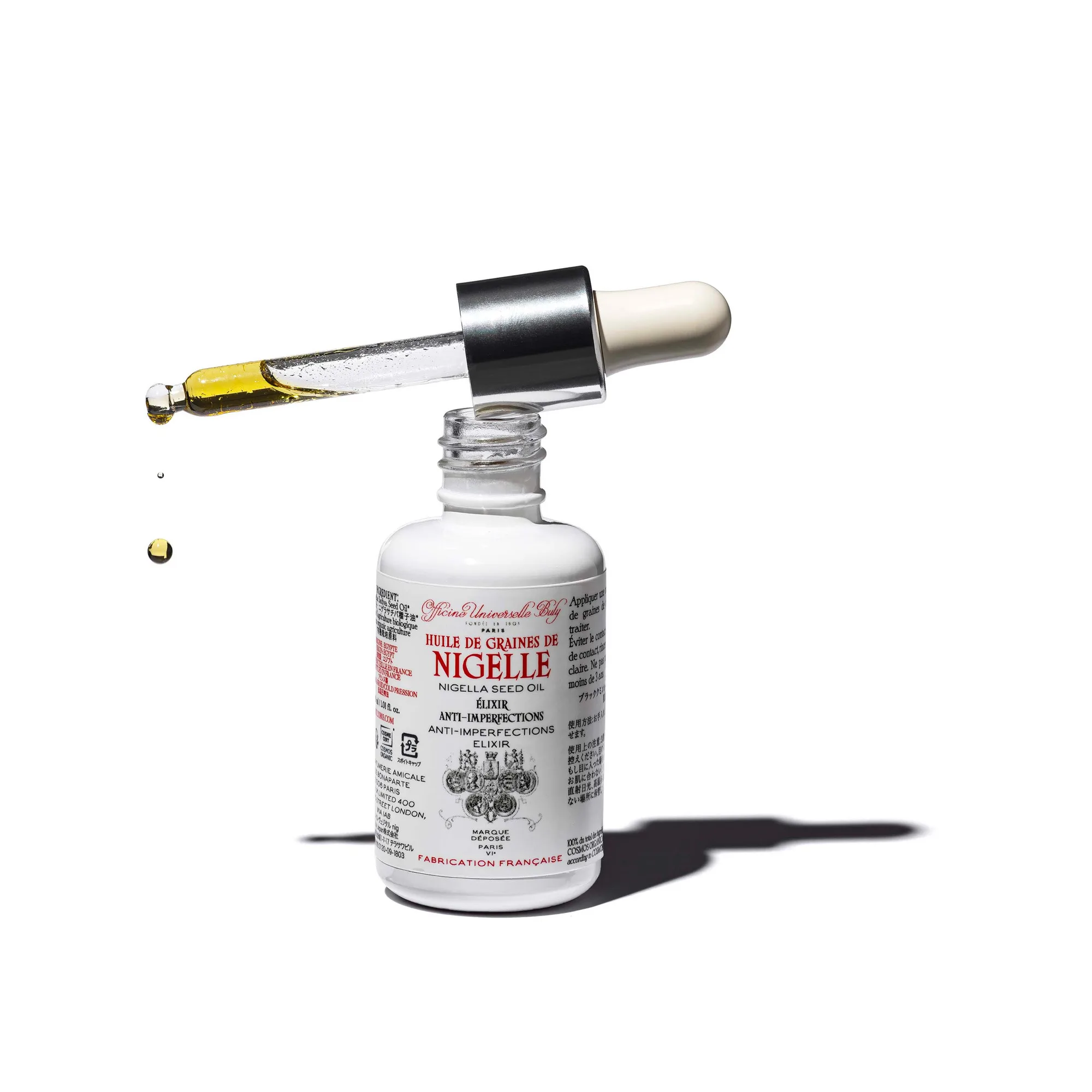
Black seed oil
-
Huile de Graines de Jojoba: Jojoba oil has a composition close to human sebum and penetrates the epidermis quickly. That means it absorbs fast and helps rebalance the skin without a greasy finish.
Huile de Graines de Jojoba
Which oil fits your routine?
Best for
- Oily or combination skin with small pimples and excess shine
- Teenage skin or skin prone to itching and irritation
- Anyone who wants a purifying, anti-inflammatory carrier oil
Not for
- Very dry skin that needs a richer, more occlusive oil
- Anyone looking for the lightest possible daily facial oil
- Skin that is already calm and balanced and does not need purifying action