Start with how the BlockOut® Cot Tent 1P manages air and moisture
Condensation in a single cot tent is usually a balance problem: the moisture you exhale and the moisture in the air have to go somewhere. The BlockOut® Cot Tent 1P gives you two tools for that balance. The inner tent uses ultra-fine No-See-Um mesh, which is designed to maximize airflow while keeping insects out. Over the top, the flysheet is rated to a 3000mm waterhead, so it is built to keep rain out.
Those two jobs pull in opposite directions. The mesh wants air moving through; the flysheet wants water out. When the flysheet is closed down in still, humid conditions, the moisture from your breath and damp gear has fewer places to go. That is the setup to watch if you are trying to stop condensation in a cot tent.
The product details that matter for moisture
-
BlockOut® Cot Tent 1P: The inner tent is made from ultra-fine No-See-Um mesh, which maximizes airflow while keeping insects out. Mesh is your main ventilation path. If airflow through the inner is restricted, moisture has less chance to escape before it condenses.
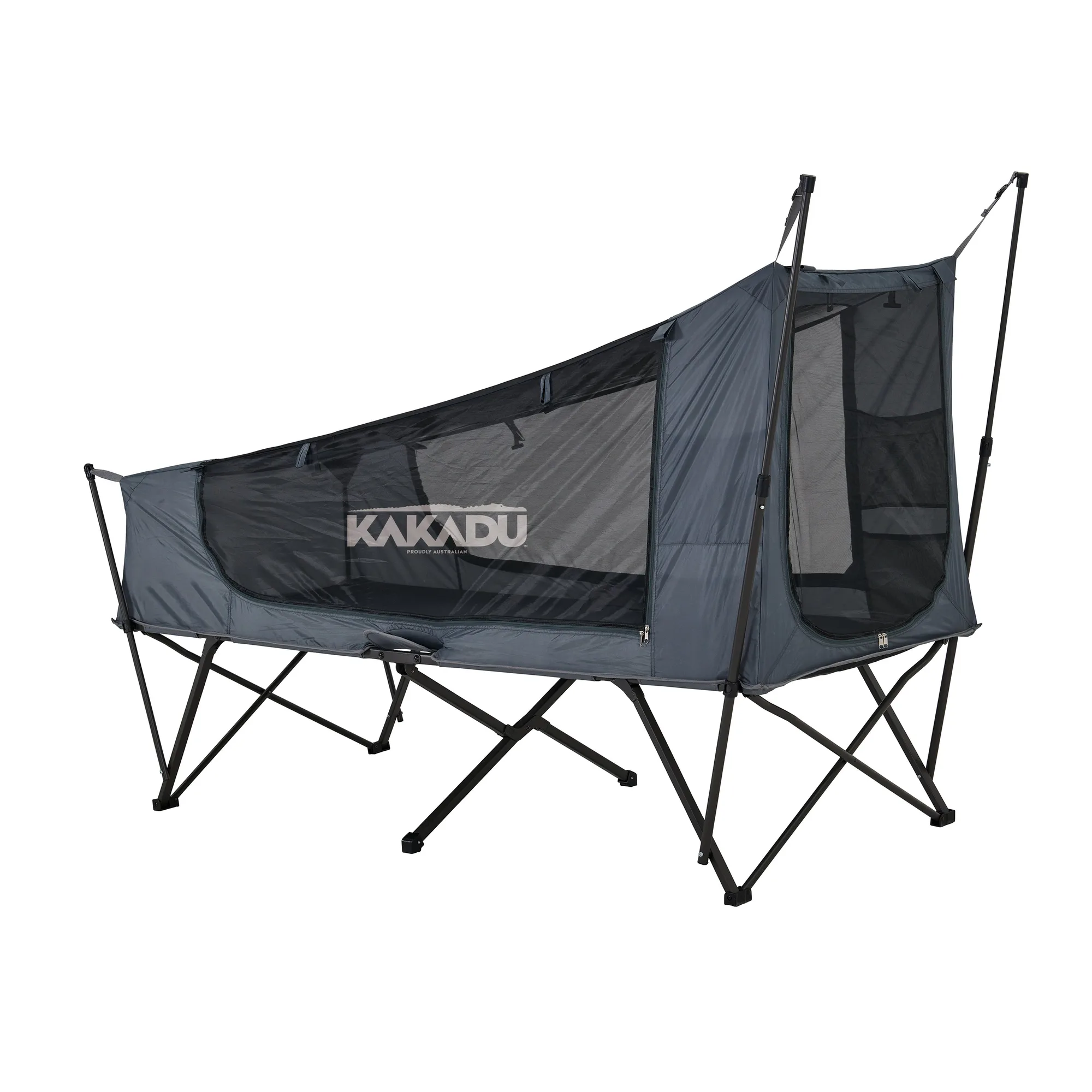
BlockOut® Cot Tent 1P
-
BlockOut® Cot Tent 1P: The flysheet is rated to a 3000mm waterhead, so it is designed to keep you dry in wet conditions. A rain-rated flysheet is there to block water from outside. It does not by itself remove moisture produced inside the tent.
-
BlockOut® Cot Tent 1P: BlockOut® technology reduces internal temperatures by up to 20 degrees and blocks 95% of light. A cooler, darker interior can change how you use the tent, but the supplied information does not show that BlockOut® fabric removes moisture or prevents condensation.
Why BlockOut® fabric can make moisture more noticeable
BlockOut® is a light- and heat-management feature, not a breathability rating. The supplied information says it blocks 95% of light and can reduce internal temperatures by up to 20 degrees. What it does not supply is a moisture-vapor transmission figure or a condensation test. So you cannot assume the BlockOut® layer will dry the air inside the tent.
In practice, that means the darker, cooler interior can mask a damp sleeping bag until you touch it. If you notice moisture on the inner surfaces or a clammy bag in the morning, treat airflow as the first thing to check rather than assuming the fabric has failed.
Cot tent airflow tips that fit this tent's design
- Use the mesh, not just the flysheet: The No-See-Um inner is the ventilated layer. Keep it exposed where conditions allow so air can move through rather than being sealed behind the fly.
- Pitch with the awning poles in mind: The tent includes two awning poles for multiple front and side awning configurations. Those configurations change how much of the tent is open to the air, so they are worth using deliberately on humid nights.
- Keep damp gear out of the sleeping zone: Wet clothing, towels or a damp bag inside the tent add moisture to the air. The supplied information does not include a separate gear store, so plan where those items go before you settle in.
- Watch still, humid nights: Condensation is most likely when the air is still and humid. On those nights, prioritize airflow over full enclosure, and check the inner surfaces before you pack away.
What the supplied information does not settle
The product record does not include a condensation rating, a breathability specification for the flysheet, or a manufacturer procedure for drying the tent. It also does not confirm whether the flysheet can be fully removed or how the awning poles should be configured for ventilation. Those are real limits on how specific this advice can be.
If condensation persists after you have opened up airflow and kept damp gear out, the next step is to check with Kakadu directly rather than improvising a fix that the supplied documentation does not support.