Two shades, one lamp: what changes?
The Blossi Wall Ø23 PRO is available with a clear glass shade or an opal shade. Both versions share the same Nordic gold metal finish and low-voltage LED board, but the shade material changes how the lamp looks and feels in a room. This comparison focuses on those differences so you can choose the version that suits your space.
What the catalog confirms about the Blossi Wall Ø23 PRO
-
Blossi Wall Ø23 Lampe, PRO, nordic gold / clear: The low-voltage version has a replaceable LED card that ensures flicker-free light and meets the latest EU restrictions. Both shade options share the same advanced LED technology, so the choice between clear and opal is purely about appearance and light distribution.
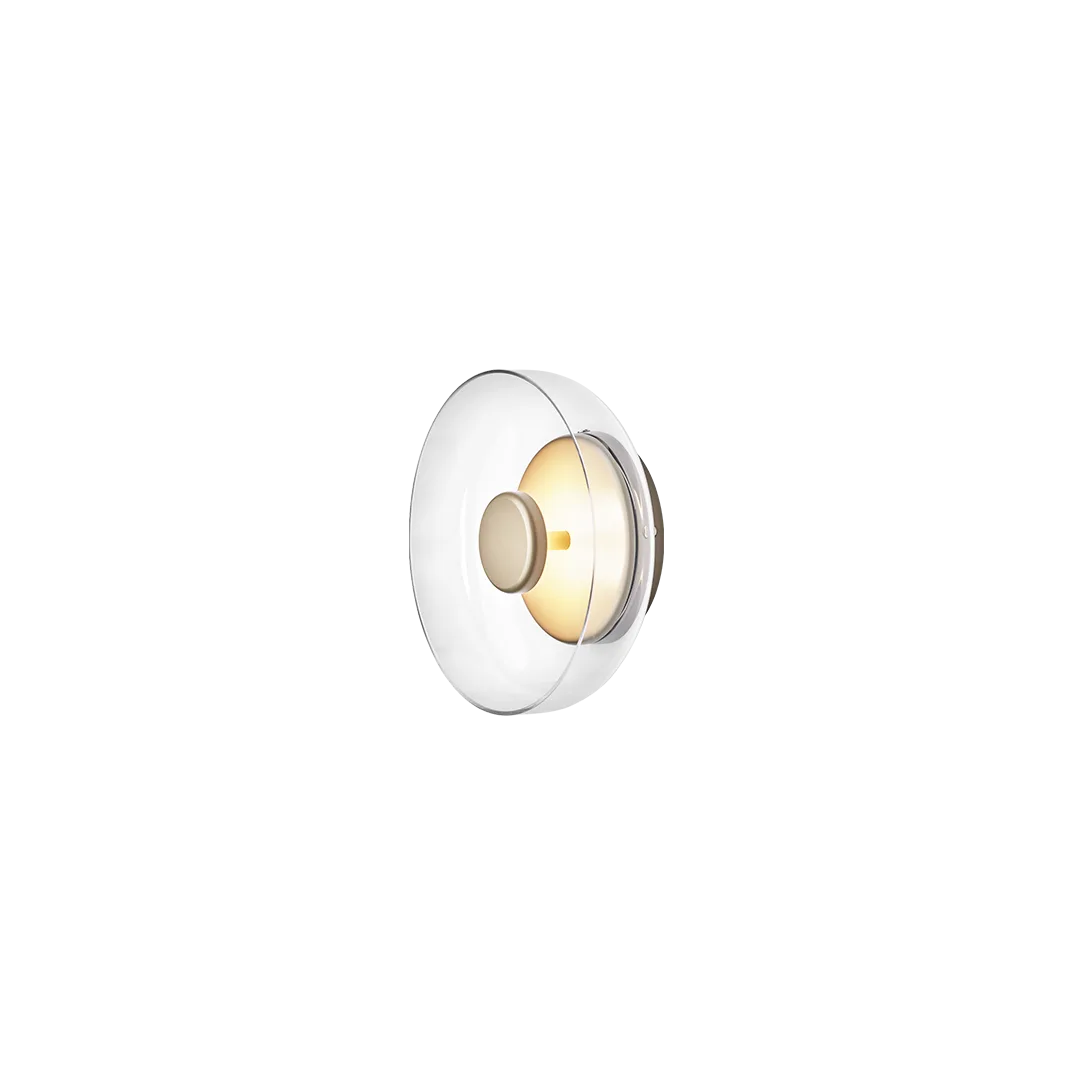
Blossi Wall Ø23 Lampe, PRO, nordic gold / clear
-
Blossi Wall Ø23 Lampe, PRO, nordic gold / clear: Light is reflected in the clear glass shade and spreads a soft, golden glow. The clear glass version creates a visible filament effect and a warm, ambient glow that highlights the Nordic gold finish.
-
Blossi Wall Ø23 Lampe, PRO, nordic gold / clear: The new low-voltage models are more compatible with common dimming systems. Both versions benefit from improved dimming compatibility, making them suitable for rooms where adjustable light levels are desired.
Clear glass vs opal: what changes in the room
- Light appearance: Clear glass lets you see the LED board and creates a visible, warm glow with a golden tint. The opal shade diffuses the light, producing a more even, glare-free wash.
- Visual presence: The clear glass version shows the internal structure and the Nordic gold finish clearly. The opal shade softens the silhouette, making the lamp appear as a warm, glowing disc.
- Room mood: Clear glass suits settings where you want a decorative, slightly industrial look with visible light source. Opal works better for ambient, shadow-free lighting in hallways or reading nooks.
How to decide between the two
If you want the lamp to be a visible design element that shows its inner glow and metallic finish, choose the clear glass version. If you prefer a softer, more uniform light that blends into the wall, the opal shade is the better option.
Both versions are low-voltage, dimmer-compatible, and share the same replaceable LED card. The shade is the only variable that changes the light quality and visual character.
What the supplied information does not confirm
The catalog does not specify exact light output (lumens or color temperature) for either shade, nor does it provide recommended room sizes or mounting heights. These decisions depend on your personal preference and the existing lighting in your space.