Quick answer
Buy blue agate tumbled stones if you want an inexpensive, calming-feeling stone in a strong blue color and you accept that the blue comes from dye. Skip them if you want a completely untreated mineral, if the stone will sit in water or direct sun for long periods, or if you need a uniform set, because dyed agate varies in tone and each piece is cut differently. Pair them with a grounding stone such as rough smokey quartz or Kambaba jasper for a simple two-stone setup.
What "dyed" means for blue agate
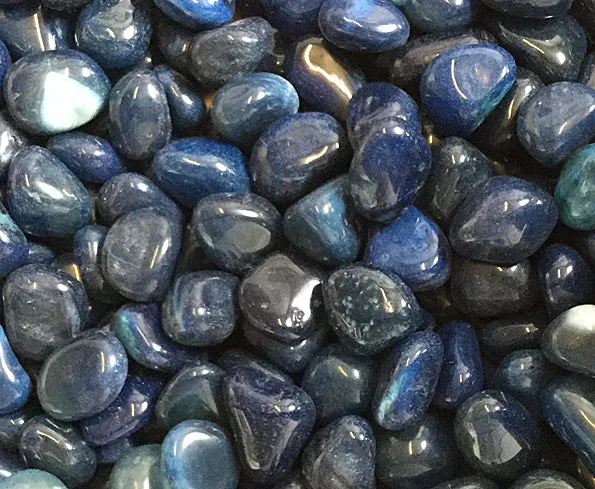
Agate is a banded form of chalcedony that takes dye well, which is why so many blue agate tumbled stones on the market are dyed rather than naturally blue. The dye sits in the stone's porous layers, so the color is real and stable in normal handling but not permanent in the way a natural mineral color is. Treat the blue as a finish, not a geological feature.
In practice this matters in three places: water, sunlight, and abrasion. A dyed stone left soaking, displayed on a sunny windowsill for months, or rubbed against keys in a pocket will fade faster than an untreated one. For a dish on a shelf or a stone you hold during the day, the color holds up well.
- Keep dyed stones out of long water soaks and ultrasonic cleaners.
- Rotate display pieces away from direct sun if you want the blue to stay saturated.
- Store separately from harder stones so the surface does not scratch and dull.
How to judge a blue agate tumbled stone before you buy
Tumbled stones are sold by the piece, and listings rarely show the exact stone you will receive. That is normal for this category, not a red flag, but it does mean you should read the listing for size and any variance note rather than assuming the photo is literal. A listing that states an approximate size and warns that color tone and shape vary is being honest about what arrives.
Check three things: the stated size in centimeters, whether the listing says dyed or natural, and whether the finish is described as polished or matte. Size is the most practical number, because a 2 cm stone and a 3 cm stone feel completely different in the hand and fit different holders, pouches, and grids.
Blue agate uses in daily routines
Blue agate is traditionally described as a calming, protective stone, and it is often recommended for children because of that soothing reputation. Whether or not you work with crystal meanings, the practical uses are straightforward: a pocket stone for stressful commutes, a desk stone within reach during long work sessions, or a small piece in a bedside dish as part of a wind-down routine.
Because the stone is small and inexpensive, blue agate works well as a first tumbled stone or as a gift for someone curious about crystals. The calming association is the reason most people choose blue over other agate colors, so if that is your goal, pick a stone you actually like holding. A stone that feels good in the hand gets used; one that sits in a drawer does not.
Pairings that make sense
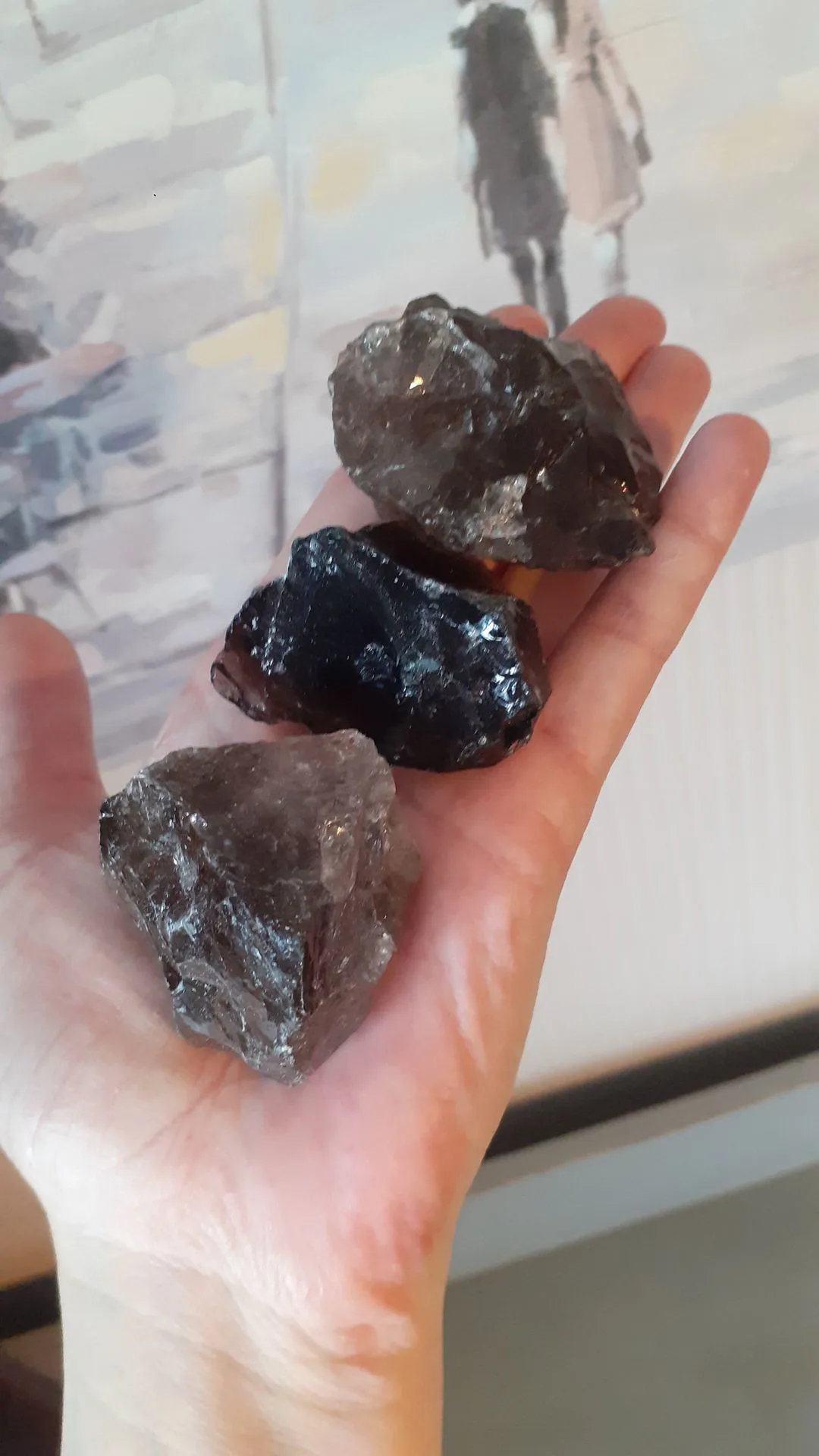
Pair blue agate with a grounding stone when you want a calmer, more settled feel. Rough smokey quartz is a natural partner: it is described as grounding and stabilizing, and its dark, unpolished look contrasts clearly with a smooth blue tumbled stone, so the two read as a deliberate pair rather than a random handful.
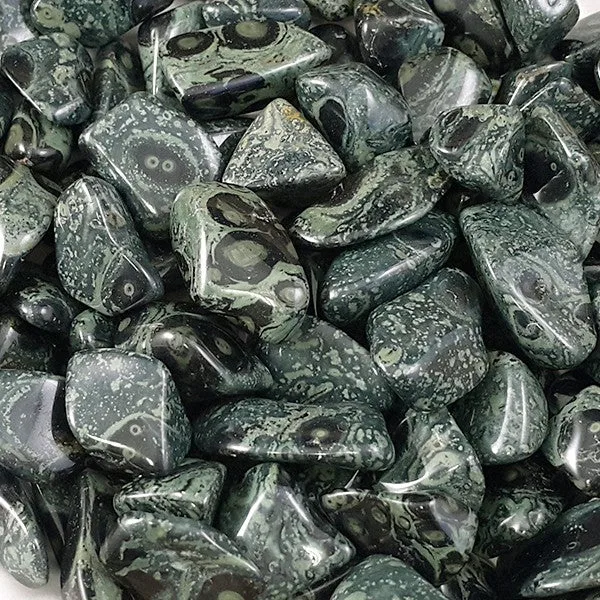
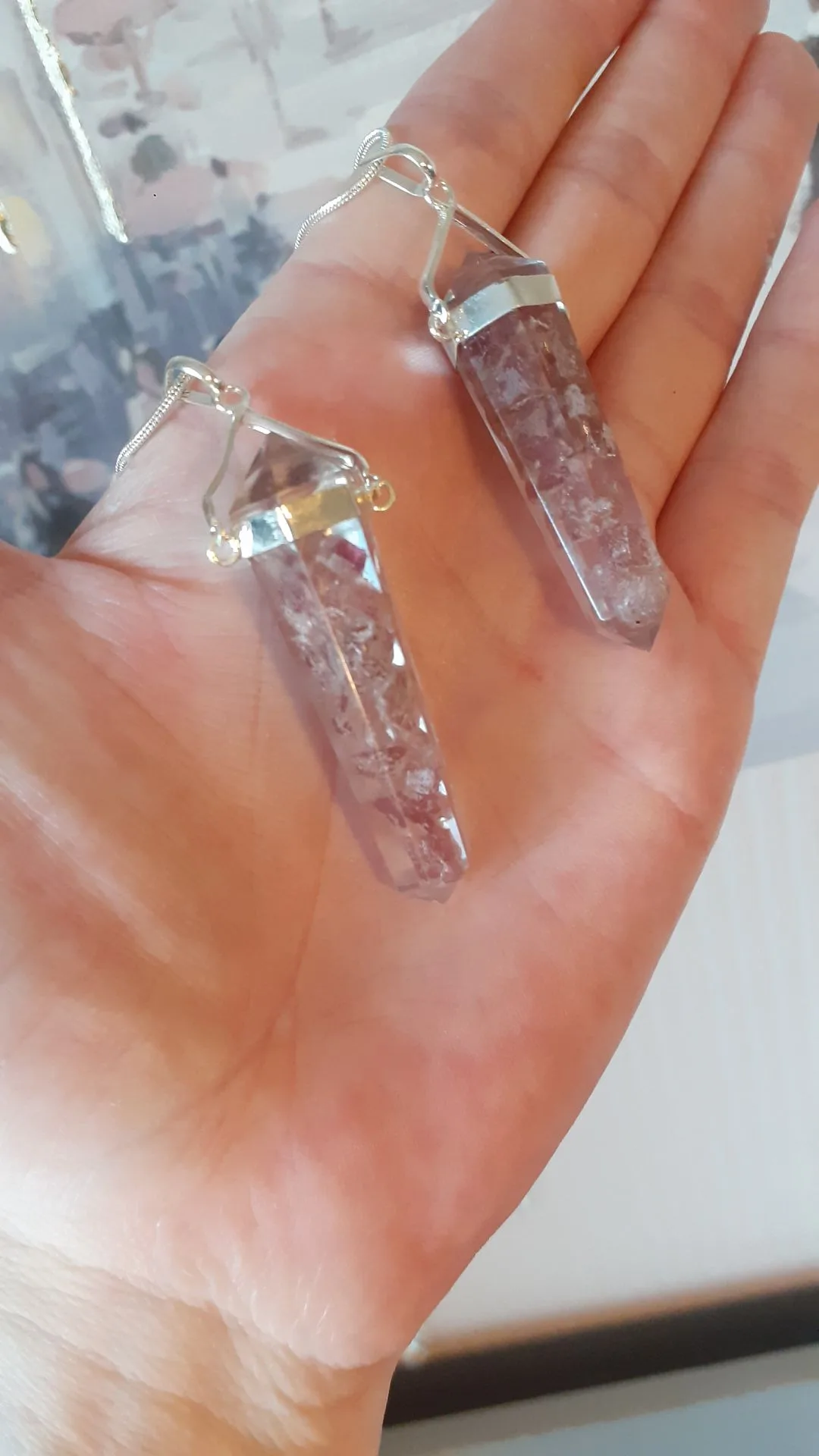
Kambaba jasper is the other easy pairing. It is a green-black patterned stone, so the color contrast with blue is strong, and its approximate 2 cm size sits close to many blue agate tumbled stones, which keeps a two-stone set visually balanced. If you want a third element for a pendulum or dowsing practice, a faceted gemstone pendulum is a different tool rather than a pairing stone, so treat it as a separate purchase.
Care that keeps the color
Wipe dyed tumbled stones with a soft dry or barely damp cloth instead of soaking them. If you cleanse your stones, use methods that do not involve prolonged water, such as sound, moonlight, or placing them near a cleansing stone. Keep dyed pieces away from saltwater soaks, which are harsh on dye and on polished surfaces alike.
For storage, a small pouch per stone prevents scratches and stops dye from transferring to lighter stones if the surface ever gets damp. If you keep a mix of rough and tumbled pieces together, separate them, because rough edges abrade polished surfaces over time.
Decision rules for buying blue agate tumbled stones
- If you want an untreated mineral: Choose a stone that is not dyed. Blue agate tumbled stones are dyed by definition, so this is the wrong purchase if natural color is your priority. Look for a naturally colored tumbled stone instead.
- If the stone will be handled daily: Dyed color holds up to normal handling and dry wiping, so a pocket or desk stone is a fine use. Avoid long water soaks and abrasive storage. Buy it, but keep it dry.
- If you are building a two-stone set: Match sizes where you can. A 3 cm blue agate next to a roughly 2 cm Kambaba jasper is a close pair; a 4.5 cm rough smokey quartz is the larger grounding anchor. Decide which stone leads the set before you order.
- If you need an exact color match: Dyed agate and natural jasper both vary in tone and shape from piece to piece, and listings state this openly. Ordering several pieces is the only way to compare. Do not expect a photo-perfect match.
Product facts
- Blue Agate (Dyed) Tumbled Stone - 1 Piece: Blue Agate (Dyed) Tumbled Stone, 1 piece, large size 3 cm; described as a protective, calming stone associated with courage, strength, and grounding emotions. The 3 cm size is generous for a tumbled stone, so it works well as a hand-held or desk piece rather than a tiny pocket stone, and the listing is explicit that the color is dyed.
- Kambaba Jasper Tumbled Stone - 1 Piece: Kambaba Jasper Tumbled Stone, 1 piece, size approximately 2 cm, with a note that natural crystals may vary slightly in color tone and shape from the photo. At about 2 cm it pairs neatly with a blue agate stone of similar size, and the variance note tells you to expect a slightly different pattern than the listing image.
- Rough Smokey Quartz - 1 Piece: Rough Smokey Quartz, 1 piece, approximately 4.5 cm x 4 cm; described as grounding and stabilizing, removing negative energies, and a protective stone. It is a rough, larger piece rather than a tumbled one, so it suits a shelf or bedside dish as the grounding anchor next to a smooth blue agate stone.
Who should buy blue agate tumbled stones
Best for
- Anyone wanting an inexpensive first tumbled stone in a strong blue color
- A calming pocket or desk stone for daily handling
- Pairing with a grounding stone such as rough smokey quartz or Kambaba jasper
- A small gift for someone curious about crystals
Not for
- Buyers who only want untreated, naturally colored minerals
- Long water soaks, saltwater cleansing, or ultrasonic cleaners
- Anyone who needs an exact color or pattern match to a photo
- Display in prolonged direct sunlight where you want the blue to stay saturated