Why this food needs a plan, not just a can opener
Blue Natural GI Gastrointestinal Support Low Fat is a veterinary-authorized canned diet for dogs who need help with fat digestion. It's not a casual switch you make on a whim. The label requires veterinary authorization, and the formula uses easily digestible ingredients, prebiotic fibers, and reduced fat. Before you open the first can, get your vet's sign-off and a feeding amount tailored to your dog. The label gives you the 'what'—this guide helps you with the 'how'.
What the Blue Natural GI Low Fat label confirms
-
Blue Natural GI Gastrointestinal Support Low Fat Canned Dog Food: Veterinary Authorization Required This is a therapeutic diet; your vet must approve its use and set the feeding amount.
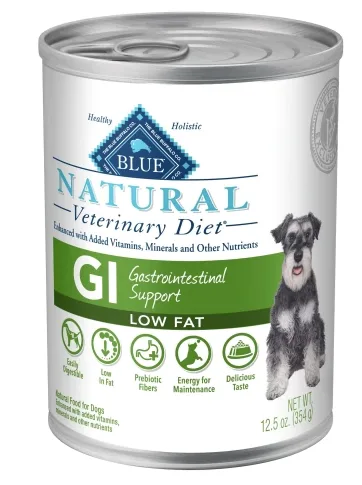
Blue Natural GI Gastrointestinal Support Low Fat Canned Dog Food
-
Blue Natural GI Gastrointestinal Support Low Fat Canned Dog Food: Formulated with easily digestible ingredients, prebiotic fibers, and reduced fat for dogs who have trouble digesting fat. These features support digestive health, but they don't replace a vet's diagnosis or feeding plan.
-
Blue Natural GI Gastrointestinal Support Low Fat Canned Dog Food: Grain-free; no chicken or poultry by-product meals; no artificial flavors or preservatives; no corn, wheat, or soy. Useful if your dog has known sensitivities, but always confirm with your vet that this formula fits your dog's overall diet.
-
Blue Natural GI Gastrointestinal Support Low Fat Canned Dog Food: Sold in 12/12.5oz cans. A 12-pack helps you keep a steady supply during a transition, but storage and serving sizes depend on your vet's portion guidance.
How to transition your dog to Blue Natural GI Low Fat
A slow transition helps your dog adjust to a new canned food. The exact pace depends on your dog's sensitivity and your vet's advice. Use this sequence as a starting framework, not a rigid schedule.
- Get veterinary authorization: Your vet must approve this diet and provide a daily feeding amount. Don't guess the portion based on the can size.
- Start with a small proportion of the new food: Mix a small amount of Blue Natural GI Low Fat with your dog's current food. The exact ratio and duration are best set by your vet, especially if your dog has a sensitive stomach.
- Increase gradually over several days: Slowly increase the new food while decreasing the old food. Watch for any changes in appetite, stool, or comfort, and pause or adjust if problems arise.
- Reach the full portion your vet prescribed: Once your dog is eating the new food comfortably, follow your vet's full feeding amount. You can split it into meals as your vet directs.
- Store and serve safely: Follow the can's storage instructions after opening. The supplied information does not include specific storage or serving temperatures, so ask your vet or check the can label for guidance.
What the label leaves to you and your vet
The product record doesn't include feeding amounts, transition schedules, or storage instructions. That's not a gap in the food—it's a reminder that this is a veterinary diet. Your vet will set the daily portion based on your dog's weight, condition, and digestive needs. They'll also tell you how quickly to transition and what to watch for. Don't rely on the can size or general feeding charts for a therapeutic food like this.
Is Blue Natural GI Low Fat right for your dog?
This food is designed for dogs with fat digestion issues, but it's not a universal digestive diet. Compare these points with your vet.
- When it may fit: Your vet has diagnosed a need for reduced fat and recommends a veterinary gastrointestinal diet. Your dog has no known allergy to the ingredients listed (whitefish, chicken, peas, etc.).
- When to ask more questions: Your dog has other medical conditions, is pregnant or nursing, or is a puppy—these situations require specific veterinary guidance. Also check if your dog needs a different protein source or a hydrolyzed diet.
Ordering and storing the 12-pack
The 12/12.5oz cans format gives you a convenient supply for a transition or ongoing feeding. Canned food is heavier and takes up shelf space, so plan where you'll store unopened cans. Once opened, follow the can's storage directions and your vet's advice on how long to keep leftovers. If your dog's feeding amount changes, you may need to adjust how often you reorder.