Quick answer
Use the Blueprint Engineering Educator Guide to structure your first robotics lessons with ready-made unit plans, challenge activities, and assessment rubrics that align to standards.
Why start with the Blueprint Engineering Educator Guide
The Blueprint Engineering Educator Guide is designed specifically for teachers who are new to hands-on engineering and robotics. It provides the scaffolding you need to move from concept to classroom activity without spending hours writing lesson plans from scratch.
Because the guide includes student grouping strategies and assessment rubrics, you can focus on facilitating learning rather than managing logistics. This makes it a practical starting point for any PK-12 STEM teacher.
How to plan your first robotics lessons with the Blueprint Engineering Educator Guide
- Review the unit plans and choose your starting point: Open the guide and scan the unit plans. Each unit is built around a central engineering challenge. Pick the one that best matches your students' grade level and available class time. Common mistake: trying to cover too many units at once. Start with one challenge to build confidence. Select one unit plan that aligns with your schedule and student experience level.
- Gather the materials listed in the challenge activities: Each challenge activity in the guide includes a materials list. Check what you already have in your classroom and what needs to be ordered. The guide's grouping strategies help you decide whether students work individually, in pairs, or in teams. Common mistake: assuming all materials are included in a single kit. Some items may need to be sourced separately. Create a materials checklist from the guide and confirm availability before the lesson.
- Use the assessment rubrics to set clear expectations: Before starting the challenge, share the rubric with students so they know how their work will be evaluated. The rubrics in the guide cover both engineering process and final product. Common mistake: skipping the rubric introduction and then having to explain expectations mid-activity. Print or project the rubric and review it with students before they begin.
- Facilitate the challenge using the guide's grouping strategies: During the activity, move between groups to ask guiding questions rather than giving direct answers. The guide's grouping strategies help you manage different group sizes and dynamics. Common mistake: intervening too quickly when a group struggles. Let them work through problems first. Let students troubleshoot independently before stepping in with hints.
- Wrap up with the reflection prompts from the guide: After the challenge, use the reflection prompts included in the guide to help students articulate what they learned about engineering and teamwork. This reinforces the learning and gives you informal assessment data. Common mistake: ending the lesson without a debrief, which misses the chance to solidify key concepts. Reserve the last 5–10 minutes of class for guided reflection.
Product facts
-
Blueprint Engineering Educator Guide: The Blueprint Engineering Educator Guide provides teachers with standards-aligned lesson plans, unit plans, challenge activities, student grouping strategies, and assessment rubrics. This means you can deliver a complete robotics unit with minimal prep time, using proven strategies that keep students engaged and on track.
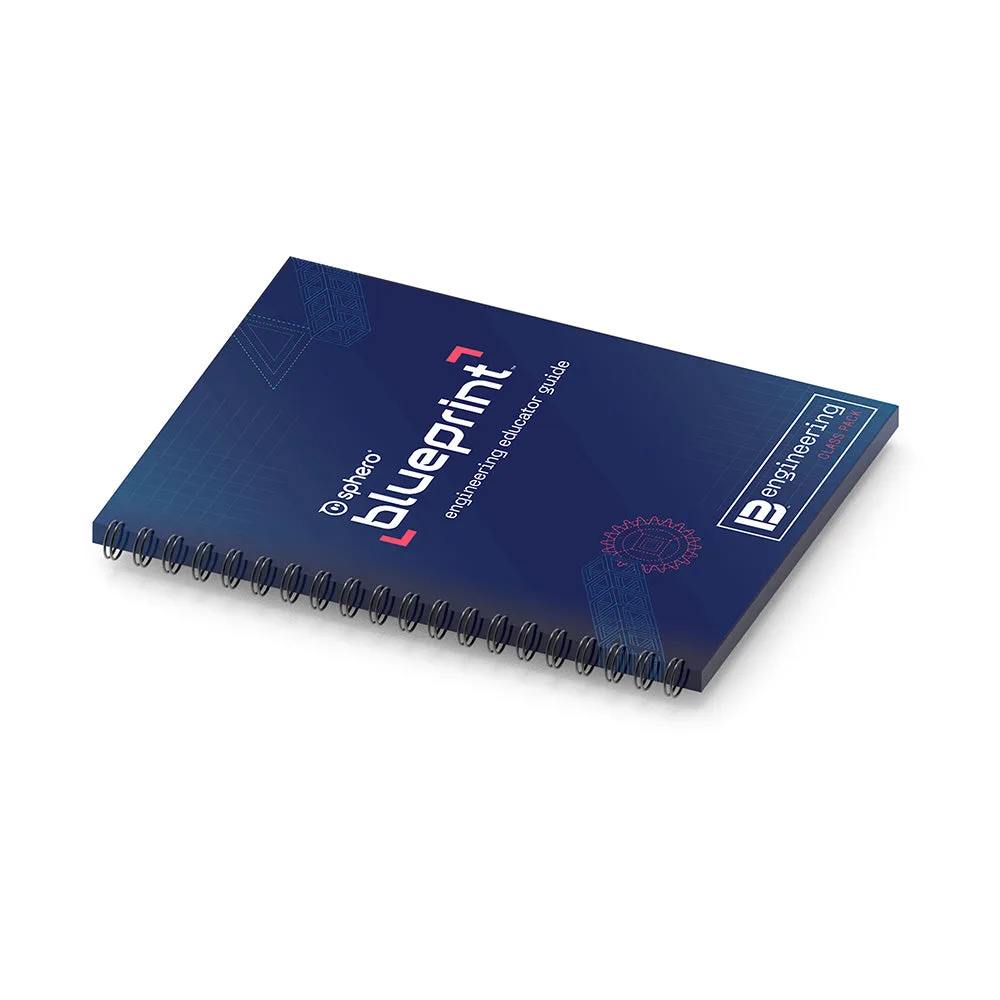
Blueprint Engineering Educator Guide