Quick answer
Restock the Blueprint Rope Clamp 15-Pack when clamps no longer hold rope tension during pulley builds, or when your class pack has fewer secure clamps than simultaneous build groups. Replace worn clamps rather than forcing them, because a slipping clamp stops the whole mechanism.
Why rope clamps wear differently from other kit parts
Rope clamps are a high-contact part: every pulley build asks them to grip rope under tension, and repeated clamping and unclamping stresses the grip surface. Unlike a bracket that stays bolted in place, a clamp is handled each time students reconfigure a build.
That handling pattern means wear shows up as function loss, not visible breakage. A clamp that still looks intact can fail to hold, which makes diagnosis more important than a visual inventory count.
When a 15-pack is the right size and when it is not
The 15-pack suits a classroom that runs multiple pulley stations at once or rotates builds across groups. It gives you enough spares to swap out failing clamps mid-lesson without stopping the class.
If you only occasionally build pulley mechanisms, a smaller restock may be more sensible, but the catalog does not list smaller clamp pack sizes here. In that case, confirm availability before ordering, or treat the 15-pack as a shared department supply rather than a single-kit purchase.
The limit of diagnosis: when to stop replacing and change approach
Replacing clamps fixes grip failures, but it will not fix a build that asks the clamp to hold more tension than the rope and pulley setup can support. If new clamps slip in the same build, the problem is the build design, not the part.
Stop replacing and review the mechanism when clamps fail immediately after installation, when rope is frayed at the clamp point, or when students report the rope pulling free under normal load. At that point, check rope condition and pulley alignment before ordering more clamps.
Diagnose a rope clamp problem in four steps
- Symptom: rope slips or pulls free during a pulley build: Test the clamp on a short length of Blueprint rope by hand. If it slides under light tension, the clamp has lost its grip and should be replaced. A clamp that fails a hand test will fail in a student build.
- Likely cause: worn grip from repeated clamping: Compare the failing clamp with a new one from the pack. If the new clamp holds and the old one does not, wear is the cause and replacement is the correct action. Keep one new clamp aside as a reference for future comparisons.
- Corrective action: swap in a clamp from the 15-pack: Replace only the failing clamps, then rebuild the pulley mechanism and test it under the load students will actually use. If the new clamp holds, return the build to service. Test under real load, not just by hand, before declaring the fix complete.
- Stop point: new clamps fail in the same build: If a fresh clamp slips immediately, stop replacing clamps. Inspect the rope for fraying at the clamp point and check that the pulley path does not overload the clamp. Choose a different build approach or replace the rope before ordering more clamps. Repeated failure with new parts points to the build or rope, not the clamp supply.
Product facts
-
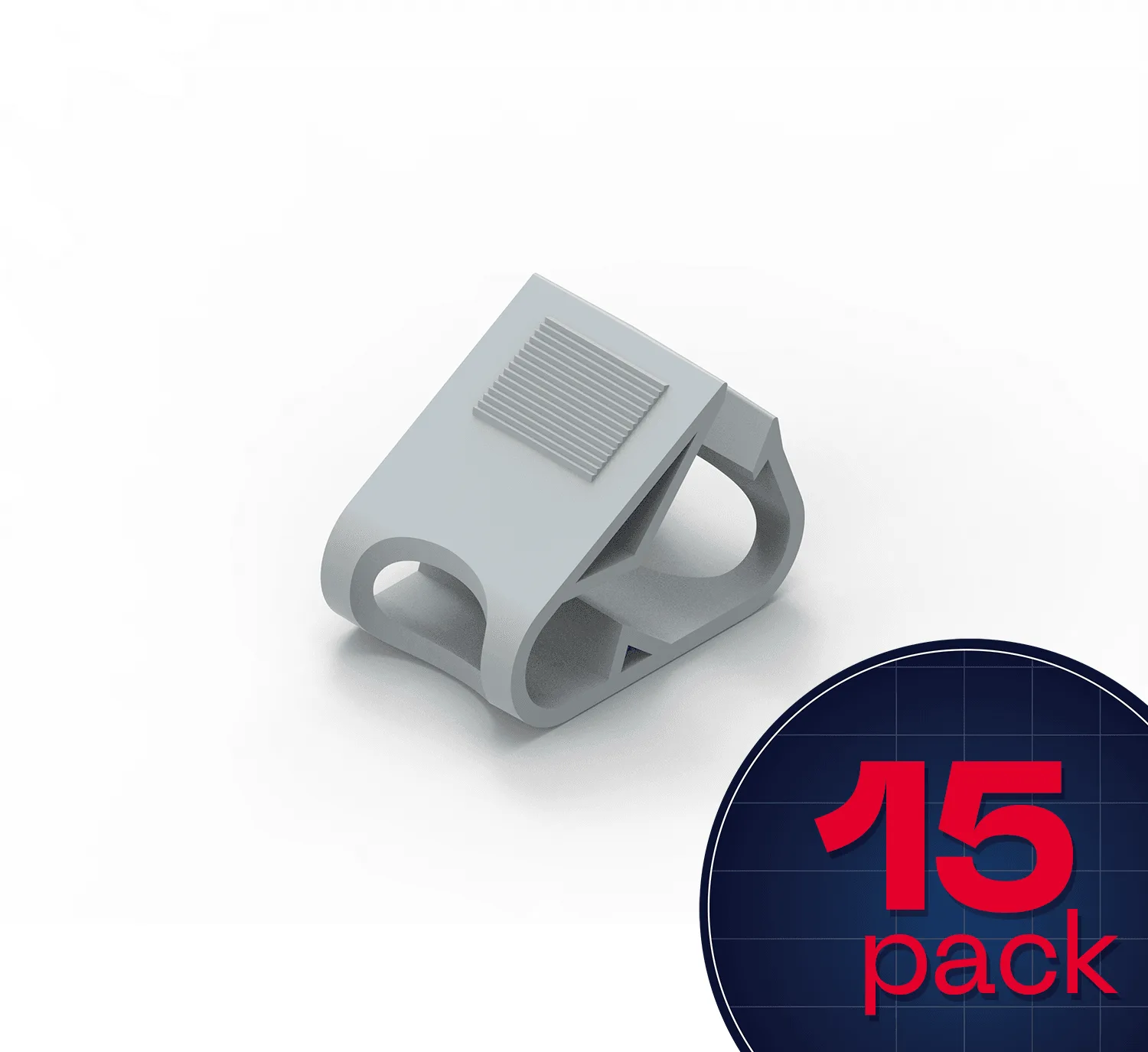
Blueprint Rope Clamp 15-Pack: The Blueprint Rope Clamp 15-Pack is designed to fasten onto Blueprint rope and provide a secure hold for pulley builds. A secure hold is the clamp's whole job, so any slip under tension is a clear replacement signal rather than a minor annoyance.
Blueprint Rope Clamp 15-Pack