Two Temperature Ratings, One Roomy Design
The Sea to Summit Boab synthetic sleeping bag comes in two temperature ratings — 15°F and 30°F — both built around the same roomy, tapered rectangular shape that suits side-sleepers and campers who prefer extra space. The core difference is insulation thickness, which shifts the warmth range and affects how you use the bag across seasons.
Both versions use RCS-recycled fabrics and Revive Loft insulation with a bluesign-APPROVED certification, and both are part of Sea to Summit's 1% for the Planet commitment. The choice between them depends on the lowest temperatures you expect and how you plan to manage ventilation.
15°F vs 30°F: Key Differences at a Glance
The temperature rating is the main variable. Everything else — shell fabric, liner, zipper, and recycled construction — is identical.
- Warmth range: The 15°F version is designed for colder nights, giving you a wider comfort buffer if temperatures drop near freezing. The 30°F version suits milder conditions (spring, summer, early fall) and is lighter to carry.
- Ventilation strategy: Both bags have a full-length YKK #5 zipper with dual sliders, so you can open the footbox or unzip completely to use as a quilt. With the 30°F bag, you'll likely use that zipper more often to dump heat on warmer nights. The 15°F bag relies on the zipper for fine-tuning warmth when the air is crisp.
- Weight and pack size: The supplied information does not include exact weight or packed volume for either variant. In general, a heavier insulation layer (15°F) will be slightly bulkier and heavier than the 30°F version. Check the product page for specific weights if pack space is critical.
How the Shared Design Affects Your Choice
Both bags share the same roomy shape that accommodates side-sleepers and allows you to move freely. The full-length zipper extends through the footbox, so you can open the bag flat and use it as a blanket — useful for airing out or sharing. A draught tube along the zipper helps retain warmth and block cool air, which matters more with the 15°F bag in cold conditions.
The 50-denier RCS-certified recycled shell and liner, combined with a non-PFAS DWR finish, provide durability and moisture resistance. If you camp in damp environments, either bag will handle condensation better than many down alternatives, though synthetic insulation compresses over time with repeated packing.
Boab Synthetic Sleeping Bag (30°F / Regular) – Like New
-
Boab Synthetic Sleeping Bag (15°F & 30°F) (Like New): The Boab is a roomy, synthetic sleeping bag made for cozy camping nights that accompany fishing, paddling or trekking adventures. This confirms the bag is designed for comfort-oriented camping, not ultralight backpacking. The roomy cut and synthetic fill suit car camping, basecamp trips, and activities where weight is less critical.
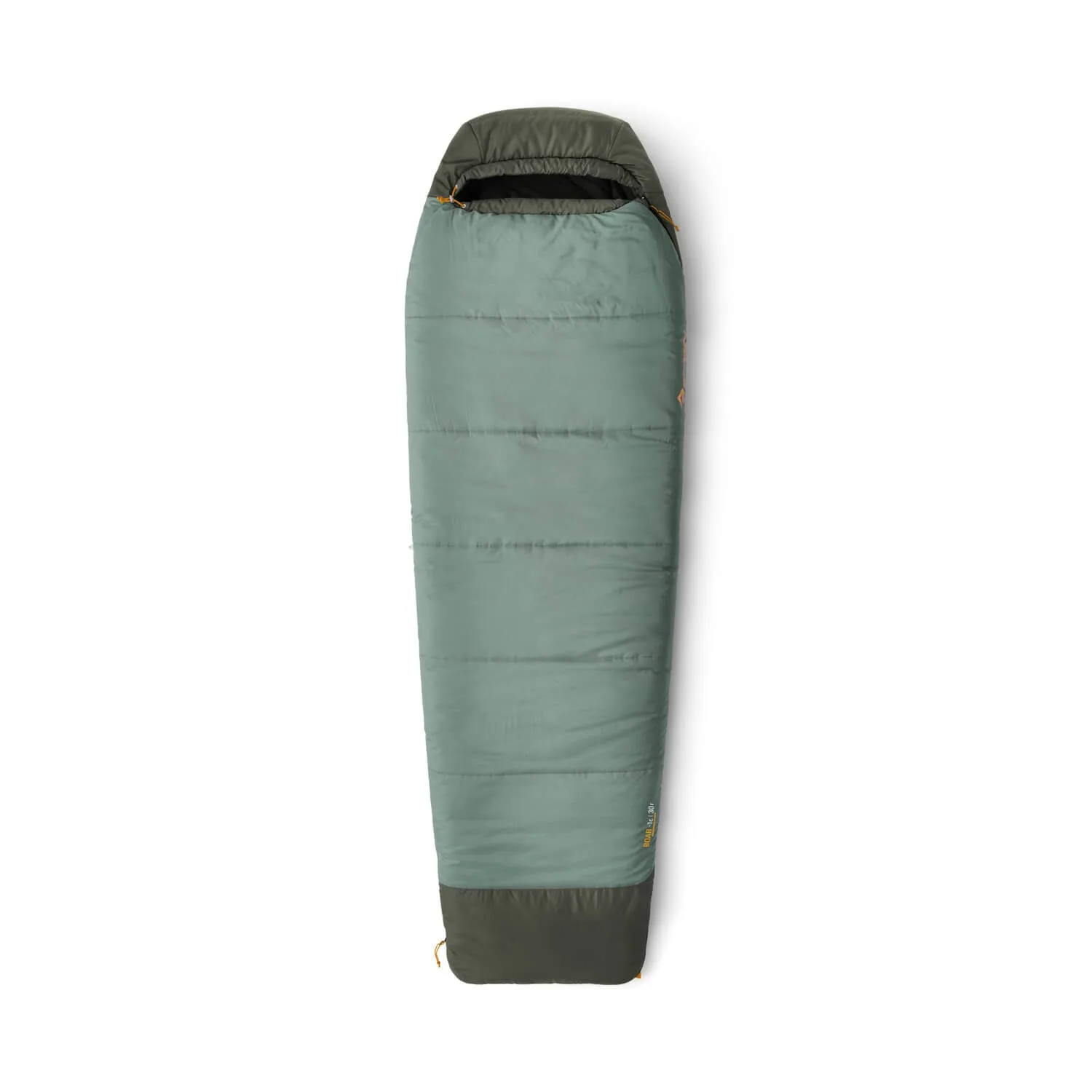
Boab Synthetic Sleeping Bag (15°F & 30°F) (Like New)
Size Options and Fit
Both temperature ratings are available in Short, Regular, Long, and Regular Wide sizes. If you sleep on your side or need extra hip room, the Regular Wide option gives you more space without a longer bag. The tapered rectangular shape is roomier than a mummy bag but still reduces dead air space compared to a full rectangle.
Choosing the right size matters for warmth: a bag that's too large lets your body heat escape, while one that's too tight restricts movement and compresses insulation. Measure your height and chest/hip circumference against the size chart on the product page.
Which One Should You Pick?
Choose the 15°F version if you camp in shoulder seasons or higher elevations where overnight lows can dip below freezing. The extra insulation gives you a safety margin and lets you use the bag across a wider temperature range with ventilation adjustments.
Choose the 30°F version if you primarily camp in summer or mild climates and want a lighter, less bulky bag. It's also a better choice if you sleep warm or prefer to use a bag liner for added versatility.
If you're unsure, consider your coldest expected campout. A 15°F bag can be vented open on warm nights, but a 30°F bag cannot be made warmer. For most three-season campers, the 30°F version offers a good balance of comfort and packability.