Quick answer
This guide walks you through using the Bolt Action Campaign D-Day US Sector book to run a linked campaign, from choosing scenarios to managing troop selectors.
Why this campaign book stands out
The Bolt Action Campaign D-Day US Sector focuses on the American beach landings at Omaha and Utah, plus the airborne assaults behind enemy lines. It provides linked scenarios that create a narrative arc, which is a major draw for historical wargaming enthusiasts. The book includes new rules, troop types, and Theatre Selectors, offering variety for both novice and veteran players.
What to consider before starting
The campaign is designed for US forces, so you'll need a US army list and appropriate miniatures. The scenarios are linked, meaning the outcome of one battle affects the next—this adds depth but requires commitment from all players. The book does not include complete army lists; you'll need the core Bolt Action rulebook for unit stats and points.
How to run the campaign
- 1. Read the campaign overview: Start by reading the introduction and campaign structure section of the book. Understand how the scenarios link together and what victory conditions carry over. Common mistake: jumping straight into a scenario without reading the linked rules—this breaks the campaign flow.
- 2. Choose your starting scenario: Select the first scenario that fits your group's interest, such as the beach landing or airborne drop. The book suggests a recommended order, but you can adapt based on player preference. Checkpoint: ensure all players agree on the starting scenario and understand the special rules for that battle.
- 3. Assemble forces using Theatre Selectors: Use the Theatre Selectors in the book to build your US force. These restrict unit choices to historically accurate options for each phase of the campaign. Common mistake: using a standard selector instead of the campaign-specific one—this can unbalance the linked scenarios.
- 4. Play the scenario and record outcomes: Play the scenario according to the book's rules. Record the result (victory, defeat, or draw) and any special conditions that affect the next battle. Checkpoint: note down which units survived and any bonus or penalty they earn for the next game.
- 5. Transition to the next linked scenario: Based on the outcome, follow the book's guidance to move to the next scenario. Some scenarios have branching paths depending on who won. Common mistake: skipping the transition rules—they often add special deployment or force adjustments that keep the campaign balanced.
- 6. Complete the campaign and review: After the final scenario, tally the overall campaign victory based on the book's scoring system. Discuss with your group what worked and what you'd change for the next campaign. Checkpoint: consider playing the campaign again from the other side (German) for a different experience.
Product facts
-
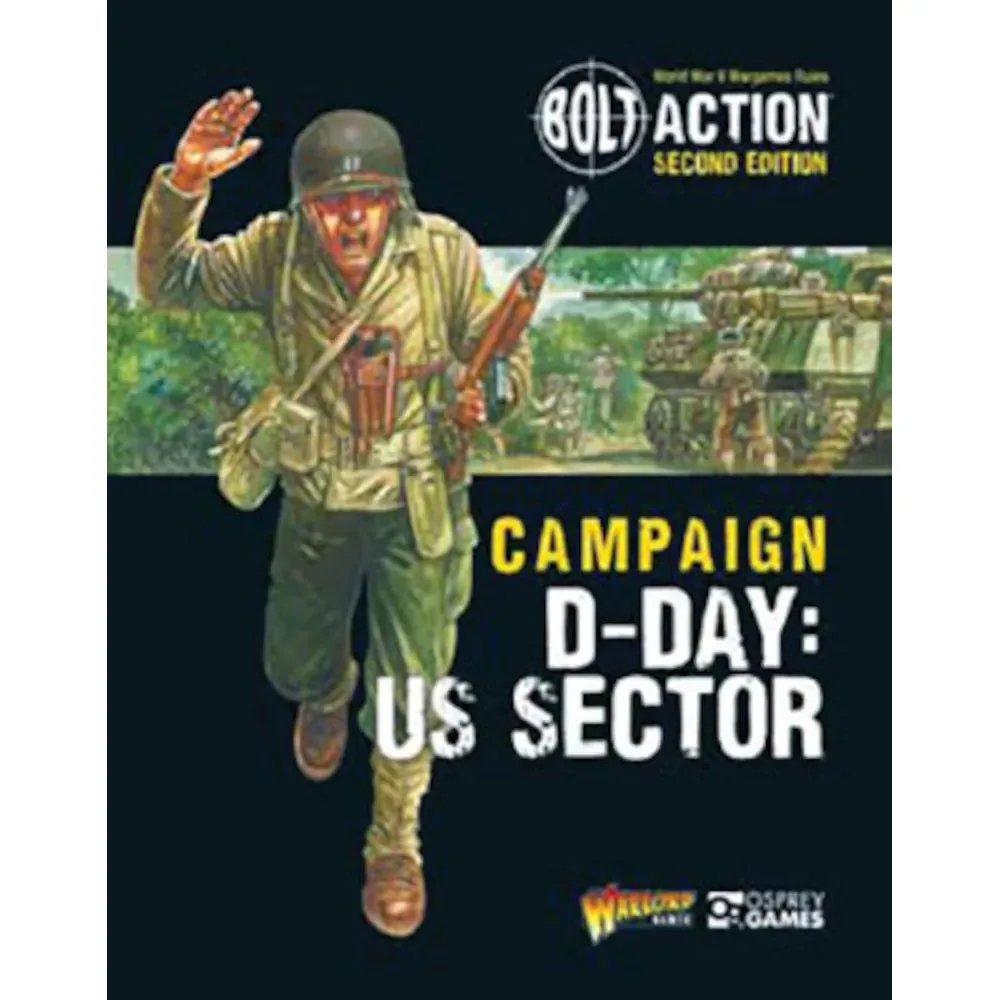
Bolt Action: Bolt Action: Campaign - D-Day: US Sector: Covers the US sectors of D-Day including Omaha and Utah beaches, with new linked scenarios, rules, troop types, and Theatre Selectors. You get a ready-to-play campaign structure that adds narrative stakes to each game, making battles feel connected rather than standalone.
Bolt Action: Bolt Action: Campaign - D-Day: US Sector