Quick answer
For most women over 50, the most useful bone strength capsules combine calcium in more than one form with vitamin D3 and vitamin K2, because D3 helps your body absorb calcium and K2 helps direct it toward bone. If your diet already supplies plenty of calcium, a multi-mineral formula with D3 and K2 is the better buy than a calcium-only pill. If you are also managing menopause symptoms, a hormone-focused probiotic is a separate purchase, not a substitute for a bone formula.
Why calcium alone is not enough after menopause
Bone loss accelerates in the years around menopause, so the goal shifts from simply getting calcium to getting calcium where it belongs. That is why the label matters more than the milligram count on the front of the bottle. A calcium vitamin d supplement works best when vitamin D3 is present to support absorption, and when vitamin K2 is included to help direct calcium into bone rather than soft tissue.
Read the ingredient panel in this order: calcium forms, then D3, then K2, then supporting minerals such as magnesium. If a formula lists calcium carbonate as the only calcium source, it is a basic option, not a bone density supplements women formula built for absorption. Multiple calcium forms are a sign the manufacturer thought about how the mineral is taken up, not just how to hit a number.
How to read a bone support capsules ingredients panel
Start with the calcium section. Formulas that use three types of calcium are designed to spread absorption across different digestive conditions, which matters if you take your capsule with or without food on different days. Next, confirm vitamin D3 rather than D2, since D3 is the form most often paired with calcium in bone-focused products.
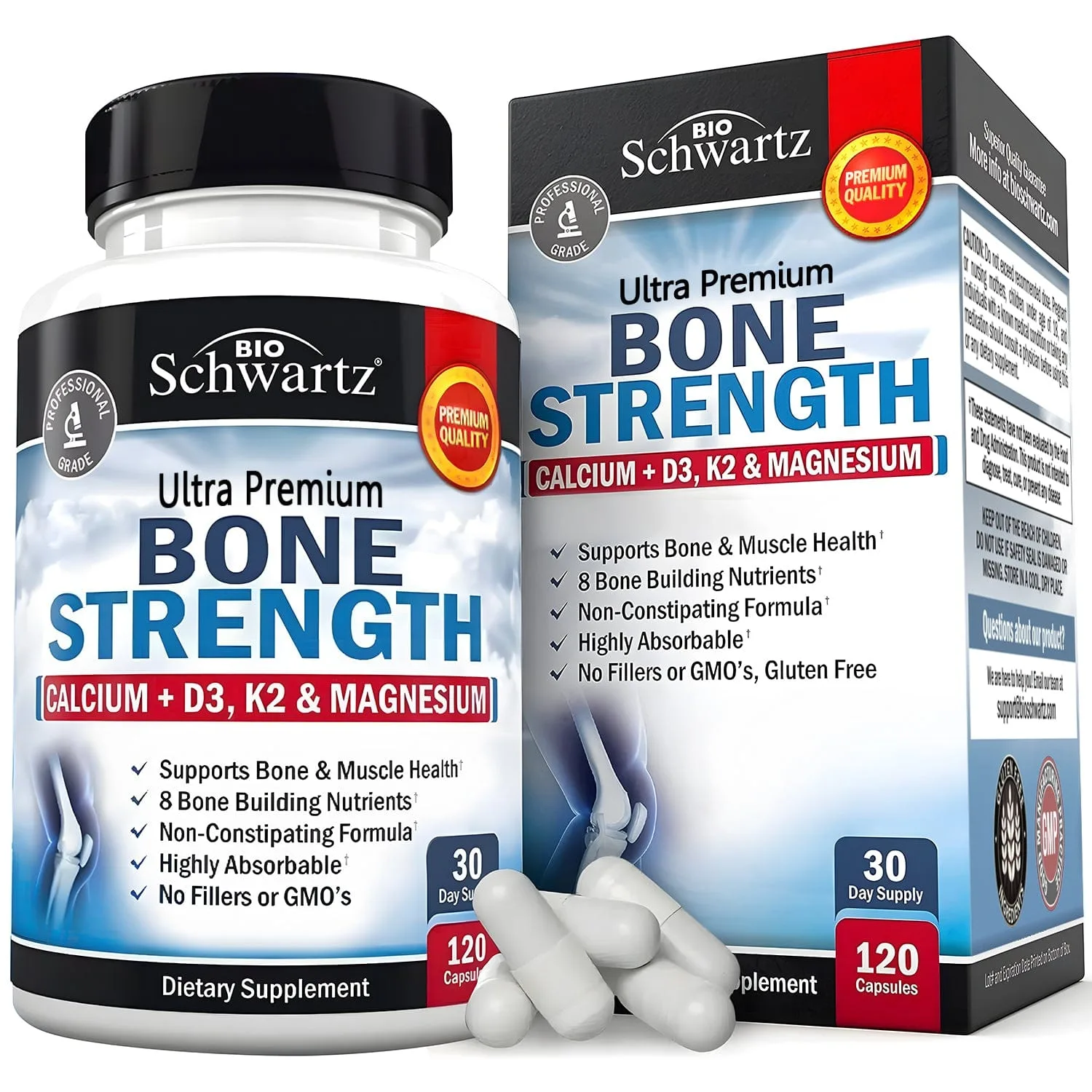
Then look for what is absent. BioSchwartz states its bone builder supplement is made without fillers or preservatives, which is useful if you already take several supplements and want a shorter ingredient list. Finally, check the serving size. A 120-count bottle only lasts four months if the serving is one capsule daily, so compare cost per serving rather than sticker price alone.
When to take bone strength capsules
Take calcium-containing capsules with a meal that includes some fat, because vitamin D3 is fat-soluble and absorption is better alongside food. If your formula contains K2, keep the timing consistent rather than splitting doses randomly across the day. Splitting calcium into two smaller servings is generally better tolerated than one large dose, especially if you are prone to constipation.
Do not stack a bone formula with a separate calcium antacid unless you have checked the total. More calcium is not automatically better, and exceeding what you need mainly adds digestive discomfort. If you take thyroid medication or certain antibiotics, separate them from calcium by several hours and confirm the timing with your pharmacist.
Where menopause probiotics fit, and where they do not
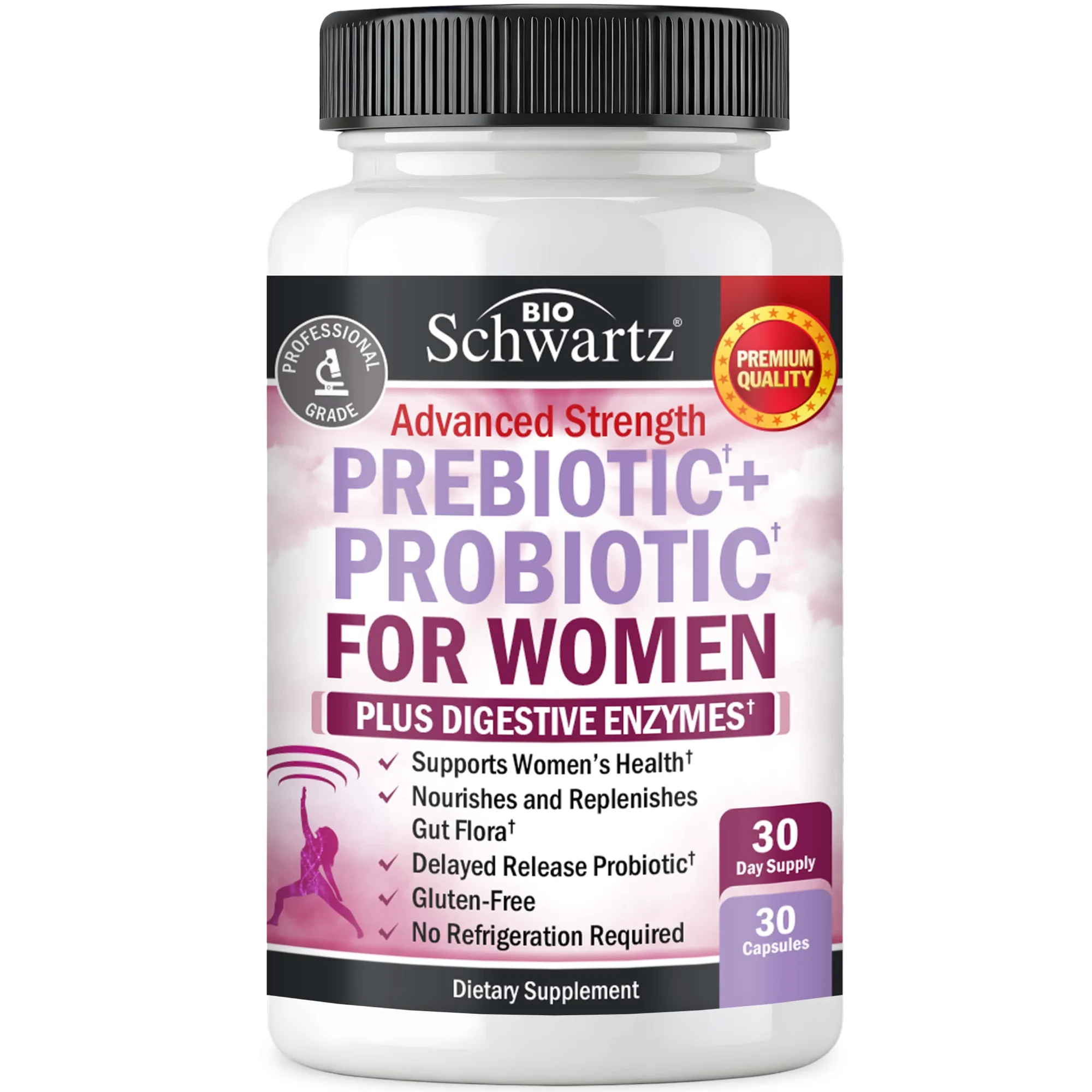
Bone health and menopause symptom support are different jobs. A menopause probiotic targets digestive comfort and hormone-related changes through probiotic strains, prebiotic fiber, and herbs such as chasteberry and black cohosh. It will not replace calcium, D3, or K2 for bone density. Treat them as two separate purchases with two separate goals.
If your main complaint is bloating, irregularity, or mood shifts during menopause, start with the probiotic. If your concern is fracture risk, family history of osteoporosis, or a recent DEXA scan result, start with the bone formula and bring the scan to your doctor. Buying both at once is reasonable, but only if you can keep the routines distinct and consistent.
Decision rules for choosing a bone formula
- If your diet is low in dairy, leafy greens, and fortified foods: Choose a multi-mineral bone formula with several calcium forms plus D3 and K2 rather than a single-mineral calcium pill, so you cover the absorption steps in one product. Prioritize a 120-count bottle if you plan to take it daily for months.
- If you already take a calcium-rich diet or a separate calcium supplement: Do not add a second high-calcium product. Look for a formula where D3 and K2 carry the formula and total calcium stays moderate. Add up every source before you buy, including antacids and fortified drinks.
- If menopause symptoms, not bone density, are your main complaint: Start with a menopause-focused probiotic for digestive and hormone-related support, and keep a bone formula as a separate decision based on your scan results and doctor's input. Two goals, two products, two routines.
- If you take thyroid medication or antibiotics: Separate calcium-containing capsules from those medications by several hours and confirm the window with your pharmacist before starting. Timing errors, not the formula, are the most common reason a bone supplement underperforms.
Product facts worth checking
- Bone Strength Capsules, 120ct: Features 9 vitamins and minerals with 3 types of calcium, plus D3 and K2 to direct calcium where it is needed, and is made without fillers or preservatives. This is the closest match to a bone-first formula, because the D3 and K2 pairing addresses absorption and direction rather than calcium volume alone.
- Women's Menopause Probiotic Capsules, 60ct: Combines 14 probiotic strains with organic prebiotic fiber and a herbal blend including chasteberry, dong quai, turmeric, and black cohosh for all stages of menopause. Useful if menopause-related digestive or mood symptoms are your priority, but it is not a calcium or vitamin D source and does not replace a bone formula.
- Men's 50+ Multivitamin Capsules, 60ct: A men's 50+ multivitamin with vitamin C, zinc, reishi mushrooms, and a mushroom blend for mental clarity and immune support. A reminder that 50+ multis are formulated by audience and goal; women seeking bone support should not assume a general 50+ multi covers calcium and K2 adequately.
Who should choose which
Best for
- Women over 50 who want calcium, D3, and K2 in one capsule instead of three separate bottles
- Anyone whose DEXA scan or family history makes bone density the priority
- Shoppers who prefer a shorter ingredient list without fillers or preservatives
Not for
- Women whose main concern is hot flashes, mood, or digestive changes during menopause, who should start with a menopause probiotic instead
- Anyone already taking a high-dose calcium supplement or calcium-based antacid without checking total intake
- Men looking for a 50+ formula built around mental clarity and immune support rather than bone minerals