Why Use Conversation Cards in Your Book Club
Leading a book club discussion can feel like a balancing act. You want to explore the story deeply without steering the conversation yourself or letting it drift into silence. Book Club Conversation Cards give you a ready-made set of open-ended questions that cover writing style, characters, plot, setting, themes, and more. They help every member contribute, and they take the pressure off you as the host to come up with fresh questions each time.
What the Book Club Deck Offers
-
Book Club Conversation Cards: 135 thought-provoking questions about writing style, characters, plot, setting, themes, and so much more. With 135 cards, you can use several per meeting or revisit the deck for months without repeating questions. The broad range ensures you cover every aspect of the book.
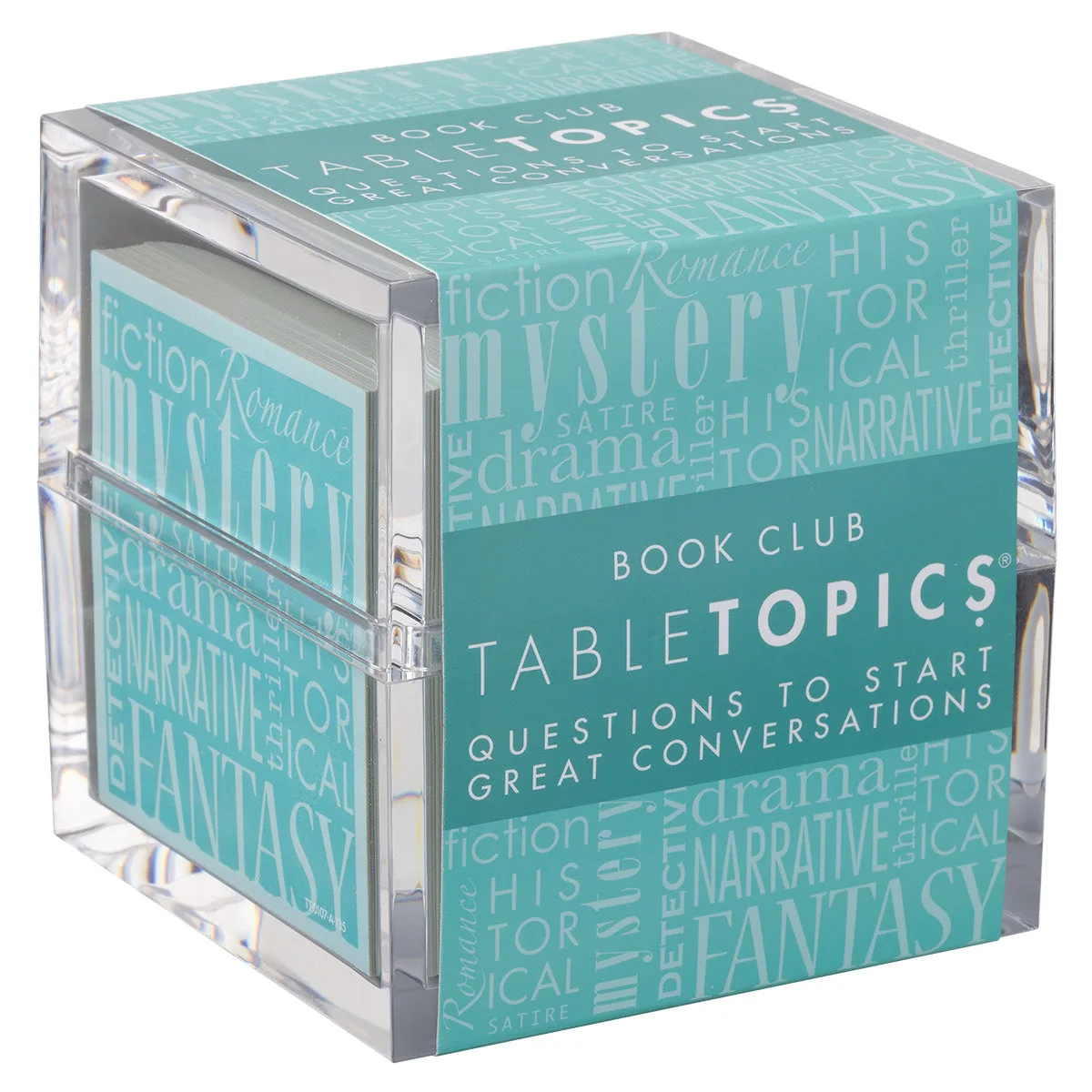
Book Club Conversation Cards
-
Book Club Conversation Cards: Sample questions include: 'Why was this story worth telling?', 'What one question would you like to ask the main character?', and 'How would living in the book’s setting change you?' These examples show the deck encourages analysis of purpose, character motivation, and immersive thinking—key elements of a deeper discussion.
-
Book Club Conversation Cards: The open-ended questions encourage in-depth answers and will get the conversation flowing. Open-ended questions prevent yes/no answers and invite personal interpretation, which keeps the discussion lively and inclusive.
How to Lead a Discussion with the Cards
You don't need a formal structure, but a simple routine helps everyone feel comfortable. Here's a process that works with any book.
- Set up the deck before the meeting: Place the clear cube on your table, coffee table, or bookshelf so it's visible. You can pre-select a few cards that match the book you're discussing, or let members draw at random.
- Start with an opening question: Ask one general card to warm up the group. For example, 'Why was this story worth telling?' gets everyone thinking about the book's purpose without requiring a detailed analysis.
- Rotate turns and encourage follow-ups: After one person answers, invite others to add their thoughts or ask a related question from the deck. The cards are designed to spark conversation, not to be answered in isolation.
- Use cards to redirect or deepen the talk: If the discussion stalls or goes off-topic, draw a card about a specific element like character or setting. For instance, 'What one question would you like to ask the main character?' can re-energize the group.
- Close with a reflective question: End the meeting by asking something like 'How would living in the book’s setting change you?' This leaves members with a personal takeaway and a connection to the next book.
Using the Cards Beyond Book Club
The deck isn't limited to book club meetings. Teachers use these questions to start lively classroom discussions or as prompts for creative writing assignments. The same cards work well for English class discussions, essay prompts, or even as a fun way to get conversation flowing at a dinner party with book-loving friends. Because the questions are open-ended, they adapt to different settings without losing their depth.
What the Deck Does Not Cover
The supplied information confirms 135 questions, but it does not specify a recommended age range or include instructions for timed rounds or scoring. The deck is designed for informal, guided conversation rather than competitive play. If your group prefers a structured game format, you may want to create your own simple rules, such as each member answering one card before passing to the next person.