Map the wallet before you load it
A large trifold fails in one of two ways: everything goes into the first slot you touch, or every slot gets filled because it exists. The BOSTANTEN Women's Leather Wallet gives you 20 card slots, 2 bill pockets, 1 ID window, 1 interior snap pocket, and 1 rear zipper pocket. That is enough room for a full everyday carry, but only if each compartment has a job.
The plan below assigns compartments by how often you reach for them. Keep the most-used items in the fold you open first, and leave the less-used slots genuinely empty so the wallet stays slim when it closes.
The compartment layout you are working with
-
BOSTANTEN Womens Leather Wallets RFID Blocking Large Capacity Trifold Card Holder Ladies Phone Clutch: Structure: 20 card slots, 2 bill pockets, 1 ID window slot, 1 interior snap pocket, and 1 rear zipper pocket. These five compartment types are the basis for the sorting plan, so you can decide what belongs where instead of guessing.
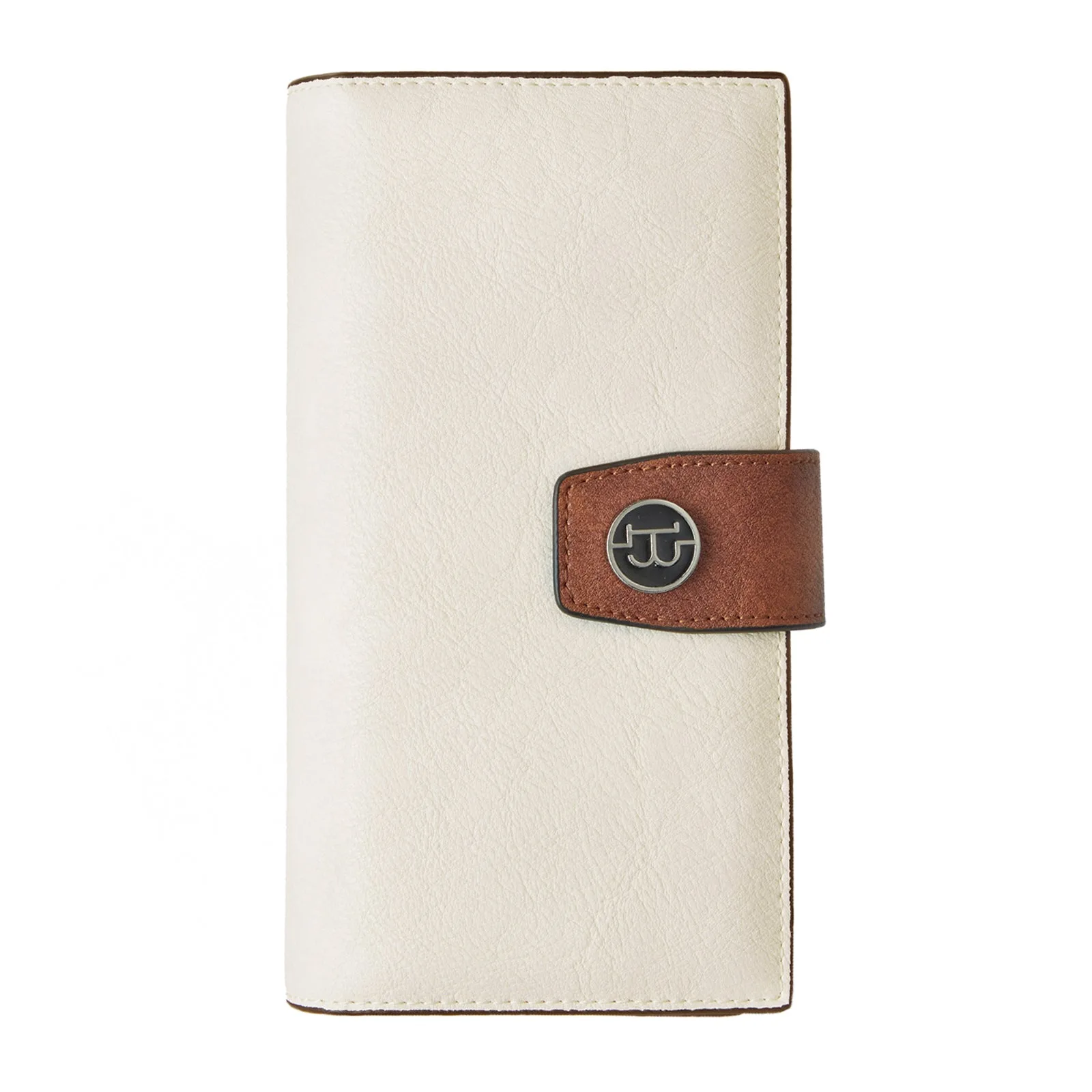
BOSTANTEN Womens Leather Wallets RFID Blocking Large Capacity Trifold Card Holder Ladies Phone Clutch
-
BOSTANTEN Womens Leather Wallets RFID Blocking Large Capacity Trifold Card Holder Ladies Phone Clutch: Dimensions: (L) 7.6" x (W) 1.1" x (H) 4.1". The 1.1" depth is the real limit on how much you can load. Organization is as much about what you leave out as what you put in.
-
BOSTANTEN Womens Leather Wallets RFID Blocking Large Capacity Trifold Card Holder Ladies Phone Clutch: Snap closure, with a zipper and buckle closure for security. Because the wallet closes with a snap, an overfilled card section will strain the closure. Spreading cards across slots keeps the fold flat.
A slot-by-slot sorting routine
Work through these steps once, then adjust after a week of use. The goal is a wallet you can open and find things in without flipping through every slot.
- 1. Start with the ID window: Put your most-checked ID in the single ID window slot so it faces out. This is the one compartment with a dedicated purpose, so do not use it for a spare loyalty card.
- 2. Give each card a home by frequency: Place your two or three daily cards in the slots nearest the fold you open first. Put occasional cards, gift cards, and membership cards deeper in the 20-slot section. One card per slot keeps edges visible and avoids stretching the leather.
- 3. Split bills across the two bill pockets: Use one bill pocket for everyday cash and the other for receipts or larger notes you do not want to spend by accident. Keeping receipts separate stops them from hiding the bills you actually need.
- 4. Reserve the interior snap pocket: The interior snap pocket is the natural place for coins or a small key, because it closes independently. Keep it light; this pocket sits inside the fold and adds bulk quickly.
- 5. Use the rear zipper pocket for loose items: The rear zipper pocket is best for items you want quick access to without opening the whole wallet, such as a folded note or a spare card. Check it before closing the wallet so nothing catches in the zipper.
- 6. Leave a few card slots empty: With 20 slots available, you do not need to fill all of them. Leaving several empty gives the leather room to flex and keeps the snap closure easy to fasten.
What the RFID blocking covers, and what it does not
The BOSTANTEN wallet includes built-in RFID blocking technology. The catalog states it is designed to block RFID signals of 13.56 MHz or higher and protect information stored in RFID chips from unauthorized scanning. That is useful for contactless bank cards, but it is not a reason to carry every card you own.
- Cards with RFID chips: These are the cards the blocking is meant for. Keep them inside the wallet's card slots rather than loose in a bag pocket.
- Cards without chips: Library cards, loyalty cards, and older cards without a chip do not need RFID protection, so they can go in the deeper, less-used slots.
- What blocking does not do: RFID blocking does not replace a secure closure or careful handling. The snap and zipper closures are what keep cards from falling out; the RFID layer only addresses scanning.
Packing it as a phone clutch
The catalog notes that the roomy interior pocket can store your iPhone, and that the wallet is designed to carry a phone, cash, credit cards, and coins. If you plan to use it as a clutch, treat the phone as the item that sets the limit. Put the phone in the interior pocket first, then build the card and cash layout around it.
A phone adds thickness that the 1.1" depth has to absorb. If the wallet feels tight when you snap it shut, remove a few cards from the 20-slot section rather than forcing the closure. The same applies when you carry the wallet in a bag: the dimensions allow it to slip into a bag easily, but a lighter load keeps the leather from distorting over time.
Two ways to organize the same wallet
There is no single correct layout. Choose the version that matches how you pay and how often you carry the wallet on its own.
- Minimal carry: Use the ID window, 6 to 8 card slots, one bill pocket, and the rear zipper. Leave the interior snap pocket empty unless you need coins. This keeps the trifold thin enough to close with one hand and works well if you mostly tap to pay.
- Full everyday carry: Use the ID window, 12 to 16 card slots, both bill pockets, the interior snap pocket for coins, and the rear zipper for receipts. This suits readers who want the large capacity the wallet was designed for, but it will feel noticeably thicker in hand.
Keeping the layout workable over time
Revisit the layout once a month. Receipts pile up in bill pockets, expired cards linger in deep slots, and coins migrate to the bottom of the zipper pocket. A two-minute clear-out keeps the 20 card slots from becoming a storage unit.
The wallet is made of top grained leather with a durable fabric lining and SBS zipper. The catalog does not include specific cleaning or conditioning instructions, so avoid improvising harsh treatments. Wipe the leather with a dry or slightly damp cloth and let it dry naturally before reloading the compartments.
Finally, remember that the snap closure is the daily checkpoint. If it fastens easily and the wallet lies flat, your organization is working. If it strains, the fix is almost always fewer cards, not a different folding technique.