Quick answer
Vacuum loose hair weekly, spot-clean spills immediately with a damp cloth and mild soap, and wash the bouclé cover only when needed on a gentle cycle. Keep the memory foam core dry and never machine-wash it.
Why forest green bouclé needs a different touch
Bouclé's looped texture hides everyday dirt well, but it also traps crumbs and hair deep in the pile. Forest green is dark enough to mask light stains, yet oily marks and muddy paw prints can still dull the fabric if left too long. A regular routine keeps the colour rich and the loops from matting.
The memory foam core is the part you cannot replace easily, so most care decisions should protect it. Water, heat and heavy detergent are the main enemies of foam, which is why the cover comes off for washing while the core stays dry.
When to spot-clean versus wash the cover
Spot-clean for fresh spills, drool marks or a single muddy patch. A full cover wash is better after a shedding season, an illness or when the bed starts to hold odour. Over-washing accelerates wear on any fabric, so aim for a full wash every few months rather than every week.
If your dog is a heavy chewer or scratcher, check the cover seams after each wash. Loose loops or open seams are easier to repair before they become a replacement issue.
Step-by-step care routine
- Vacuum the bouclé surface: Use a handheld vacuum with a soft brush attachment on low suction. Work in slow passes over the whole bed to lift hair and crumbs from the loops. Avoid a rotating beater bar, which can snag bouclé loops. Check the brush head before you start; a stiff bristle tool can pull the fabric.
- Spot-clean stains promptly: Blot fresh spills with a clean, dry cloth, then dab with a cloth wrung out in cool water and a drop of mild dish soap. Work from the outside of the stain inward to avoid spreading it. Rinse with a clean damp cloth and blot dry. Never rub back and forth; rubbing pushes the stain deeper into the loops.
- Remove and pre-treat the cover: Unzip the cover and shake it outdoors to release loose debris. Pre-treat any remaining marks with a small amount of gentle laundry detergent and let it sit for five minutes before washing. Check the care label on your cover before applying any product; if the label is missing, test on a hidden corner first.
- Wash the cover on a gentle cycle: Machine-wash the cover alone or with similar colours on a cold, gentle cycle using mild detergent. Skip fabric softener, which can coat the fibres and reduce breathability. If hand-washing, squeeze gently rather than twisting. Fasten the zipper before washing to prevent it catching on the fabric.
- Air-dry the cover fully: Reshape the cover and hang or lay it flat in a shaded, well-ventilated spot. Avoid direct sunlight and radiators, which can fade forest green dye and shrink the fabric. Make sure the inside seams are completely dry before refitting. A partly damp cover can transfer moisture to the foam core, so allow extra drying time in humid weather.
- Refresh the memory foam core: Do not wash the foam. Instead, vacuum both sides with a brush attachment, then air the core in a dry, shaded area for a few hours. If it smells stale, sprinkle a thin layer of bicarbonate of soda, leave for 30 minutes, then vacuum off. Never soak or machine-wash memory foam; moisture breaks down the foam structure.
- Reassemble and check fit: Once the cover is completely dry, refit it over the foam core and zip closed. Smooth the bouclé pile by hand and check that the cover sits evenly without tight pulls. If the cover feels tight, the foam may not be seated correctly; readjust before forcing the zip.
Product facts
-
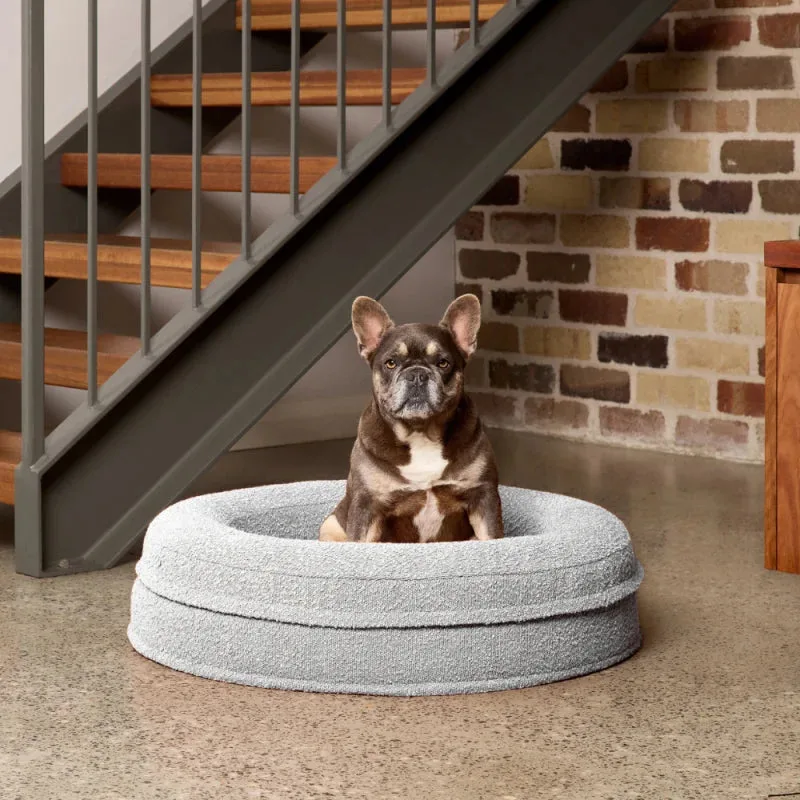
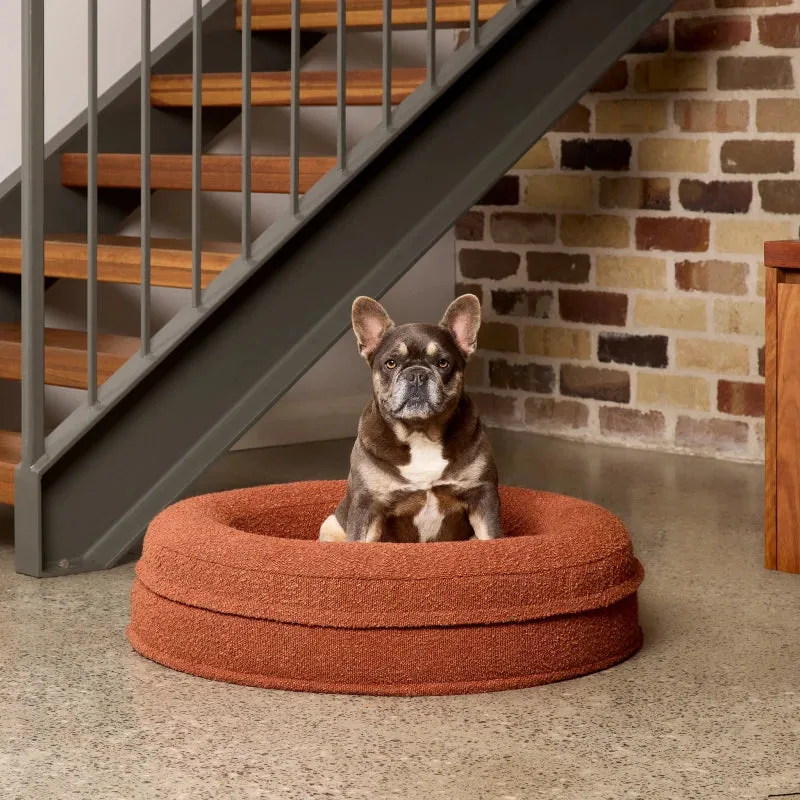
Round Memory Foam Dog Bed - Bouclé Forest Green: Round bouclé orthopaedic dog bed with supportive memory foam. The foam core relieves pressure on joints, hips and spine, so keeping it dry and protected preserves the bed's main comfort benefit.
Round Memory Foam Dog Bed - Bouclé Forest Green
Round Memory Foam Dog Bed - Bouclé Forest Green