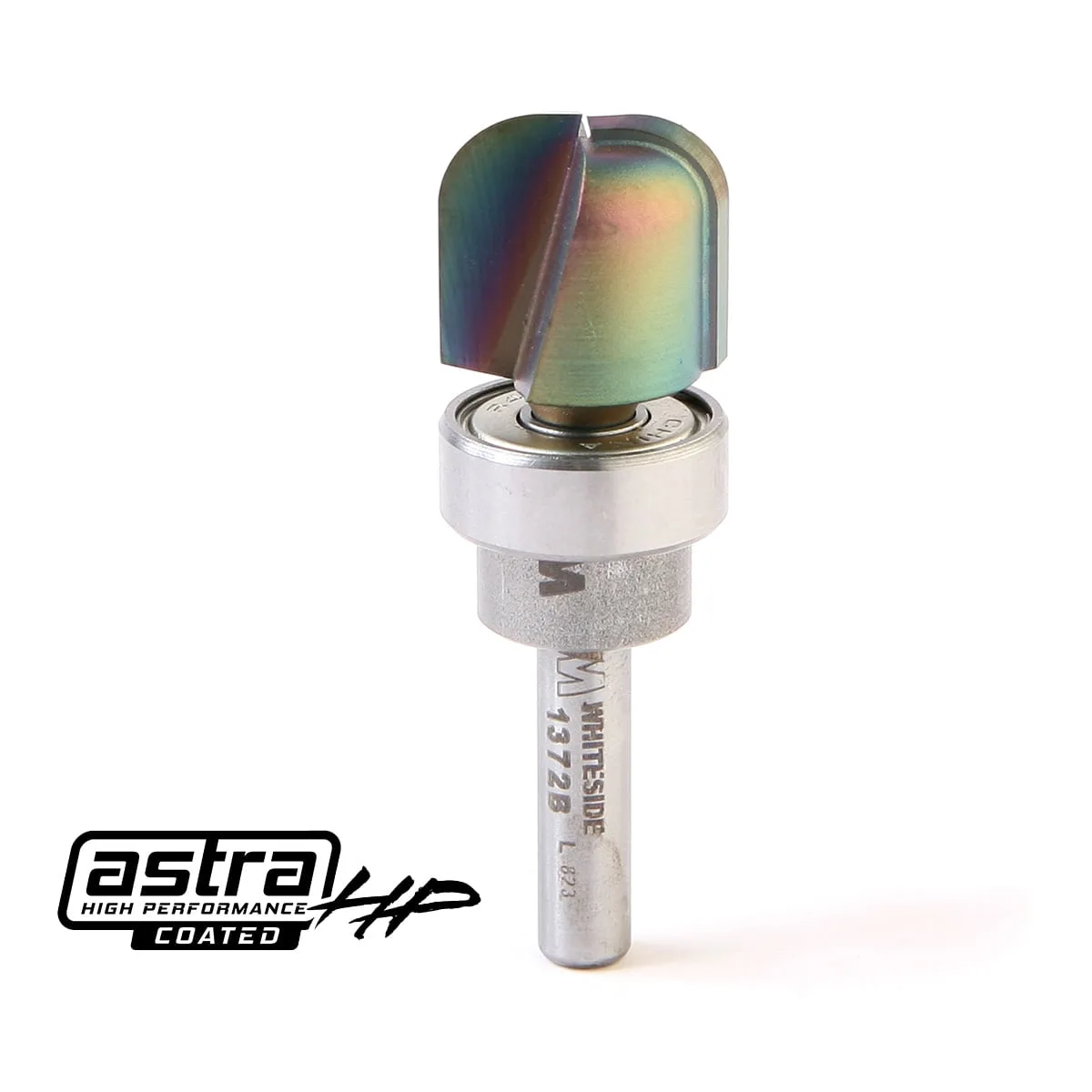
Why shank size matters for bowl and tray bits
When you choose a bowl and tray router bit, the shank size — 1/4" or 1/2" — determines whether the bit fits your router collet and how aggressively you can cut. Both sizes are available in the Whiteside 1370 series, which shares the same 3/4" cutting diameter and 1/4" corner radius. The difference is in the shank, and that affects collet compatibility, feed rate, and depth per pass.
Whiteside 1372 (1/4" shank) vs 1374 (1/2" shank)
Both bits are AstraHP coated, used for bowls, trays, boxes, and juice grooves. The catalog confirms the same recommended spindle speed of 16,000 RPM for both. But the 1/2" shank bit (1374) allows a deeper cut per pass and a faster feed rate.
- Whiteside 1372 (1/4" shank): 1/4" shank, 3/4" cutting diameter, 1/4" corner radius, 5/8" cut length. Recommended feed rate: 120-150 IPM. Depth per pass: 1/8". Stepover: 40-50%.
- Whiteside 1374 (1/2" shank): 1/2" shank, 3/4" cutting diameter, 1/4" corner radius, 5/8" cut length. Recommended feed rate: 120-150 IPM. Depth per pass: 1/8-1/4". Stepover: 40-50%.
How shank size affects your cut
The 1/2" shank (Whiteside 1374) supports a deeper pass — up to 1/4" per pass vs 1/8" for the 1/4" shank (1372). If your router accepts a 1/2" collet, the 1374 lets you remove material faster, especially in CNC work. The 1/4" shank bit is lighter and fits any palm router or trim router with a 1/4" collet, making it a good choice for smaller machines or lighter passes. Both bits share the same 120-150 IPM feed rate and 40-50% stepover, so the main tradeoff is depth per pass.
When to choose the bearing-guided 1372B
The Whiteside 1372B is a 1/4" shank bit with a bearing, designed for template-guided work like cutting juice grooves or signs. If you need to follow a pattern, the bearing on the 1372B eliminates the need for a bushing. The standard 1372 and 1374 do not include a bearing, so they require a fence or CNC path. The 1372B shares the same 1/4" shank and 3/4" cutting diameter as the 1372, but adds the bearing for guided cuts.
Catalog evidence for the three bits
-
3/4″ Bowl & Tray Bit x 1/4″ Corner Radius x 1/4″ Shank – Whiteside 1372 (AstraHP Coated): Whiteside 1372: 1/4" shank, 3/4" cutting diameter, 1/4" corner radius, 5/8" cut length, 16,000 RPM, 120-150 IPM feed rate, 1/8" depth per pass. Confirms the 1/4" shank bit is limited to 1/8" depth per pass, making it suitable for lighter cuts on smaller routers.
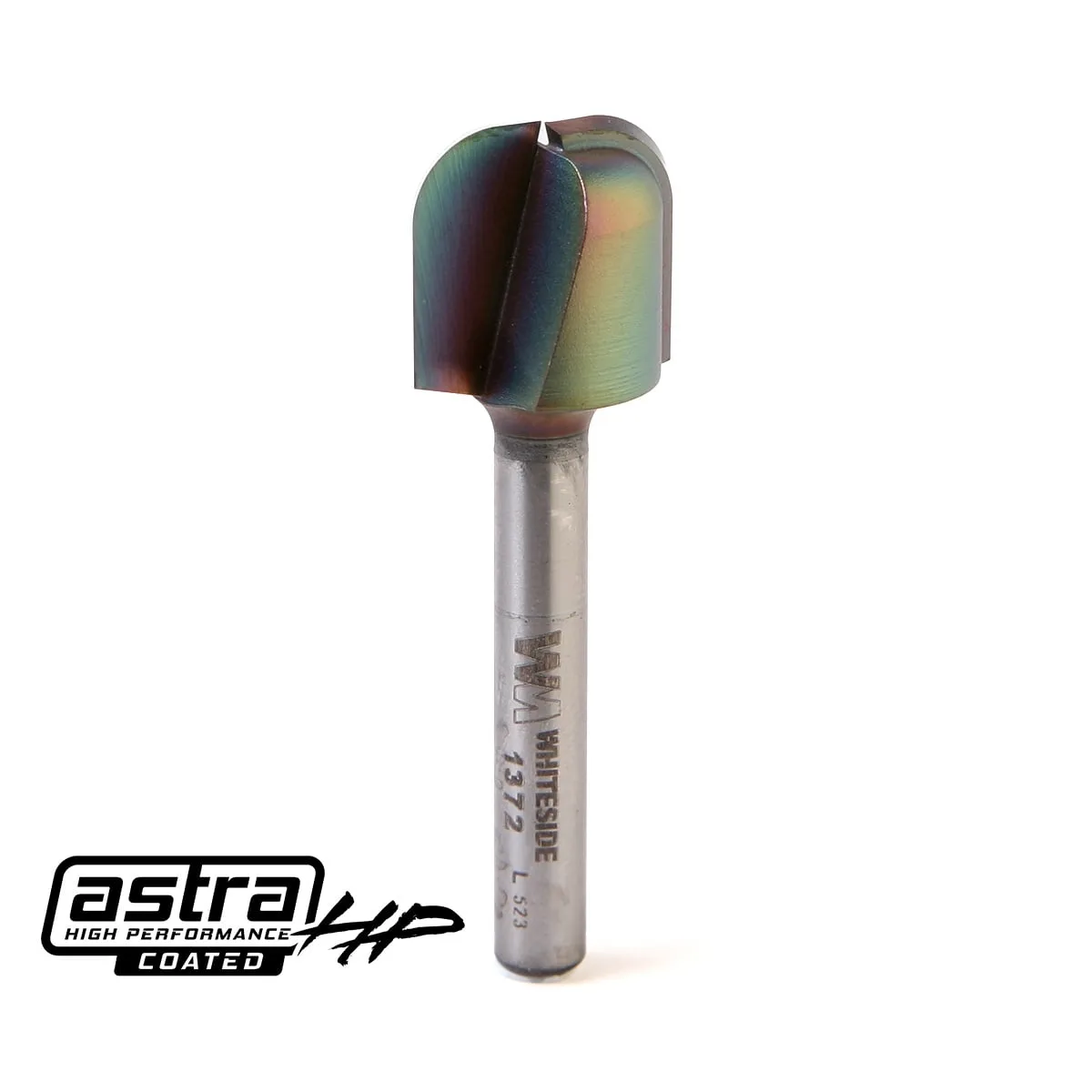
3/4″ Bowl & Tray Bit x 1/4″ Corner Radius x 1/4″ Shank – Whiteside 1372 (AstraHP Coated)
-
3/4″ Bowl & Tray Bit x 1/4″ Corner Radius x 1/2″ Shank – Whiteside 1374 (AstraHP Coated): Whiteside 1374: 1/2" shank, 3/4" cutting diameter, 1/4" corner radius, 5/8" cut length, 16,000 RPM, 120-150 IPM feed rate, 1/8-1/4" depth per pass. The 1/2" shank allows up to 1/4" depth per pass, enabling faster material removal when the router collet accepts 1/2" shanks.
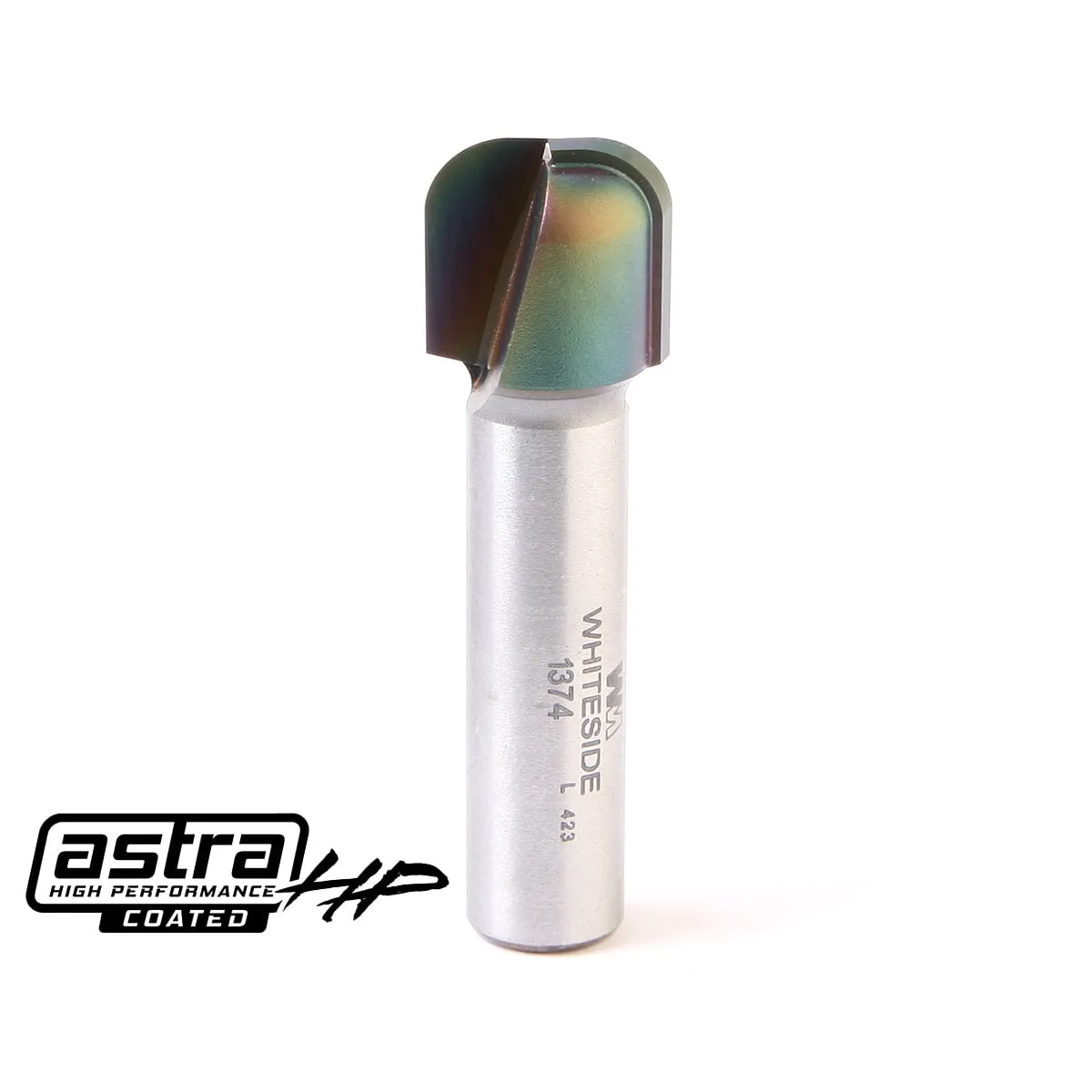
3/4″ Bowl & Tray Bit x 1/4″ Corner Radius x 1/2″ Shank – Whiteside 1374 (AstraHP Coated)
-
3/4″ Bowl & Tray Bit w/Bearing x 1/4″ Corner Radius x 1/4″ Shank – Whiteside 1372B (AstraHP Coated): Whiteside 1372B: 1/4" shank, 3/4" cutting diameter, 1/4" corner radius, includes bearing for template-guided cuts. Adds bearing-guided capability to the 1/4" shank platform, useful for juice grooves or signs without a CNC.
What the catalog does not settle
The supplied information does not specify maximum RPM or material-specific feed adjustments. The stepover recommendation (40-50%) applies to both bits, but the catalog does not give a formula for calculating stepover based on corner radius or cutting diameter. For router collet compatibility, verify your router's collet size before choosing: a 1/4" collet requires the 1372 or 1372B; a 1/2" collet can use the 1374. The 1374 is not confirmed to work with a 1/4" collet via an adapter, and the catalog does not mention adapter use.