Quick answer
Put the thermal top and bottom on as the first layer against his skin, then add a regular school shirt and pants over them. Check the fit at the wrists and ankles before he leaves, and skip the thermal set on mild days to prevent overheating.
Why the base layer does most of the work
A kids thermal base layer traps warm air next to the skin and moves sweat away from the body. That matters on cold school days when kids go from a heated classroom to a windy playground and back again. If the base layer is bulky or loose, it bunches under school clothes and loses much of that benefit.
When to choose a thermal set instead of extra sweats
A thermal top and bottom sit closer to the body than fleece sweatpants or a hoodie, so they fit under school uniforms without adding visible bulk. Choose a thermal set on days when the morning is near freezing and the playground is exposed. On milder winter days, a single thermal top under a regular shirt is often enough, and the bottom can stay in the drawer.
The fit trade-off: snug but not tight
Thermal layers work best when they touch the skin, but a set that is too tight restricts movement and feels uncomfortable during gym or recess. Look for a size that follows his body without leaving red marks at the waist or wrists. If he is between sizes, size up rather than down, because a slightly looser thermal still layers well under pants.
How to layer a thermal top and bottom for school
- Start with dry skin: Put the thermal top and bottom on clean, dry skin before any other clothing. Common mistake: layering over a cotton undershirt, which traps moisture and cancels the wicking benefit. If his skin is damp from a bath or lotion, wait a few minutes before dressing.
- Check the top fit at wrists and waist: The sleeves should reach his wrists and the hem should stay tucked without riding up. Common mistake: choosing a top that is too short, which leaves a cold gap at the lower back when he bends or sits. Have him raise both arms overhead; if the hem lifts above his waistband, try the next size.
- Check the bottom fit at ankles and knees: The legs should reach his ankles and bend easily at the knee. Common mistake: pulling the bottoms down over socks, which bunches fabric in shoes and causes blisters. Tuck the thermal legs into socks only if the socks are tall enough to stay up.
- Add school clothes over the set: Put his regular shirt and pants on over the thermal top and bottom. Common mistake: adding a second bulky layer like fleece-lined pants over a thermal bottom, which makes him overheat indoors. If the classroom is warm, a single thermal top under a shirt is usually enough.
- Do a final movement check: Have him sit, squat, and reach forward to confirm nothing pulls or bunches. Common mistake: skipping this check, then discovering at school that the waistband rolls or the sleeves ride up. A quick squat test catches most fit problems before he leaves the house.
Product facts
-
EVERYDAY KIDS Boys Red Thermal Top and Bottom Underwear Set: This set is lined with soft microfleece and made from a polyester and spandex blend with a moisture-wicking interior. The wicking lining helps move sweat away during active play, so he stays drier when he comes back inside.
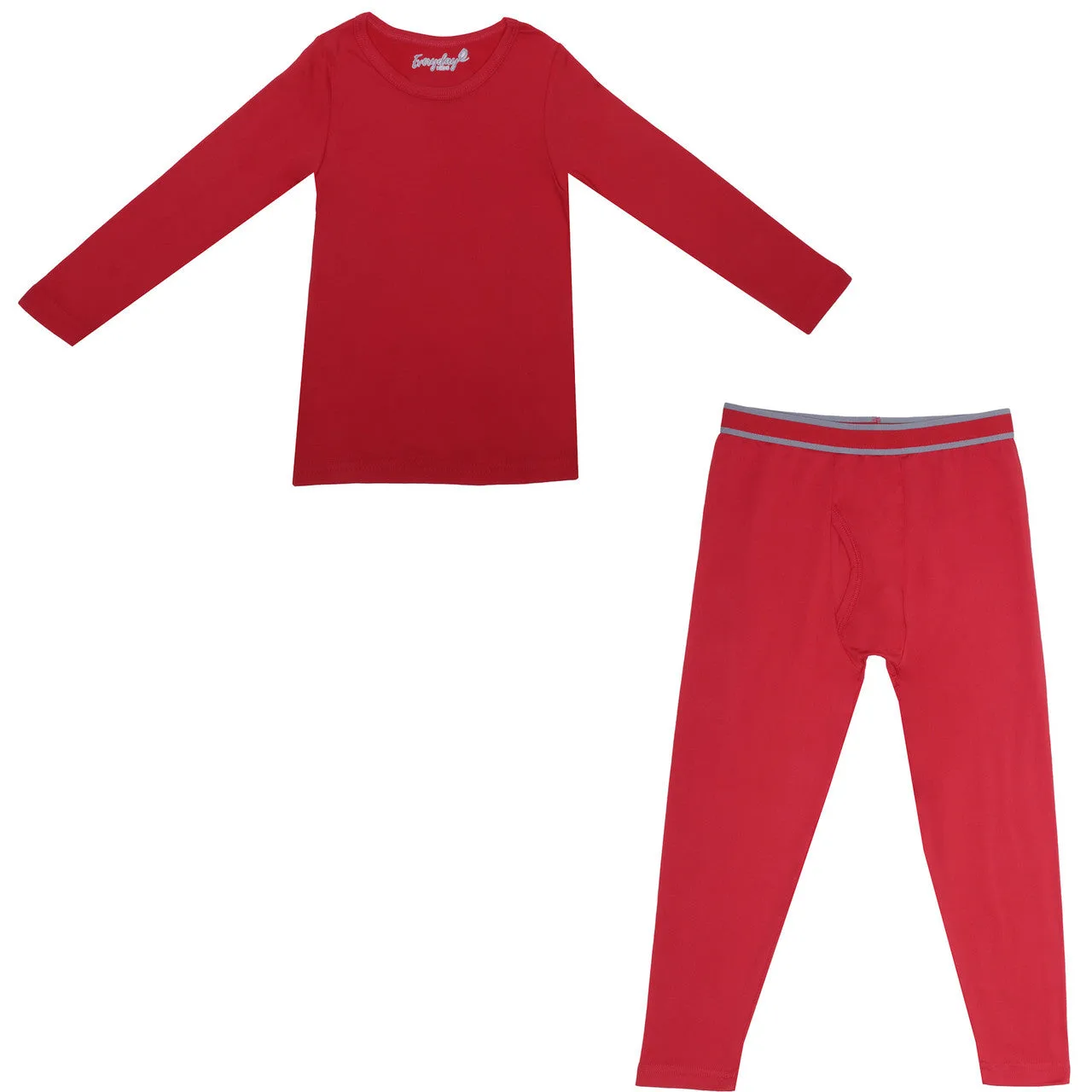
EVERYDAY KIDS Boys Red Thermal Top and Bottom Underwear Set