Quick answer
For sweat alone, choose a bra liner: it sits against the bra band to reduce underboob moisture. A nursing pad is built for milk leaks, so it is the better pick when leakage is your main problem. If you deal with both, use each for its own job rather than expecting one product to do everything.
They solve different moisture problems
Underboob sweat comes from skin trapped against the bra band, while milk leaks come from the breast itself. A bra liner is placed to manage perspiration against the bra, and a nursing pad is placed to catch milk. That difference matters because a pad designed for leakage may feel bulky or damp when the issue is only sweat, and a liner will not absorb a let-down.
The practical rule is to match the product to the source of the moisture. If your bra band feels clammy by midday but your pads stay dry, sweat is the issue. If pads are soaked after feeds, leakage is the issue.
Reuse and wardrobe trade-offs
Reusable bra liners appeal to shoppers who want a washable layer that works with bras they already own, but they add laundry and need a spare while one is drying. Nursing pads are usually sold as absorbent inserts and may be disposable or washable; either way, they are sized around milk absorption rather than airflow.
Neither product replaces a well-fitting bra. A band that digs in or a cup that shifts will create friction and trapped moisture no liner or pad can fully fix. Check fit first, then add the layer that matches your day.
When you need both
Many breastfeeding parents face sweat and leaks in the same week, especially in warm rooms or during cluster feeds. In that case, use a nursing pad for leak protection and a bra liner for band-level moisture, but avoid stacking thick layers that make the bra feel tighter. Rotate and wash both regularly, and give your skin a break from tight bands when you can.
Trade-offs at a glance
- Sweat control: A bra liner is the more direct choice for underboob sweat because it is designed to reduce moisture at the bra band. A nursing pad is shaped around milk absorption, so it may not address band-level clamminess as well. If your bra band is the damp part, start with a liner.
- Leak protection: A nursing pad is the practical pick when milk leaks soak your bra between feeds. A bra liner is not a substitute for a pad on heavy let-down days. If pads are wet after feeds, keep using them even if you add a liner.
- Laundry and cost: Reusable bra liners add a washable layer but require spares and laundry. Nursing pads may be disposable or washable, so compare the ongoing cost and effort of your preferred type before buying. Buy at least two liners if you plan to wear one daily.
- Fit and bulk: A liner adds a thin layer at the band, while a nursing pad adds absorbent material over the nipple. Wearing both can make a bra feel tighter, so check the band fit after adding either. Adjust the bra band before deciding the liner or pad is too bulky.
Product facts
-
Don't Sweat It - Bra Liner: The Belly Bandit® Don't Sweat It Bra Liner is designed to minimize under-boob perspiration and is available in Black and Nude. It gives you a sweat-focused layer that can pair discreetly with existing bras, rather than serving as a milk-absorbing pad.
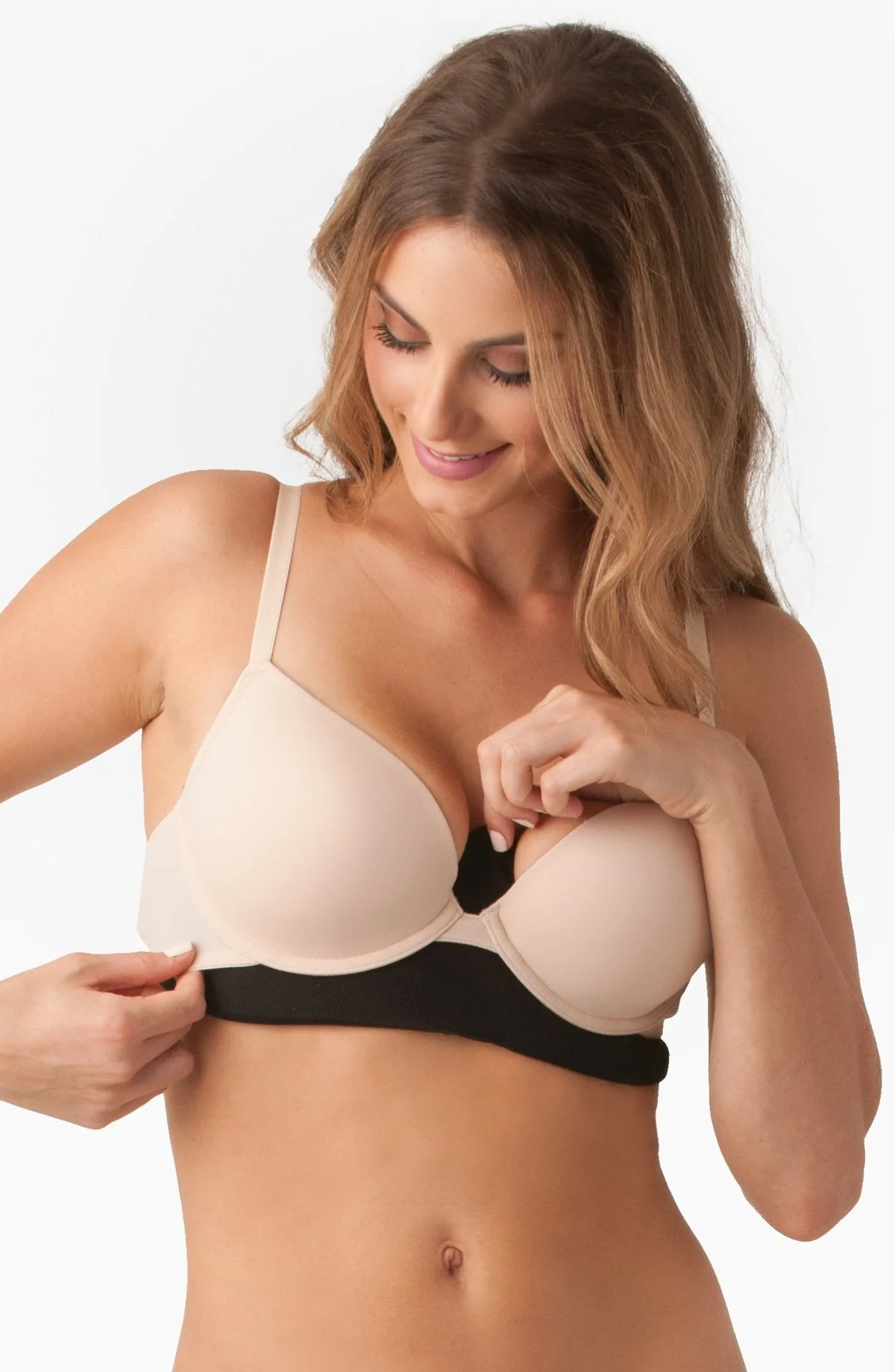
Don't Sweat It - Bra Liner
Which should you choose?
Best for
- Breastfeeding parents whose main complaint is underboob sweat and clammy bra bands
- Shoppers who want a reusable layer that works with bras they already own
Not for
- Anyone dealing with heavy milk leakage who needs absorbent nursing pads
- People who want a single product to handle both sweat and leaks without adding layers