Quick answer
Weight fluctuation usually changes your band size first, because the ribcage carries much of the gain or loss, while cup volume shifts more gradually. Remeasure when your band rides up, your cups gap or spill, or your straps dig in even when adjusted. A quick tape measurement plus a fit check on your current bra tells you whether you need a new size or just a different style.
Your bra size is not a fixed number. It is a snapshot of your body at a particular weight, and bodies change for many reasons: seasonal shifts, training cycles, medication, pregnancy, or simply a few pounds up or down. The bra that felt perfect six months ago may now sit differently, and that is normal.
The useful question is not whether your size changed, but whether your current bra still does its job. Below are the questions readers ask most about bra size fluctuation, with practical answers you can act on today.
Does weight fluctuation really change your bra size?
Yes, and the change is often uneven. The ribcage is bony and relatively stable, so band size tends to move in whole increments, while the breasts are mostly soft tissue, so cup volume can shift more subtly. A five-pound change might show up as a snugger band before you notice any cup difference. A larger change can move you both down a band and up a cup, or the reverse.
Because the two measurements do not move in lockstep, relying on memory is risky. Rechecking both numbers whenever your bra feels off is the simplest way to catch a size change early.
- Band size often changes before cup size does.
- A tighter band can make cups feel smaller even when cup volume has not changed.
- Weighing yourself is optional; how the bra fits is the better signal.
When should I remeasure my bra size?
Remeasure when you notice any of these signs for more than a day or two: the band rides up in back, the center gore floats away from your sternum, cups gape at the top or spill over the edge, or straps leave red marks even after you loosen them. These are fit symptoms, not style problems, and adjusting the hooks or straps will not fix them for long.
A good habit is to remeasure after any deliberate weight change of about five to ten pounds, after a change in medication, or at the start of a new season when your body may have shifted. If nothing has changed, there is no need to remeasure on a schedule.
- Check the band first: it should feel snug on the loosest hook, not tight.
- If the gore does not touch your chest, the cup or band size is likely off.
- Remeasure after roughly five to ten pounds of change, not every week.
How do I remeasure bra size after a weight change?
Measure your underbust snugly, keeping the tape level around your ribcage, and round to the nearest whole inch for your band. Then measure your bust at the fullest point, usually across the nipple, without compressing the tissue. The difference between the two numbers gives you a starting cup size. From there, try on bras in that size and one size in each direction, because brands and styles vary.
If you are between band sizes, choose the larger band and go down a cup, or the smaller band and up a cup, depending on whether the band or the cups felt more off in your old bra. Trust the fit check over the tape number when the two disagree.
- Measure underbust snug, not tight, and keep the tape level.
- Measure bust at the fullest point without pressing the tape into the tissue.
- Try the calculated size plus one band and one cup size in each direction.
Which bra styles adapt best to bra size fluctuation?
Styles with some stretch and adjustability handle small fluctuations better than rigid, structured bras. A demi or plunge bra with a soft underwire and stretch lace can accommodate a few pounds without gaping, while a wireless bandeau or a lightly padded half-cup gives you a smoother shape when volume drops. The key is to match the style to what changed: if your band got tighter, look for a style with a wider hook range; if your cup volume changed, look for a cup that follows your shape rather than holding a fixed form.
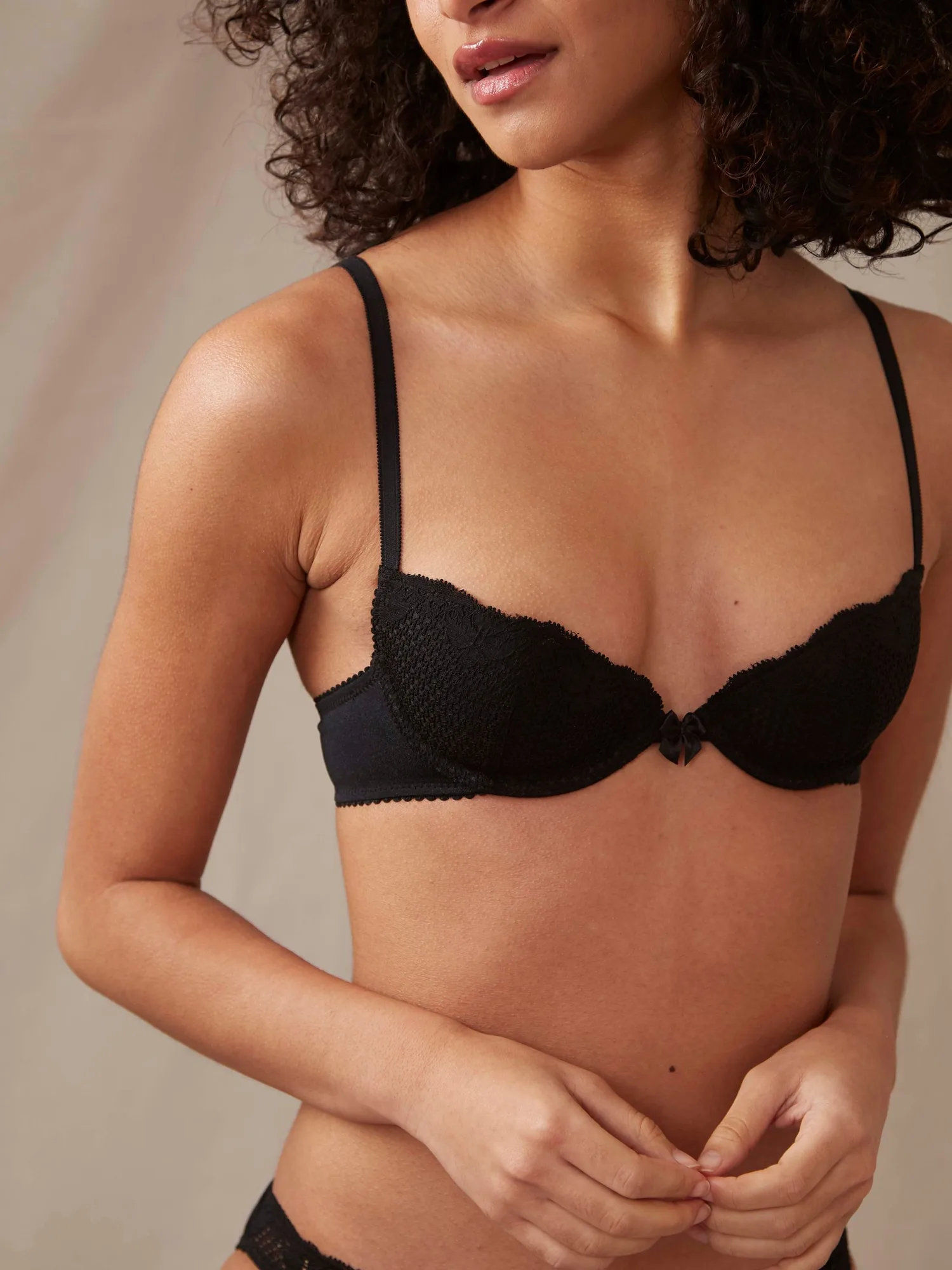
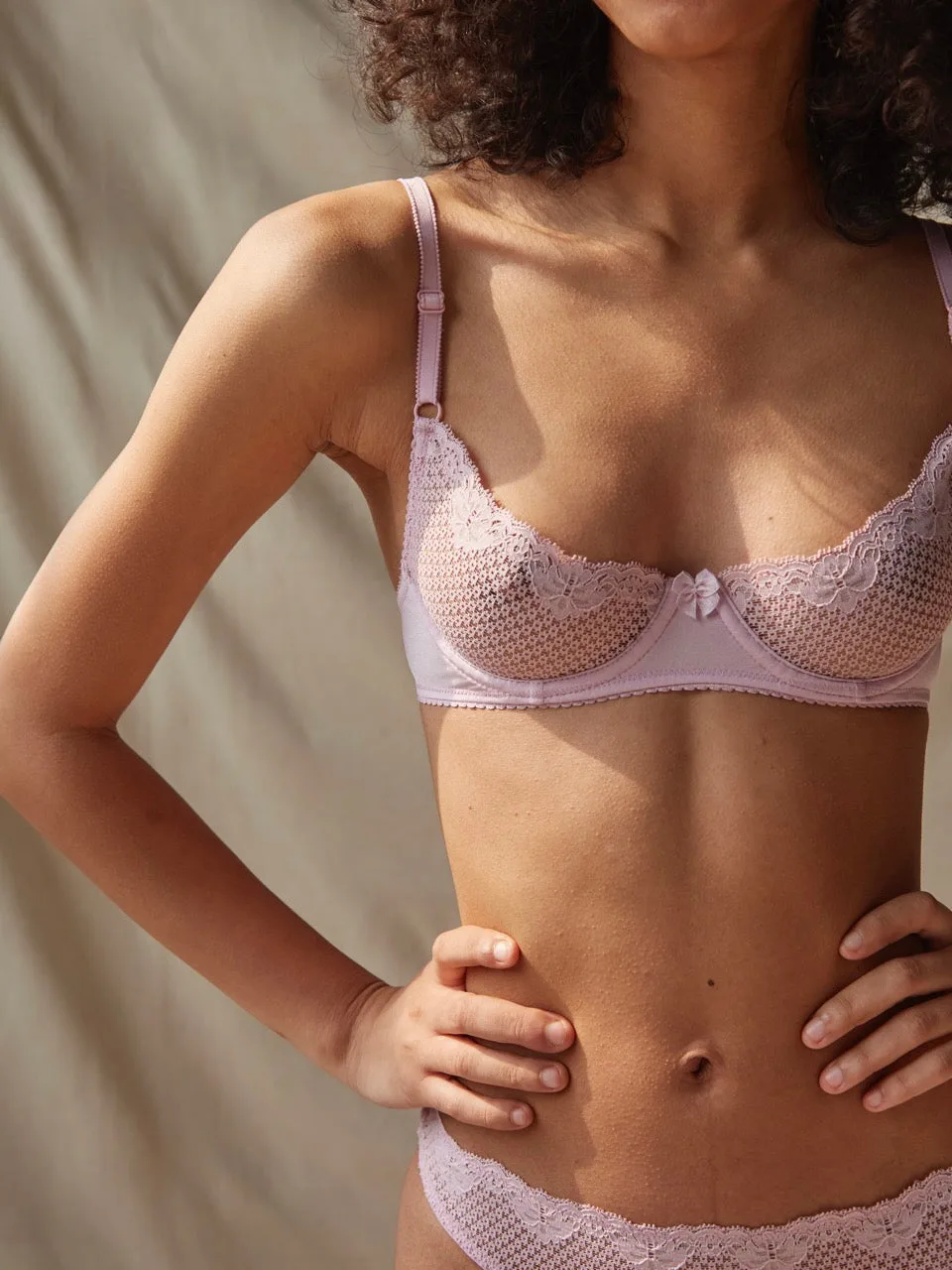
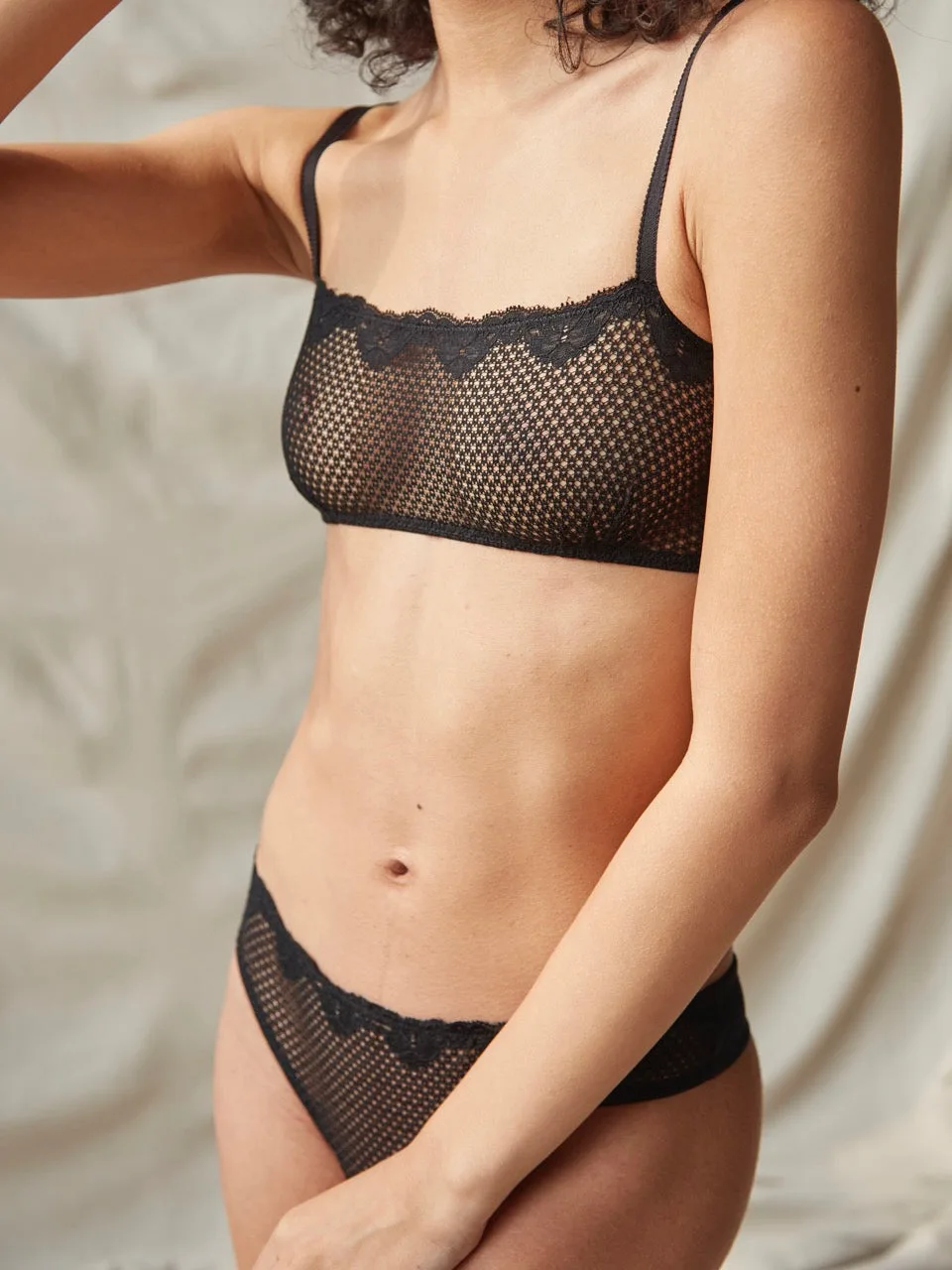
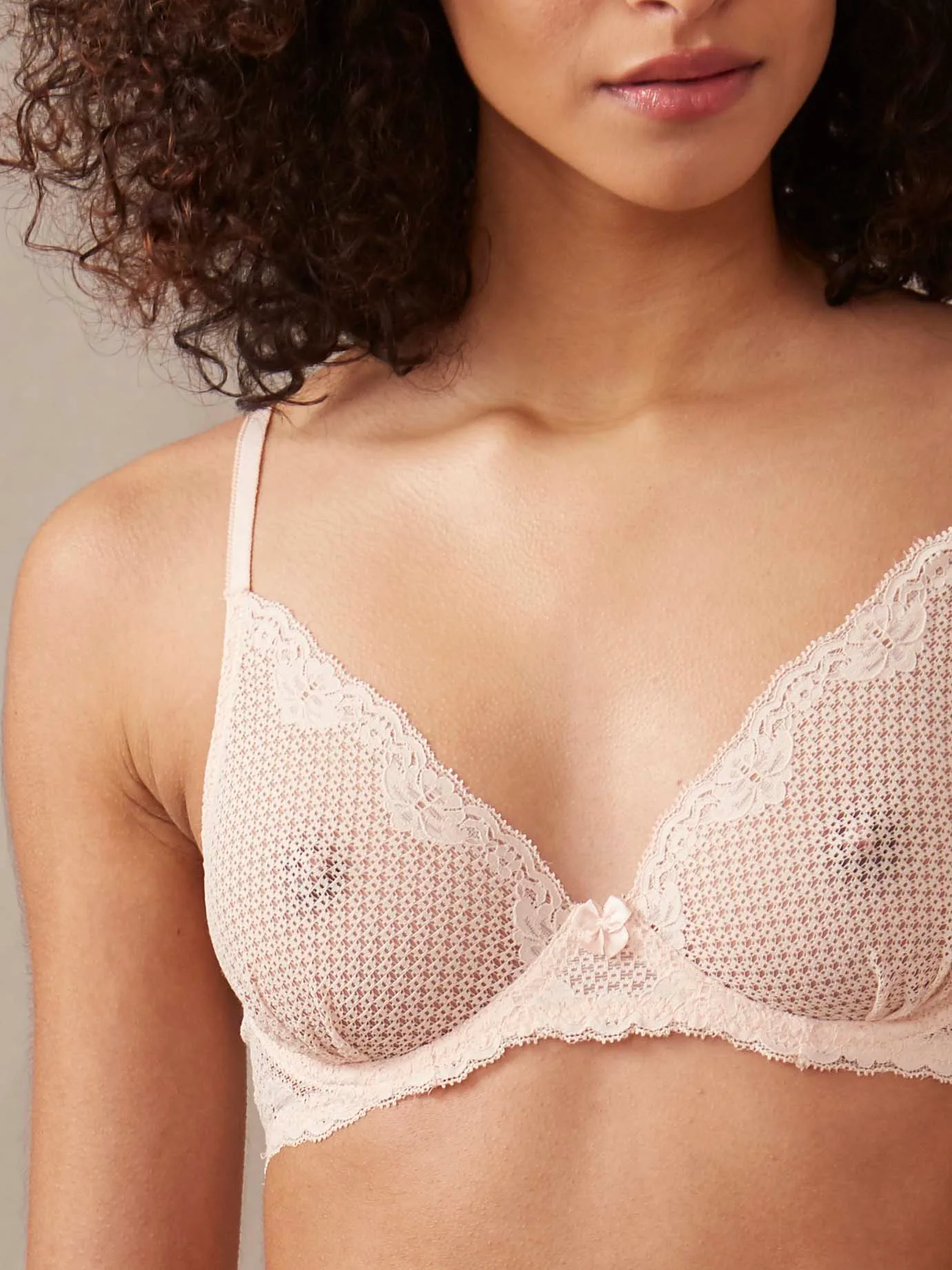
For readers who want a specific starting point, the Alice collection offers several silhouettes built on the same soft lace, so you can compare coverage and support without changing brands. The Alice Demi Bra uses a single lace panel with a soft underwire for gentle lift without padding, which makes it a good fit-check bra when your size is in transition. If you want a little more volume in an A to C cup, the Alice Padded Bra adds light foam padding to a low-cut half-cup shape, which can help when weight loss leaves cups feeling empty. For low necklines, the Alice Plunge Bra centers the bust in a deep V, and the wire-free Alice Bandeau bra uses adjustable sewn-on straps to stay in place without an underwire.
If you prefer a lighter, sportier feel, the Camille Plunge Bra uses sheer mesh over seamless foam cups for a secure deep V. Note that it is marked final sale, so it cannot be returned or exchanged, which makes it a less forgiving choice during an active weight change. When your size is still shifting, a returnable style is the safer test.
- Stretch lace and adjustable bands tolerate small changes better than rigid cups.
- Match the fix to the problem: band tightness versus cup volume.
- During an active change, favor styles you can return or exchange.
Can I keep wearing my old bra size after weight change?
You can, but only if it still passes the fit check. A bra that is one band size off can still work if you use the middle or tightest hooks and the cups lie flat. A bra that is one cup size off usually cannot be saved by adjusting straps, because the cup volume itself is wrong. Wearing a too-loose band means the straps do all the work, which leads to slipping and shoulder strain; a too-tight band can dig in and feel restrictive all day.
If your old bra fails the check, retire it from daily wear rather than forcing it. Keep one or two well-fitting bras in your current size and revisit the rest after your weight stabilizes.
- A band that needs the tightest hooks is a sign to size down.
- Straps should not be carrying the weight of the bra.
- Set aside bras that fail the fit check instead of tolerating them.
How often should I check my bra fit?
Check your fit whenever your body changes or your bra starts to feel different, and otherwise once or twice a year. A quick two-minute check, band level, gore flat, cups smooth, straps comfortable, is enough to catch most problems. If you track your weight, tie the check to any change of about five pounds in either direction.
Consistency matters more than frequency. A bra that fit last spring may not fit this fall, and that is not a failure of the bra or your body. It is simply information that tells you when to remeasure.
- Do a two-minute fit check after any noticeable weight change.
- Recheck at least once or twice a year even without weight change.
- Replace or resize when the band, gore, cups, or straps fail the check.
Quick fit checkpoints for bra size changes
Band check
Fasten on the loosest hook and slide two fingers under the band. If it lifts away easily, size down; if it digs in, size up. A band that needs the tightest hooks is already too big.
Gore check
The center piece between the cups should rest flat against your sternum. Floating means the cup or band size is off. Adjusting straps will not fix a floating gore.
Cup check
Look for smooth fabric with no gaping at the top and no spillover at the edge. If either appears, try one cup size in each direction. Cup volume, not strap tension, controls gaping and spillover.
Strap check
Straps should stay put with light tension. If they dig in or slip, the band is likely doing too little work. Fix the band first, then adjust straps.
Timing check
Remeasure after about five to ten pounds of change, or whenever the bra feels different for more than a day or two. Fit symptoms are the best signal to remeasure.
Timpa styles that help during size changes
- Alice Demi Bra: Features a soft underwire and stretch lace cups made from a single panel with no middle seams, providing gentle lift without padding. The seamless stretch lace follows small volume changes and avoids the gaping that padded or seamed cups can show after weight loss.
- Alice Padded Bra: Designed for smaller busts (A-C cups) with light foam padding in a low-cut half-cup silhouette to create a smooth, rounded shape without gaping. If weight loss leaves your cups feeling empty, the light padding restores shape without adding bulk.
- Alice Plunge Bra: A deep V silhouette in seamless crochet lace that centers the bust and provides secure lift for low-cut necklines. Good for low necklines when your size is stable, but the centered fit is less forgiving if your cup volume is still changing.
- Alice Bandeau bra: A wire-free, unlined bandeau in soft stretch lace with fully adjustable, sewn-on straps for smaller busts. The adjustable straps and lack of underwire make it a comfortable option when your band size has shifted and structured bras feel restrictive.
Bra size changes from weight fluctuation are normal and manageable. Remeasure when your bra tells you something is off, favor stretch lace and adjustable bands during transitions, and treat your size as a current fact rather than a permanent label. A few minutes of checking saves you from all-day discomfort.