Quick answer
For most DD–G cup wearers, a structured bra is the better daily choice because it is engineered to carry fuller cup volume, while a bralette suits lighter days, lounging and layering when you accept less lift. If you want one bra that does the heavy lifting, choose a wire or full-cup style; add a bralette as a secondary piece, not a replacement.
A bralette can look effortless in photos, but at a DD–G cup the deciding factor is not the look — it is how the band, cups and straps carry weight across a full day. A structured bra and a bralette are built around different jobs, so the right answer depends on what you need that garment to do.
This comparison focuses on the trade-offs that matter most at fuller cup sizes: band support, cup construction, wire comfort and how each style behaves under clothing. The aim is not to crown a winner, but to help you choose the right option for a specific day, outfit or mood.
How a full bust bra is built
A full bust bra is designed around structure. The band does most of the supporting work, the cups are shaped to hold volume, and the straps are usually wider and more adjustable to spread pressure. In DD–G sizes this architecture is what keeps the bust lifted and separated rather than compressed together.
The trade-off is that structure often means more visible seams, firmer wires and a less relaxed feel against the skin. If you want a smooth line under a fitted dress, that construction is usually an advantage; if you want something you can forget you are wearing on a sofa day, it can feel like more bra than you need.
- Check that the band, not the straps, is doing the lifting — if straps dig in, the band may be too loose.
- Look for cups that hold their shape when you move, rather than collapsing at the centre.
What a bralette can and cannot do at DD–G
A bralette is typically lighter, often wireless and less structured. That makes it comfortable, easy to layer and flattering for relaxed looks, but it usually offers less lift, less separation and less control over shape. At a DD–G cup, the difference is noticeable rather than subtle.
A bralette can still work well for short wear, low-impact days or as a layer under a shirt or robe. The honest limitation is that most bralettes are not built to carry fuller cup weight for hours, so expecting bra-level support from one usually leads to disappointment.
- Choose a bralette with a wide, firm underband if you want any meaningful support.
- Avoid judging fit in the first minute — wear it for an hour to see if the band stays put.
Support, shape and comfort compared
Support: a structured bra wins for lift and weight distribution, because the band and cups are engineered for it. A bralette relies more on compression and stretch, which can feel comfortable but rarely lifts the same way.
Shape: a bra gives a rounder, more defined silhouette and better separation. A bralette tends to create a softer, more natural line, which can be exactly what you want under loose clothing but less predictable under fitted pieces.
Comfort: a bralette often wins for lightness and ease, while a well-fitted bra wins for all-day wear because the support is distributed rather than concentrated. The deciding factor is usually how long you plan to wear it and what you are doing.
- If you are between sizes, prioritise a snug band over a looser one — bands stretch with wear.
- For long days, a bra with adjustable straps and a firm band is the more reliable choice.
How to choose for a specific outfit or day
Start with the outfit, not the garment. Under a fitted dress or a structured top, a bra is usually the safer choice because it controls shape and reduces movement. Under an oversized shirt, a knit or a robe, a bralette can be the more comfortable and better-looking option.
Then consider duration. A bralette for a couple of hours at home is a very different decision from a bralette for a full working day. If you know you will be moving around, lifting things or sitting at a desk for hours, the bra is the more dependable pick.
- Match the bra to the neckline first, then to the level of support you need.
- Keep one structured bra and one relaxed bralette so you are not forcing one garment to do both jobs.
The trade-offs at a glance
- Support vs ease: A structured bra distributes weight through the band and cups for reliable lift, while a bralette trades that lift for a lighter, less restrictive feel. Choose the bra for long days and movement; choose the bralette for short, low-impact wear.
- Shape control vs natural line: A bra gives a rounder, more separated silhouette under fitted clothing, whereas a bralette creates a softer, more relaxed line. Match the level of shape control to the outfit, not to habit.
- Structure vs simplicity: Wires, seams and adjustable hardware improve fit at DD–G but add bulk and require more careful fit checks, while a bralette is simpler but less adjustable. If you want one dependable piece, prioritise a bra that fits the band and cups correctly.
Full bust options in the collection
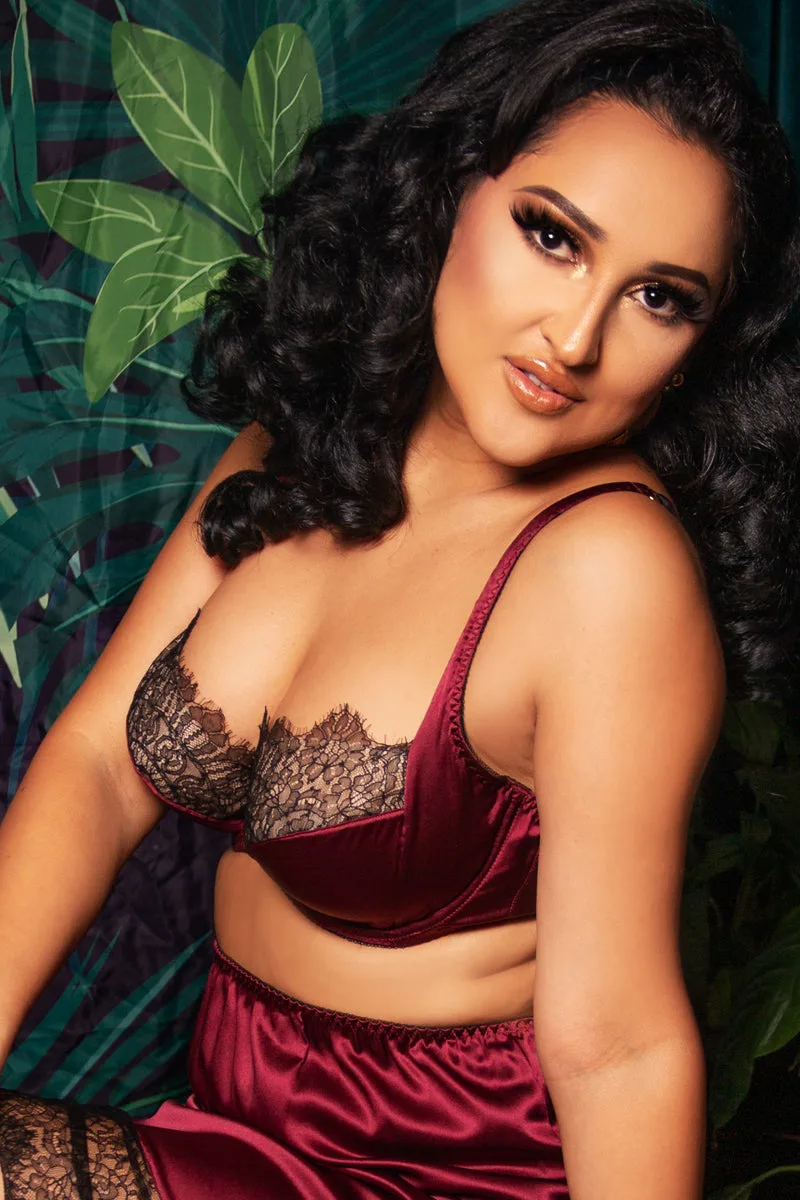
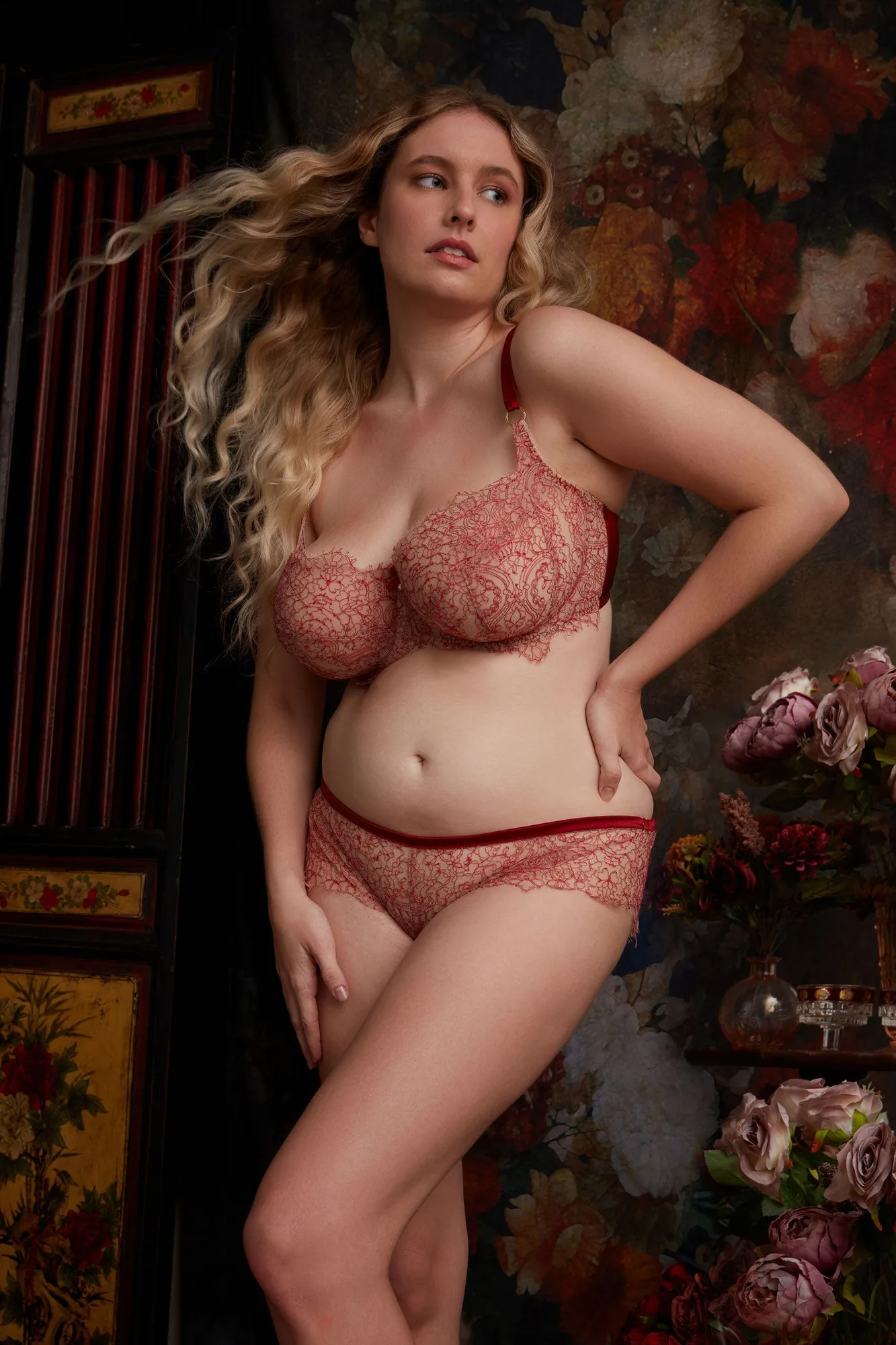
- Eleanor Damson DD - G Cup Bra: Silk lined cups create sumptuous comfort against the skin, combined with a beautifully supportive fit for DD+ bra sizes, finished with contrasting black eyelash lace and a hand sewn teardrop pearl. A structured bra with silk-lined cups and a supportive DD+ fit is the kind of piece that handles fuller cup volume for longer wear.
- Rosanna DD - G Cup Bra: Handmade to order in the English atelier, each piece is meticulously crafted for the perfect fit in fuller cup sizes, with gold toned hardware for extra adjustability and double-layered silk. Made-to-order construction and adjustable hardware matter at DD–G because small fit differences have a big effect on comfort and shape.
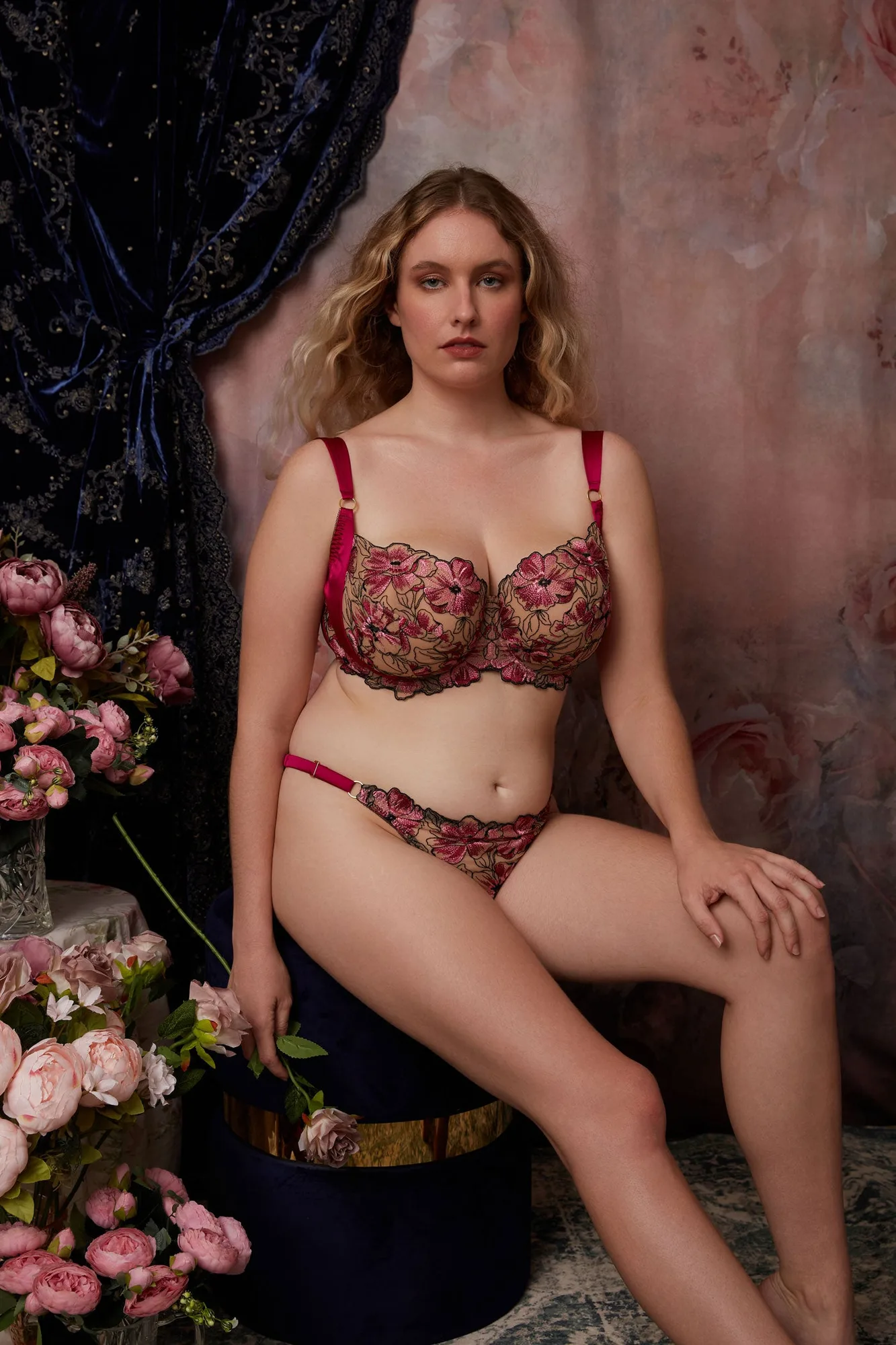
- Azalea DD - G Cup Bra: Created especially for DD-G cup sizes, with soft golden tulle linings providing extra support and comfort, and a design that mixes and matches with black lingerie. Purpose-built DD–G sizing and supportive linings show how a bra is engineered for fuller cups in a way a typical bralette is not.
Which should you choose?
Best for
- DD–G cup wearers who want lift, separation and all-day support
- Fitted dresses, structured tops and long working days
- Anyone who wants a single dependable bra rather than a secondary layer
Not for
- Anyone wanting a completely unstructured, wireless feel
- Very short wear or lounging where lift is not a priority
- Outfits where a soft, natural line matters more than shape control
The bra vs bralette question at DD–G is really a question of purpose. A structured bra earns its place for support, shape and long wear, while a bralette is a useful secondary piece for lighter days. Choose based on the outfit and the hours ahead, and you will get more from both.