Quick answer
A braided Lightning cable usually outlasts a standard rubber-jacketed cable in daily use because the jacket resists abrasion and the reinforced head resists bending stress. But the jacket is only half the story: cable length, connector style, and where you actually plug in decide whether a cable survives months of car doors, couch cushions, and pocket pulls. For most people, a braided 6 ft cable for home and a short 2 ft cable for the car is the combination that holds up best.
Most Lightning cables do not fail in the middle. They fail right behind the connector, where the jacket bends every time you plug in. That is why a braided Lightning cable vs a standard cable is not just a texture preference — it changes where stress lands and how long the cable survives.
This comparison looks at what actually changes after months of daily use, using ToughTested cables as the concrete examples. The honest answer is that braiding helps, but length and connector choice often matter just as much.
What a braided jacket actually protects
A standard Lightning cable typically uses a smooth rubber or PVC jacket. It feels fine on day one, but repeated bending at the same point creates a crease, then a split, then exposed wire. A braided jacket spreads that bending force across many small fibers instead of one smooth surface, so the jacket resists abrasion and stays intact longer.
Braiding alone does not fix a weak connector. The ToughTested PET Pro 8 ft Lightning to USB-C Cable pairs its PET ArmorWeave jacket with reinforced strain relief, which is the part that matters most after months of daily use. The jacket resists surface wear; the strain relief resists the bend that usually kills a cable.
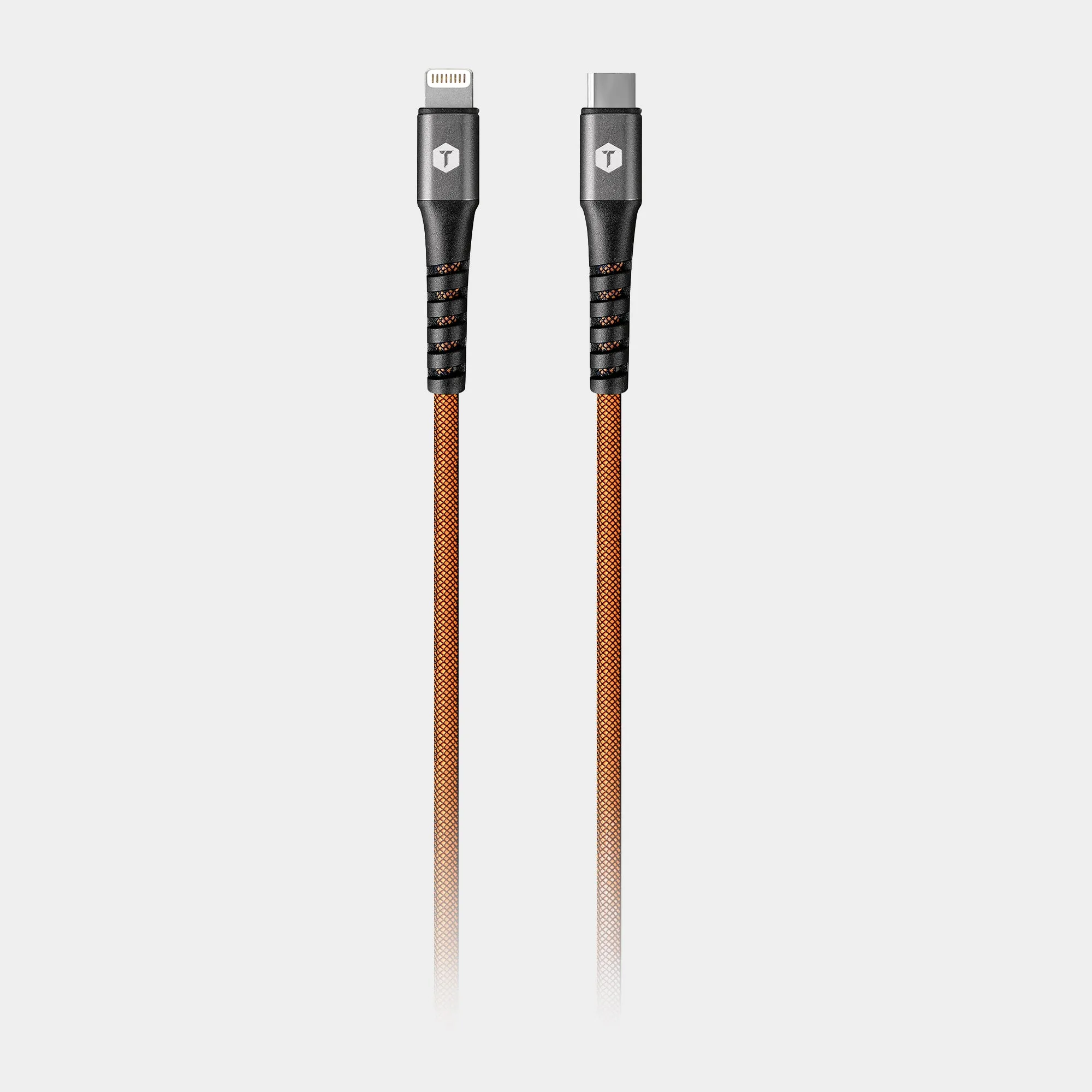
ToughTested PET Pro 8 ft Lightning to USB-C Cable
- Check the strain relief, not just the jacket — that is where most cables fail first.
Why length changes durability more than people expect
A longer cable gives you slack, and slack means the cable bends at a gentler angle when you pick up your phone. A cable that is always taut pulls hard on the connector every time you move. That constant tension is a bigger long-term threat than most people realize.
The ToughTested 6 ft USB-C to USB-A Durable Braided Cable illustrates the point: its 6-foot length and strong flexible design let it absorb movement instead of transferring it to the plug. A short cable in the same spot would tug at the port every time you reach for your phone.
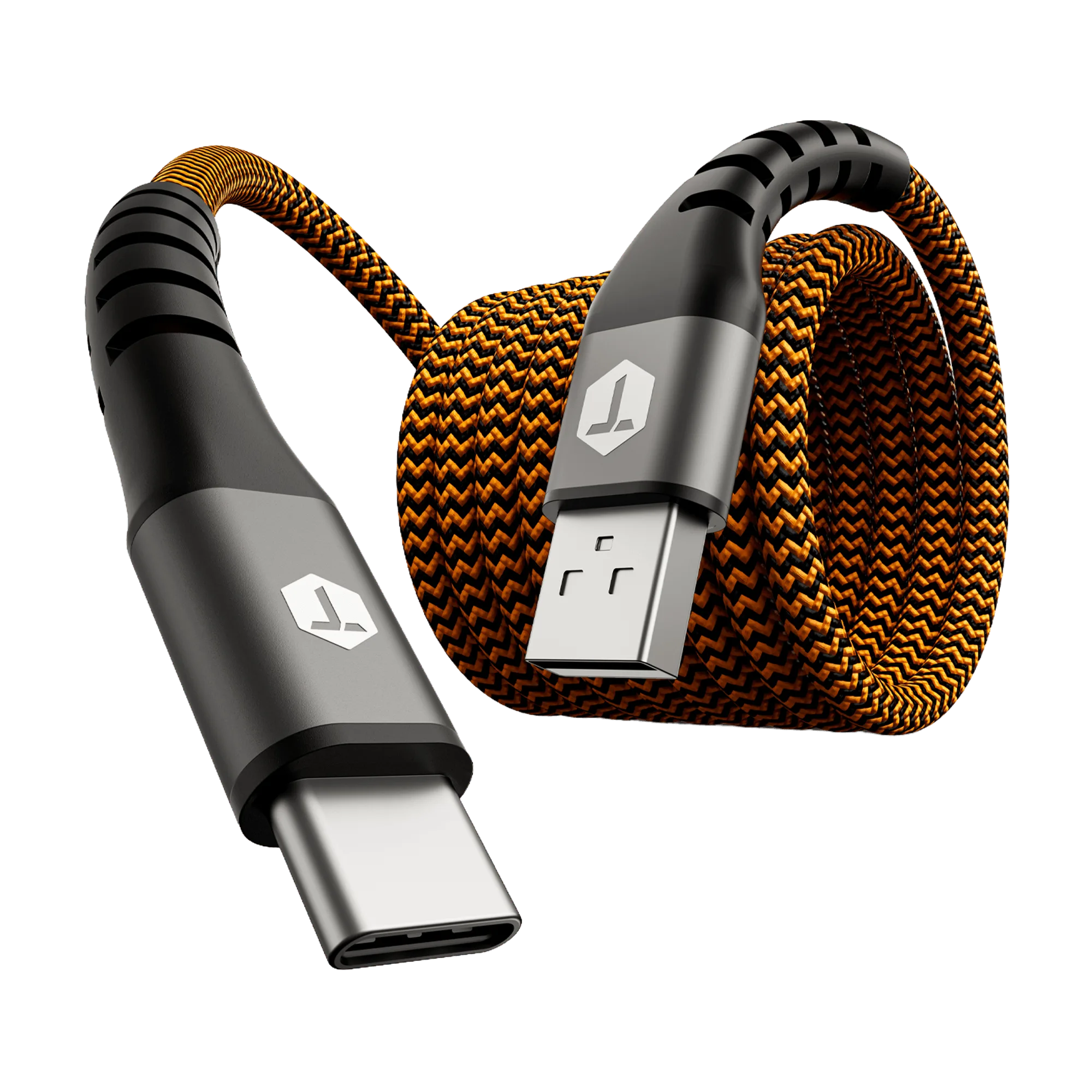
ToughTested 6 ft USB-C to USB-A Durable Braided Cable
- If your cable is always stretched tight, go one size longer before blaming the cable.
The car is the hardest test for any cable
Heat, sunlight, and constant plugging make a car the toughest environment for a Lightning cable. A long cable loops and snags on the shifter; a short cable reaches the mount without excess. This is where length stops being about convenience and starts being about survival.
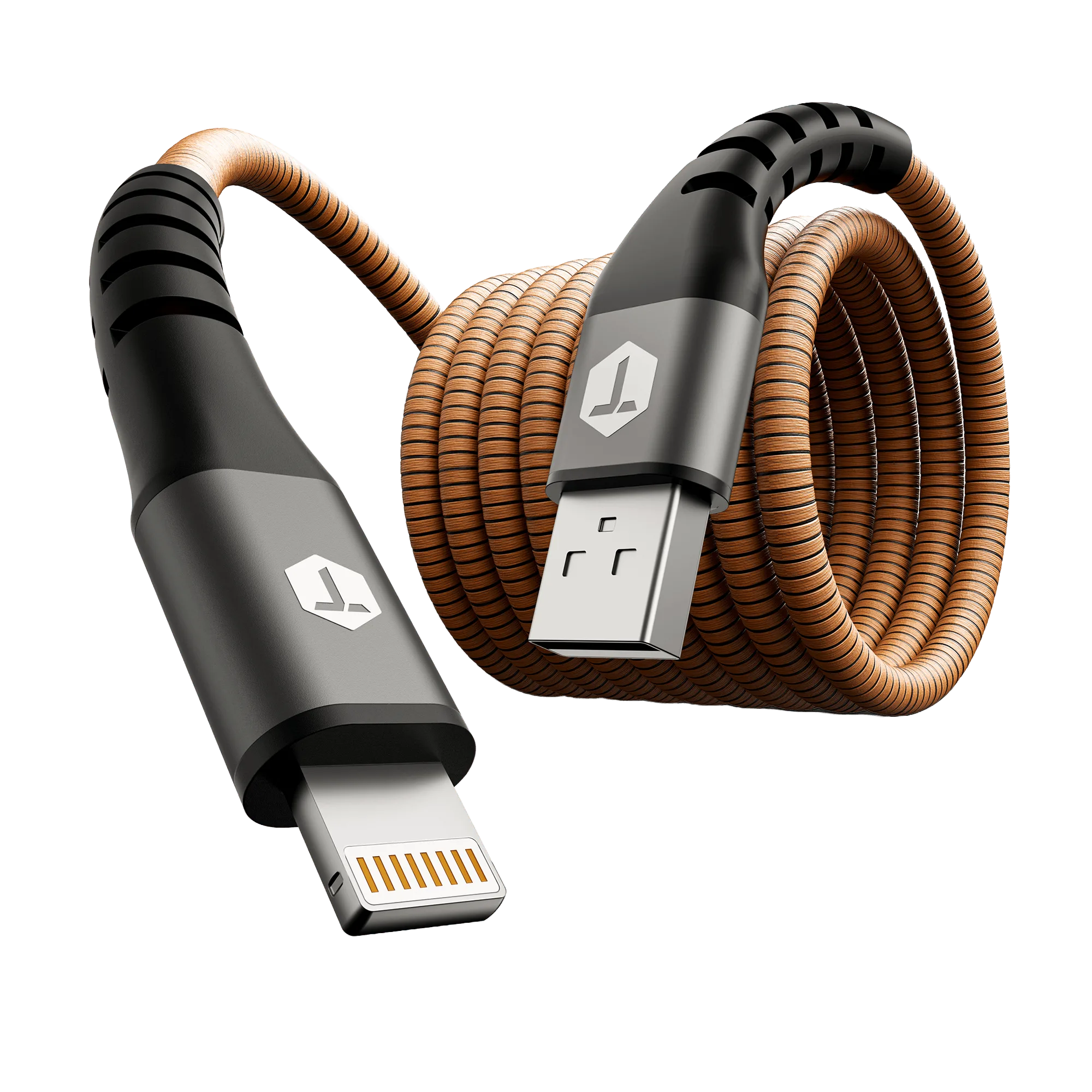
The ToughTested Armor Flex 2 ft Lightning Cable is built for exactly this: a 2 ft length for car mounts and tight spots, a flexible jacket that stays manageable in the cab without kinking, and reinforced strain relief that resists fraying at the connector. In a car, a short braided cable usually outlasts a long standard one.
- Match the cable to the space: short in the car, longer at home.
When a standard cable is still the right call
A standard cable is not automatically a bad cable. If it stays on a desk, rarely moves, and never gets yanked, a smooth jacket can last a long time. The failure mode is mechanical, so a cable that never bends much never hits that failure mode.
The trade-off is that standard cables give you no margin. Once the jacket creases, there is nothing underneath to slow the damage. Braided cables cost a little more up front but tend to fail later and more gradually, which is easier to notice before it stops charging.
- If a cable lives on a desk and never travels, a standard jacket is a reasonable choice.
Trade-offs to weigh before you buy
- Braided jacket vs standard jacket: Braiding resists abrasion and surface wear better, but it does not replace good strain relief. A braided cable with a weak connector can still fail early. Look for reinforced strain relief first, braiding second.
- Long cable vs short cable: Longer cables reduce tension at the port but can loop, snag, and tangle. Shorter cables stay tidy but pull tight if you move while charging. Pick length by where the cable lives, not by what looks best on the shelf.
- Upfront cost vs replacement frequency: Braided cables usually cost more than basic standard cables, but a cable that lasts longer means fewer replacements and less e-waste. If you replace cheap cables every few months, the math usually favors braided.
ToughTested cables compared
- ToughTested PET Pro 8 ft Lightning to USB-C Cable: 8-foot PET Pro cable with a Tough PET ArmorWeave jacket, chemical, heat, and abrasion resistance, dual-layer shielding, and reinforced strain relief; made for iPhone, iPad, and iPod. The ArmorWeave jacket and reinforced strain relief target the two most common failure points, and the 8 ft length reduces tension when you use your phone while charging.
- ToughTested Armor Flex 2 ft Lightning Cable: 2 ft Lightning cable with reinforced strain relief and a flexible jacket; certified Lightning connector for Apple devices; high-speed charge and sync. The short length keeps the cable from looping and snagging in a car mount, and the reinforced head handles constant plugging better than a standard cable.
- ToughTested 6 ft USB-C to USB-A Durable Braided Cable: 6-foot durable braided cable with a tough nylon jacket, dual-layer shielding, and a reinforced cable head and strain relief; rated for charge and sync. A good middle length for home or office use where you want slack without a long loop, and the shielding helps reduce interference.
Which cable fits your routine
Best for
- People who charge in the car and need a short, tangle-free cable that survives constant plugging
- Anyone whose current Lightning cable has already frayed near the connector
- Households where cables get shared, dropped, and pulled across rooms
Not for
- Someone who only charges at a desk and never moves the cable — a standard cable is fine there
- Buyers who need a specific length or connector not covered by the cables above
Braiding helps, but it is the strain relief and the right length that carry a cable through months of daily use. Choose a braided cable where the cable bends and travels, and keep a standard cable where it never moves.