Quick answer
Place the bread plate to the upper left of your main plate, above the forks. Use it only for bread and butter: tear off a bite-sized piece, butter that piece, and eat it in one or two bites.
Why the left-side rule matters
The bread plate belongs on the left because the right side is reserved for glasses and knives. This simple rule keeps the table organized and prevents you from reaching across your neighbor. In a formal setting, the bread plate sits just above the forks and to the left of the main plate.
Common mistakes to avoid
The most frequent errors are putting the bread plate on the right, buttering a whole slice at once, and using the plate for other items like used cutlery or olive pits. Another mistake is cutting bread with a knife; it should be torn by hand. These small habits make a big difference in how comfortable your guests feel.
Choosing a bread plate that works
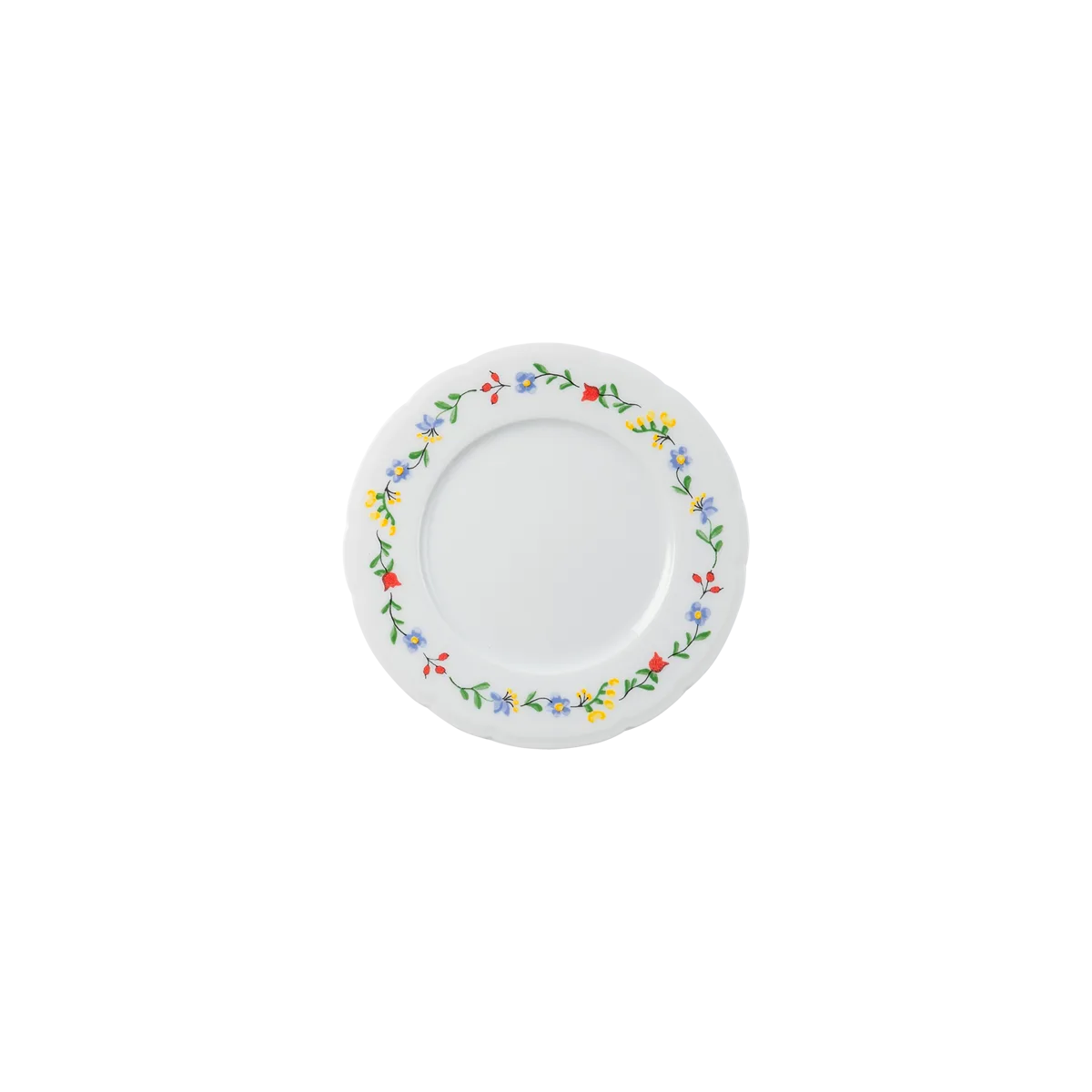
A bread plate should be small enough to fit comfortably at the table but large enough to hold a slice or two without crowding. Look for a plate with a slightly raised edge to keep crumbs contained. Material matters too: porcelain is classic and easy to clean, while stoneware offers a more rustic look. The Guy Degrenne Reminiscence Fleurie bread plate, for example, is made of Limoges porcelain with a scalloped edge and hand-drawn floral garlands, giving each piece a unique decor that adds charm to the table.
Step-by-step bread plate etiquette
- Set the plate on the left: Place the bread plate to the upper left of the main plate, above the forks. If you are setting a formal table, the plate should align with the top of the main plate. Checkpoint: the plate should never be on the right side.
- Keep it for bread only: Use the bread plate exclusively for bread and butter. Do not put used cutlery, olive pits, or other food on it. Checkpoint: if you need to put something down, use the main plate or a side dish.
- Tear, don't cut: When you take bread, tear off a bite-sized piece with your hands. Never cut bread with a knife at the table. Checkpoint: tearing preserves the texture and is considered proper etiquette.
- Butter one piece at a time: Butter only the piece you are about to eat, not the whole slice. Use the butter knife to take a small amount of butter and spread it on the piece. Checkpoint: buttering the whole slice can look greedy and makes the bread soggy.
- Eat in one or two bites: Eat the buttered piece in one or two bites. Do not dunk bread into soup or sauce unless the host does so first. Checkpoint: keep the plate clean and avoid leaving crumbs on the tablecloth.
Product facts
-
Bread Plate: Scalloped Limoges porcelain with hand-drawn floral garlands, each piece with a unique decor. The scalloped edge helps contain crumbs, while the unique decor makes each place setting feel special.
Bread Plate