Build the camera compartment around the shot list, not the gear pile
The Brevitē Jumper Photo Backpack is designed to carry a DSLR and lens, a drone, or even a small tripod, and it comes with four flexible dividers. That is the whole packing system: the dividers are what turn a day pack into a camera backpack. Before you put anything inside, decide what the day actually requires — one body and one lens, a body plus a second lens, or a drone instead of a second lens — and arrange the dividers around that answer.
Start with the largest item you plan to carry and give it a divider-bounded space rather than letting it float. Then use the remaining dividers to create separate slots for anything that could knock against it. The goal is a compartment where nothing shifts when you lift the bag by one strap, because a loose lens is the fastest way to turn camera backpack organization into a repair bill.
A packing order that works with the Jumper's layout
Work from the interior outward. The Jumper's pockets are placed for different jobs, so filling them in the wrong order means unpacking to reach the ones you need most.
- 1. Set the dividers for your main body and lens: Create a bounded space for the camera you will shoot with most. The four flexible dividers can be arranged to suit a DSLR and lens, a drone, or a small tripod, so choose the configuration that matches this specific day rather than a permanent setup.
- 2. Give the second item its own slot: If you are carrying a second lens or a drone alongside the camera, use the remaining dividers to separate it. Separate slots are what keep the interior organized instead of becoming one padded compartment with everything touching.
- 3. Load the laptop sleeve only if the day needs it: The dedicated laptop sleeve is a fixed part of the bag. On a pure shooting day it is dead weight and wasted space, so leave the laptop at home and let the sleeve stay empty rather than using it as a catch-all for loose accessories.
- 4. Put phone and passport in the back-panel pocket: The quick-access pocket on the back panel is positioned for a phone or passport. Pack these last so they sit flat and do not bulge into the camera compartment.
- 5. Use the hidden inner pocket for valuables: The hidden inner pocket is the place for items you do not want visible when the bag is open — cards, cash, a spare memory card. Keep it reserved for small flat items so it stays discreet.
- 6. Attach the tripod last: The Jumper has bottom and side tripod holders. Strapping the tripod on after the interior is packed lets you balance the load and confirm the bag still sits comfortably before you leave.
- 7. Fill the water bottle pocket and check the carry: A water bottle pocket is part of the exterior layout. Add the bottle at the end, then lift the bag by one shoulder strap to check that nothing inside has shifted.
What the Jumper gives you to pack with
-
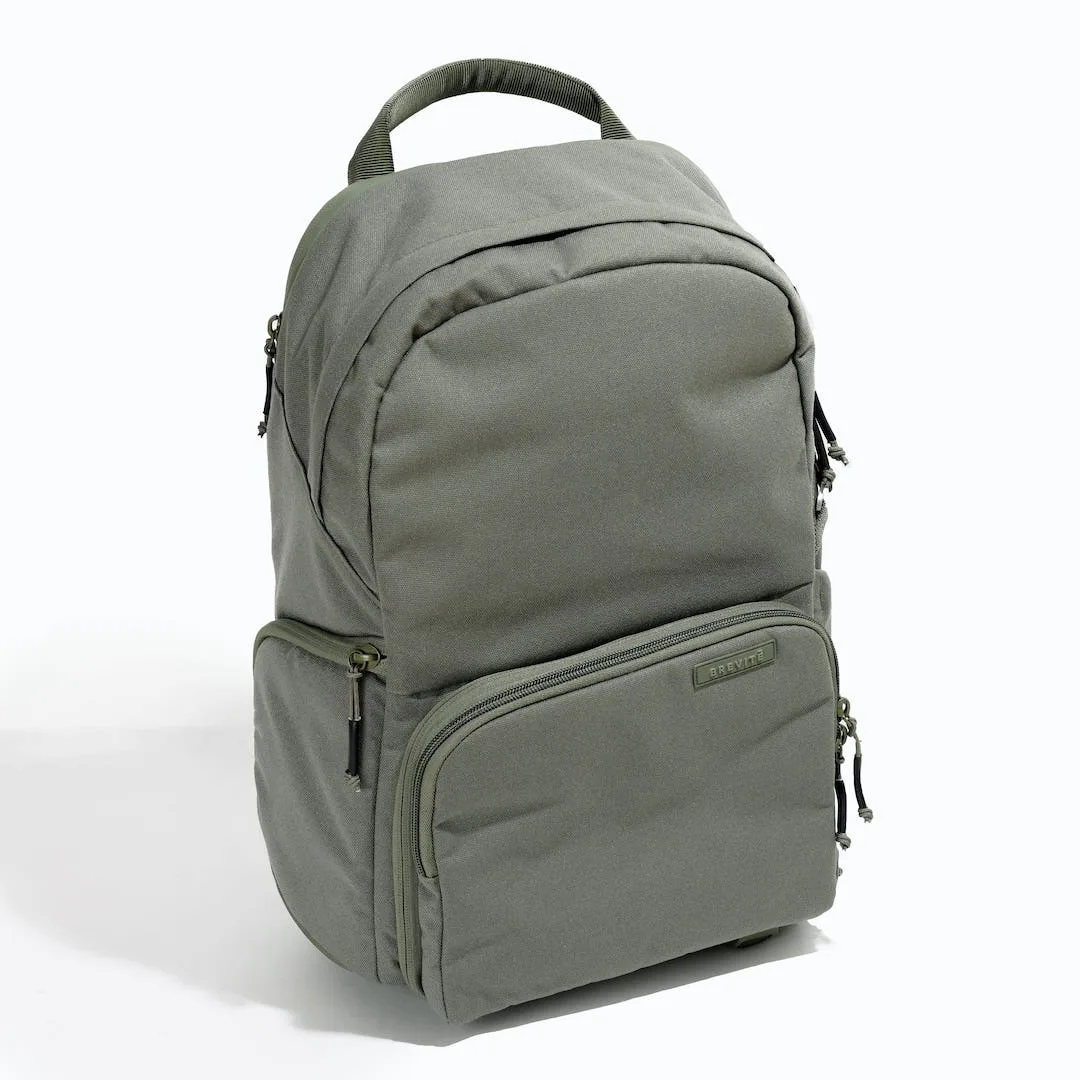
Brevitē Jumper Photo Backpack: Four flexible dividers help keep everything in place, with room for a DSLR and lens, a drone, or even a small tripod. The dividers are the core of camera backpack organization here; the packing plan depends on arranging them for the day's kit rather than leaving them in one default layout.
Brevitē Jumper Photo Backpack
-
Brevitē Jumper Photo Backpack: A dedicated laptop sleeve, a quick-access back-panel pocket for a phone or passport, and a hidden inner pocket for valuables. These three pockets serve different access needs, so assigning each one a single job prevents the bag from becoming a general-purpose dump pouch.
-
Brevitē Jumper Photo Backpack: Bottom and side tripod holders, plus a water bottle pocket; select colors feature a luggage pass-through. Exterior attachment points let you keep the tripod and bottle out of the padded interior, which preserves divider space for camera gear.
Keep the city-friendly exterior working for you
The Jumper's pared-back exterior is part of its appeal for urban shooting: it blends into city landscapes rather than announcing a camera bag. That advantage disappears if the outside is cluttered. Use the tripod holders for the tripod and the water bottle pocket for the bottle, and resist clipping extra pouches to the outside.
The same logic applies inside. The interior is described as thoughtfully organized for essential gear, which is a prompt to carry essentials rather than everything you own. A day shoot kit that fits the dividers cleanly is easier to work from than a bag packed to capacity.
Decisions the catalog does not settle for you
Some packing questions depend on your own gear, and the supplied product information does not answer them. Treat these as checks to make with your own equipment rather than assumptions.
- Exact interior dimensions: The supplied information does not list interior measurements, so test-fit your camera body and lenses with the dividers in place before relying on a particular configuration for a shoot.
- Lens and body combinations: The bag is described as suitable for a DSLR and lens, a drone, or a small tripod. Whether a specific long lens plus a second body fits is not confirmed by the supplied information, so arrange the dividers around what you actually carry.
- Weather protection: The supplied information does not confirm a rain cover or water-resistant construction. Plan for the forecast with your own protection rather than assuming the bag handles heavy rain.
- Luggage pass-through by color: Only select colors feature a luggage pass-through. If you plan to slide the Jumper onto a rolling suitcase, confirm the feature on the specific color you order.
A five-minute reset before the next shoot
After a day out, empty the quick-access and hidden pockets, check that the dividers still match your next kit, and re-attach the tripod only when you need it. The Jumper is available in 10 colors, from Nimbus Gray to Powder Teal, and the bag you chose for its looks will stay useful longer if the interior is reset rather than left packed from the last shoot.
If you are deciding whether the Jumper is the right day pack at all, compare it against your typical load: a body, one lens and a tripod is squarely within what the dividers are designed to organize. A kit that needs constant reconfiguration is a sign to simplify what you bring, not to force more into the compartment.