Why Coffeehouse Blend works without a drip machine
Folgers Coffeehouse Blend is a medium dark roast ground coffee sold in 9.6-ounce cans. The catalog describes it as smooth and balanced with a rich aroma, and it is intended for drip coffee makers and other standard brewing methods. That makes it a reasonable starting point for manual brewing: you are not fighting an extremely dark, oily roast or an unusually fine grind.
The main adjustment is your ratio and your contact time. Ground coffee extracts faster than whole bean, so manual methods reward a consistent scoop and a steady pour more than fancy equipment. Below are four no-machine methods, what each one asks of you, and where Coffeehouse Blend fits best.
What you are brewing
-
Folgers Coffeehouse Blend Medium Dark Roast Ground Coffee, 9.6 Ounces (Pack of 6): Folgers Coffeehouse Blend Medium Dark Roast Ground Coffee, 9.6 Ounces (Pack of 6), described as smooth and balanced with a rich aroma. A balanced medium dark roast is forgiving across pour over, French press, moka pot, and cowboy coffee, so you can choose a method by equipment and time rather than by flavor risk.
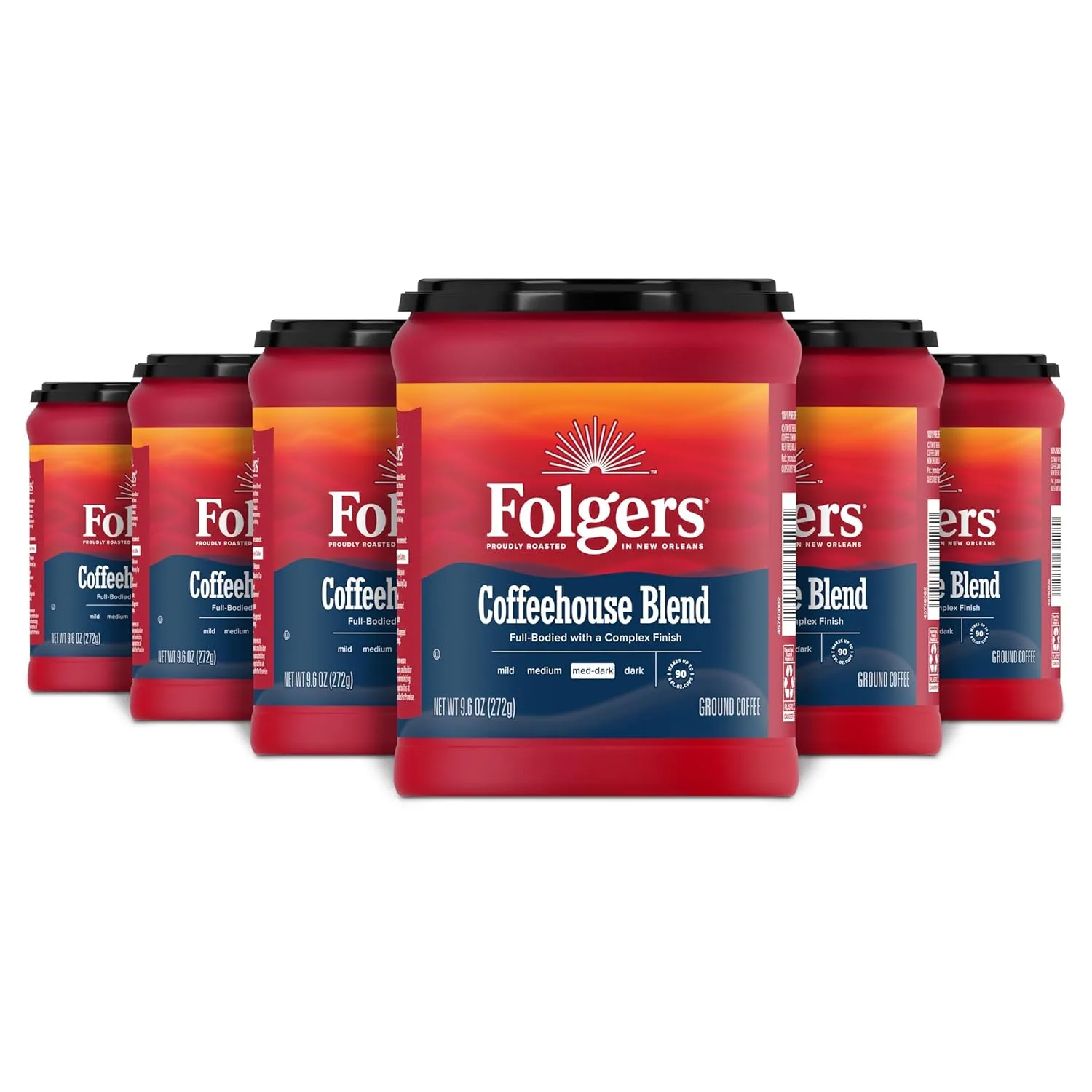
Folgers Coffeehouse Blend Medium Dark Roast Ground Coffee, 9.6 Ounces (Pack of 6)
-
Folgers Coffeehouse Blend Medium Dark Roast Ground Coffee, 9.6 Ounces (Pack of 6): The catalog lists it as suitable for drip coffee makers and other standard brewing methods. That is your permission slip to use it in manual brewers; the pack size simply means you have plenty of ground coffee to practice ratios.
Start with ratio, then adjust by taste
For any manual method, begin with a consistent coffee-to-water ratio and change one variable at a time. A common starting point for ground coffee is roughly 1 to 2 tablespoons per 6 ounces of water, but treat that as a dial, not a rule. If the cup tastes weak, add coffee or grind finer; if it tastes harsh or bitter, use less coffee, coarser grind, or cooler water.
Because Coffeehouse Blend is pre-ground, you cannot change grind size much. That means ratio, water temperature, and contact time are your main levers. Keep a note of what you used so the next cup is repeatable.
Pour over: the closest match to a drip machine
Pour over gives you the most control and the clearest view of what the coffee is doing. It suits Coffeehouse Blend's balanced profile and is the easiest method to scale for one or two cups.
- Set up: Place a paper filter in a cone or dripper over your cup or carafe, and rinse the filter with hot water to remove paper taste and warm the vessel.
- Add coffee: Add your measured ground coffee to the filter and level the bed so water passes through evenly.
- Bloom: Pour a small amount of hot water just to wet the grounds, wait for the bed to settle, then continue. This releases gas and helps even extraction.
- Pour in stages: Add water in slow circles, keeping the bed covered, until you reach your target volume. Let the bed drain between pours rather than flooding it.
- Taste and adjust: If the cup is thin, use more coffee next time; if it is bitter, pour more gently or use slightly cooler water.
French press: full body with less fuss
A French press is the most forgiving method for pre-ground coffee. It keeps the grounds in contact with water for the whole brew, so you get a heavier body that flatters a medium dark roast. The trade-off is sediment in the cup and a slightly muddier flavor than pour over.
Use a coarse-ish ground coffee if you can, but Coffeehouse Blend's standard grind will still work. Add coffee and hot water to the carafe, stir once, let it steep, then press the plunger slowly. If the cup is too silty, pour through a paper filter or let the brewed coffee settle before pouring.
Moka pot: strong, concentrated cups
A moka pot produces a small, intense brew closer to espresso than to drip coffee. Coffeehouse Blend's medium dark roast can handle that intensity, but the method is less forgiving of fine grounds and high heat. Fill the basket loosely without tamping, use hot but not boiling water in the base, and keep the pot on moderate heat. Stop the brew when the flow turns pale and sputtering, then taste. If it is too harsh, use a slightly lower flame or a coarser grind next time.
Cowboy coffee: the no-equipment fallback
Cowboy coffee is the simplest method: grounds and water in a pot, heated, then settled. It is ideal when you have no brewer at all. Bring water to a near-boil, add your measured ground coffee, stir, and remove from heat. Let the grounds settle before pouring gently. A splash of cold water on the surface can help them sink. Expect a rustic cup with some sediment; if clarity matters, strain through a fine mesh or paper filter.
Which method fits your morning
- Pour over: Best for clarity and control. More hands-on, but the closest result to a drip machine and a good match for Coffeehouse Blend's balanced flavor.
- French press: Best for body and low effort. Forgiving of pre-ground coffee; expect some sediment.
- Moka pot: Best for a strong, small cup. Requires attention to heat and fill level; less suited to very fine grounds.
- Cowboy coffee: Best when you have nothing else. Rustic and sediment-prone, but workable with any heat source.
Keeping the rest of the can fresh
Coffeehouse Blend comes as six 9.6-ounce cans, so you will have opened coffee on hand for a while. Store the can sealed in a cool, dark place and keep it away from the stove and direct sun. Ground coffee stales faster than whole bean, so buy the pack size you will finish, and consider transferring an opened can to an airtight container if the lid does not seal tightly. The catalog does not state a shelf life after opening, so use your senses: flat aroma and a dull cup are your cue to finish the can soon.