Quick answer
Choose a bridal cape or jacket by matching it to your gown’s bodice, not just the weather. For a fitted gown with a plunging neckline, pick a cape that closes at the neck or shoulders so it doesn’t fight the dress. For a gown with sleeves or a corseted back, a simple jacket or stole is usually easier. Buy the layer after your final fitting so the length and shoulder fit are based on the real dress.
Match the cover-up to your gown’s neckline and back
Start by looking at the highest point of your gown’s bodice. If your dress has a plunging neckline, a cape with a high neck closure or a jacket that sits open at the front will frame the neckline rather than cover it. If your gown has a low cowl back or a row of covered buttons, avoid a heavy cape that hides those details. A lightweight stole or a jacket worn open keeps the back visible while still adding warmth.
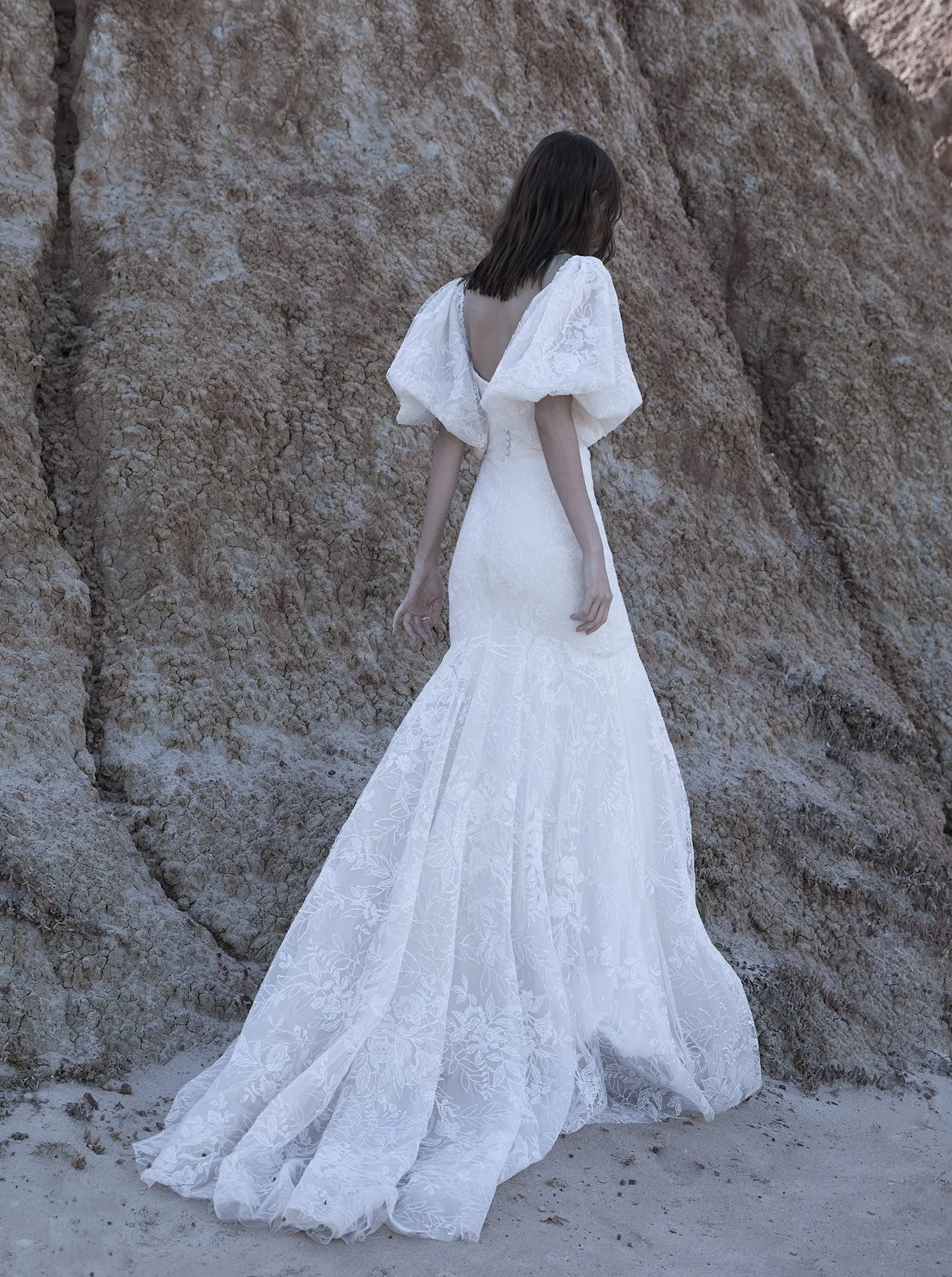
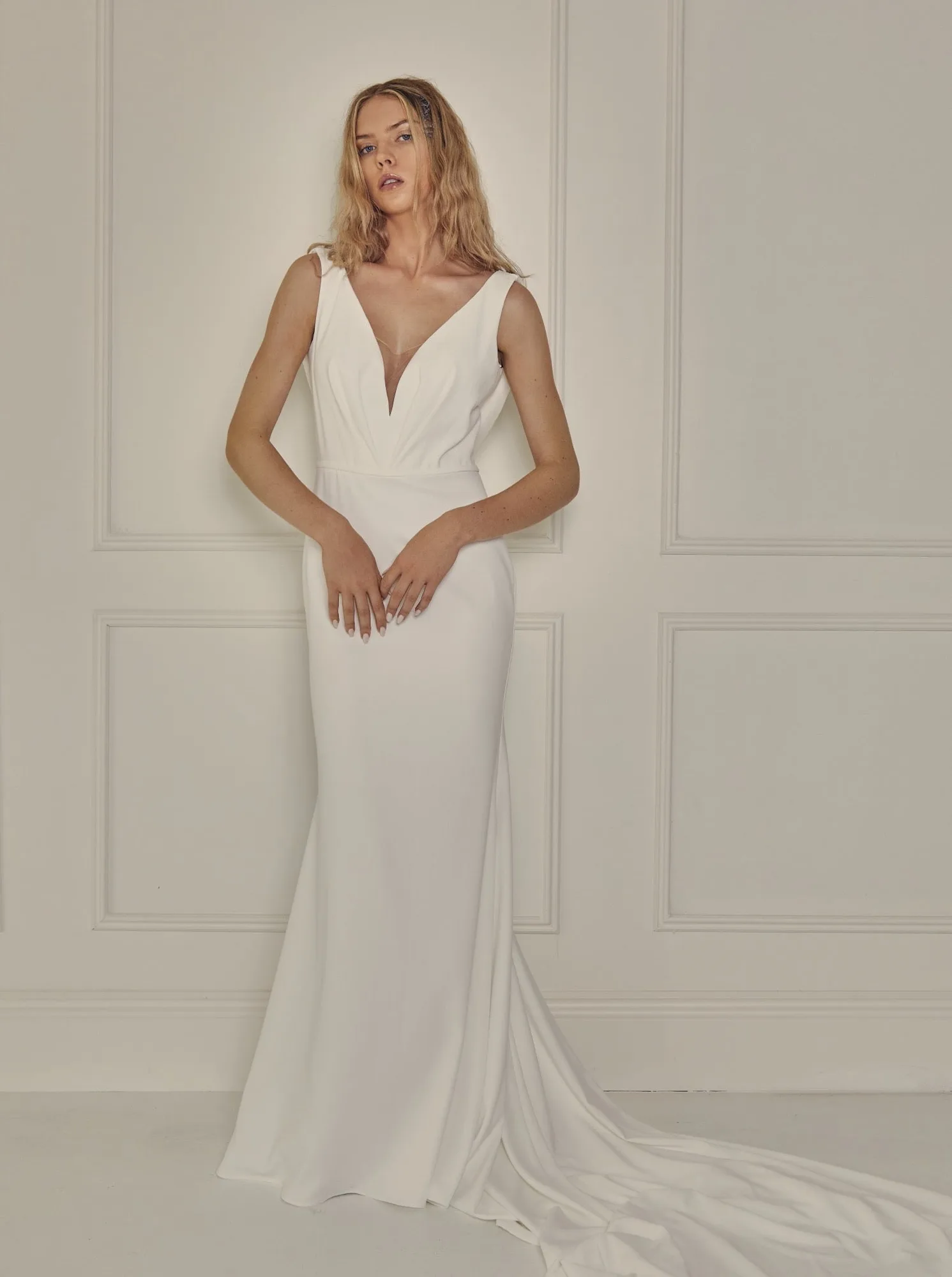
The Ava Gown, for example, has an illusion tulle corset and a low cowl back. A structured cape that ties at the neck can work because it leaves the front neckline and back cowl largely visible. The Ellery Gown has a corseted bodice with a row of small covered buttons down the back. A jacket that stops above the waist or a cape that falls from the shoulders will let those buttons show. If your gown has a lot of hand-beading on the bodice, like the India Gown, choose a plain cover-up so the beadwork stays the focus.
Choose a fabric weight for the season and venue
For autumn weddings, a mid-weight fabric such as crepe, light wool, or velvet works well. It adds warmth without overwhelming a fitted gown. For winter weddings, look for brushed wool, heavy velvet, or a lined cape with a satin or tulle outer layer. If your ceremony is outdoors and short, a heavier cape is practical. If you are mostly indoors with brief outdoor moments, a lighter jacket or stole is easier to carry and store.
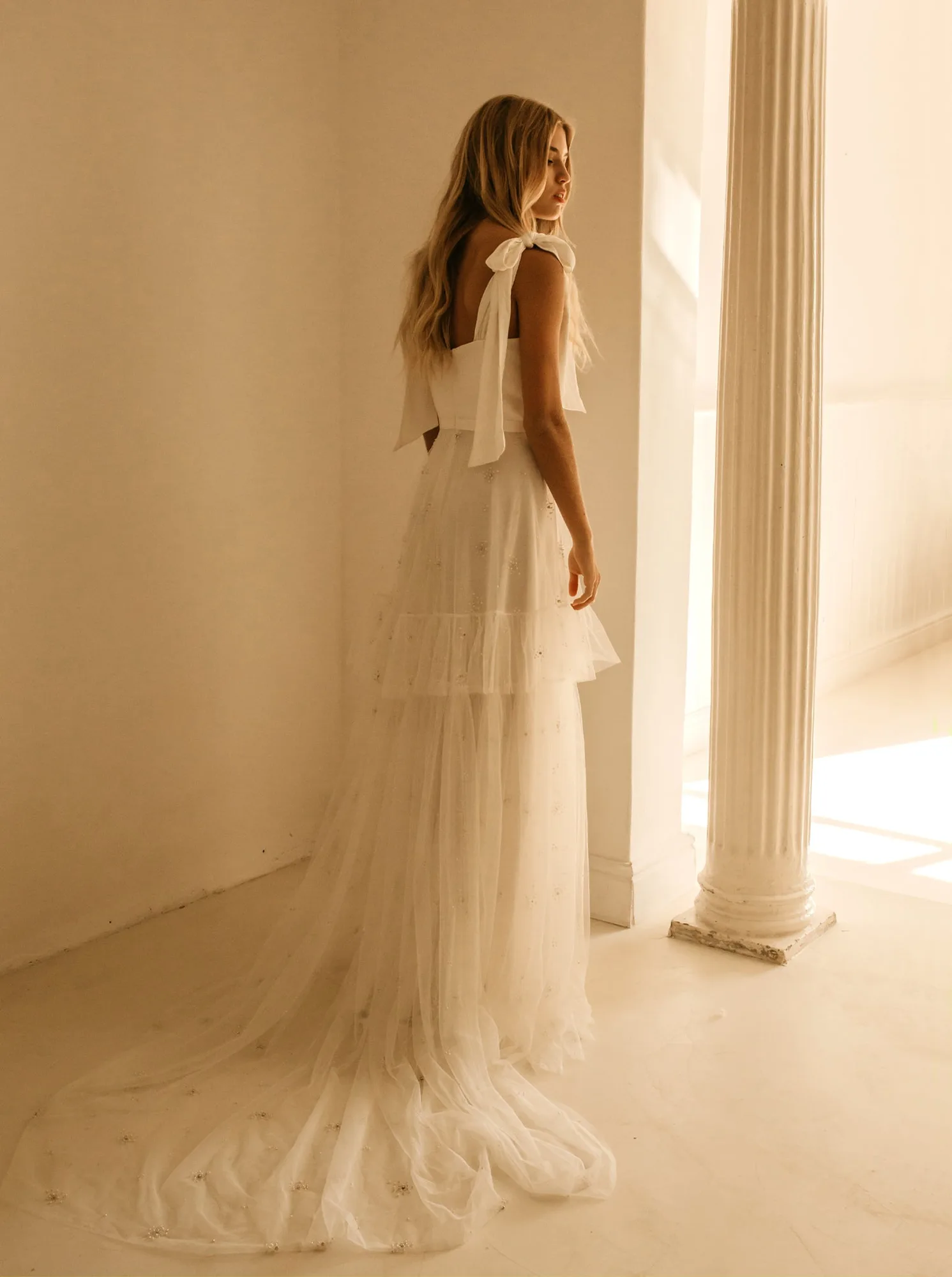
Check how the fabric behaves when you move. A stiff cape can stand away from the body and look bulky in photos. A softer fabric drapes closer to the gown. If your gown is made from soft crêpe, like the Ava Gown, a fluid cape in crepe or light wool will blend better than a stiff structured wool. If your gown has volume, such as the Avalon Gown with its layers of Italian tulle and ruffled tier, a simple, close-fitting jacket or a fine knit stole will balance the silhouette.
Get the length and shoulder fit right
The hem of your cape or jacket should end at a deliberate point: at the waist, at the hip, or at the floor. Avoid lengths that cut across the widest part of your gown’s skirt. If your gown flares above the knee, a cape that ends at the knee or floor keeps the line clean. If your gown is fitted through the hip, a hip-length jacket or a cape that ends at the hip can work.
Shoulder fit matters more than you think. A cape should sit on your shoulders without sliding when you lift your arms. A jacket should allow you to reach forward and hug guests without pulling across the back. If you have a larger bust, look for a cape that closes at the neck with a hook or a jacket with a single button at the waist. If you are petite, a cape that ends above the knee or a cropped jacket will keep you from looking swamped.
Decide between a cape, a jacket, and a cape veil
A cape veil is a hybrid: it covers the shoulders and upper back but leaves the arms free. It works well for brides who want the look of a veil without the length. A traditional cape covers the arms and can be removed easily for the reception. A jacket gives you the most freedom of movement and can be worn open or closed. If you plan to wear the cover-up for photos only, a cape veil or a lightweight cape is often enough. If you will be outside for a long time, a lined jacket or a heavy cape is more practical.
Consider how you will store the piece during the reception. A cape can be draped over the back of a chair, but a heavy wool cape may need a hanger. A jacket can be folded over a chair. If your venue has limited cloakroom space, a lighter piece is easier to manage.
Decision rules for bridal outerwear
- If your gown has a plunging neckline: Choose a cape that closes at the neck or a jacket worn open so the neckline stays visible. Avoid high, closed necklines that flatten the bodice.
- If your gown has a detailed back: Pick a cape that falls from the shoulders or a jacket that ends above the waist to keep the back detail in view. Skip long, heavy capes that cover the back entirely.
- If your wedding is outdoors in autumn or winter: Choose a lined wool, velvet, or heavy crepe cape or jacket for real warmth. A light tulle cape veil is for photos, not for cold weather.
- If your gown is heavily beaded or textured: Choose a plain, smooth cover-up in a solid color that lets the gown’s texture stand out. Avoid competing patterns or heavy embellishment on the cover-up.
How real gowns change the cover-up decision
- Ava Gown: The Ava Gown is crafted in soft crêpe with an illusion tulle corset, a plunging neckline, and a low cowl back. A cape that ties at the neck or a fluid jacket worn open will frame the neckline and keep the cowl back visible, while a stiff or high-backed cover-up would hide the gown’s best details.
- India Gown: The India Gown has a fully hand-beaded bodice with sequins, hand-pleated georgette, glass beads, bugle beads, and faux pearls. Because the bodice is heavily textured, a plain, smooth cover-up in a solid color will let the beadwork stand out instead of competing with it.
- Ellery Gown: The Ellery Gown has a corseted bodice with padded cups and a back decorated with a row of small covered buttons. A jacket that stops above the waist or a cape that falls from the shoulders will keep the button detail visible, while a long, heavy cape could cover it.
- Avalon Gown: The Avalon Gown has a structured satin bodice with sash shoulder ties and a hand-beaded celestial motif on the skirt, plus layers of Italian tulle with a ruffled tier below the hip. A simple, close-fitting jacket or a fine stole will balance the gown’s volume without adding bulk, and a shorter cape will avoid cutting across the ruffled tier.
Who this guide is for
Best for
- Brides marrying in autumn or winter who need a bridal cover up for winter wedding days
- Brides with a fitted or corseted gown who want a layer that doesn’t hide the bodice
- Brides who want a wedding cape veil or a wedding jacket for bride layering
Not for
- Brides who want a full-length fur or heavy coat that covers the entire gown
- Brides who need a cover-up that doubles as a reception outfit
- Brides who have not yet chosen their gown silhouette