Quick answer
Most bridal fit problems fall into three groups: pressure that cannot be let out (too tight through the ribcage or hips), structure that is fighting your proportions (straps, boning, cups), and length or hem issues. If the dress closes but pinches, a skilled seamstress can often fix it. If the fabric cannot be let out at the pressure point, or the bodice is more than one size off, stop adjusting and choose another option. Always test the fix sitting, standing, and hugging someone before the final fitting.
Diagnose the symptom before you book the seamstress
A wedding dress that feels wrong usually tells you where the problem lives. Pressure under the bust or across the ribs points to a bodice that is too small or boning that is too stiff. Pinching at the hips means the skirt or inner structure is cut too narrow for your stride. Slipping straps or a gaping back mean the dress is too big in the upper body, not too small overall. Write down exactly where and when it hurts, then bring that note to the fitting.
Do not assume every discomfort means the dress is the wrong size. A corset-boned bodice should feel secure, not painful. If you can slide two fingers under the top edge and breathe deeply without strain, the size is probably workable. If you cannot sit down without the front edge digging into your ribs, the fit is the problem, not your posture.
What alterations can realistically fix
A seamstress can take in side seams, shorten straps, add or move cups, adjust the hem, and often let out a seam by a small amount if there is seam allowance. She can also add a modesty panel, change a zipper to a corset back, or soften a neckline. These are normal wedding dress adjustment tasks and usually cost far less than replacing the dress.
What she cannot do is create fabric that is not there. If the bodice is more than one size too small at the ribcage, or the skirt has no seam allowance at the hip, letting it out may leave marks or open the seams. In that case, the honest fix is a different size or a different silhouette.
Test the fix in real wedding-day movement
A fitting room mirror hides problems that appear after ten minutes of real life. After any alteration, do three things: sit on a low stool for two minutes, reach both arms forward as if hugging a guest, and walk up a short flight of stairs. If the dress stays put and you can breathe, the fit is likely stable. If it rides up, twists, or cuts in, the adjustment is not finished.
Schedule your final fitting at least two to three weeks before the wedding. That leaves room for one more small adjustment if your weight shifts or the fabric settles. Bring the exact undergarments and shoes you will wear, because a half-inch heel change can alter the hem and posture.
When to stop adjusting and choose another option
Stop when the cost of alterations approaches the price of a different dress, when the seamstress says the fabric cannot be let out at the pressure point, or when you have had three fittings and the dress still hurts. Discomfort that makes you dread the ceremony is not a detail you can ignore. A dress that needs a complete bodice rebuild is usually the wrong dress, not a project.
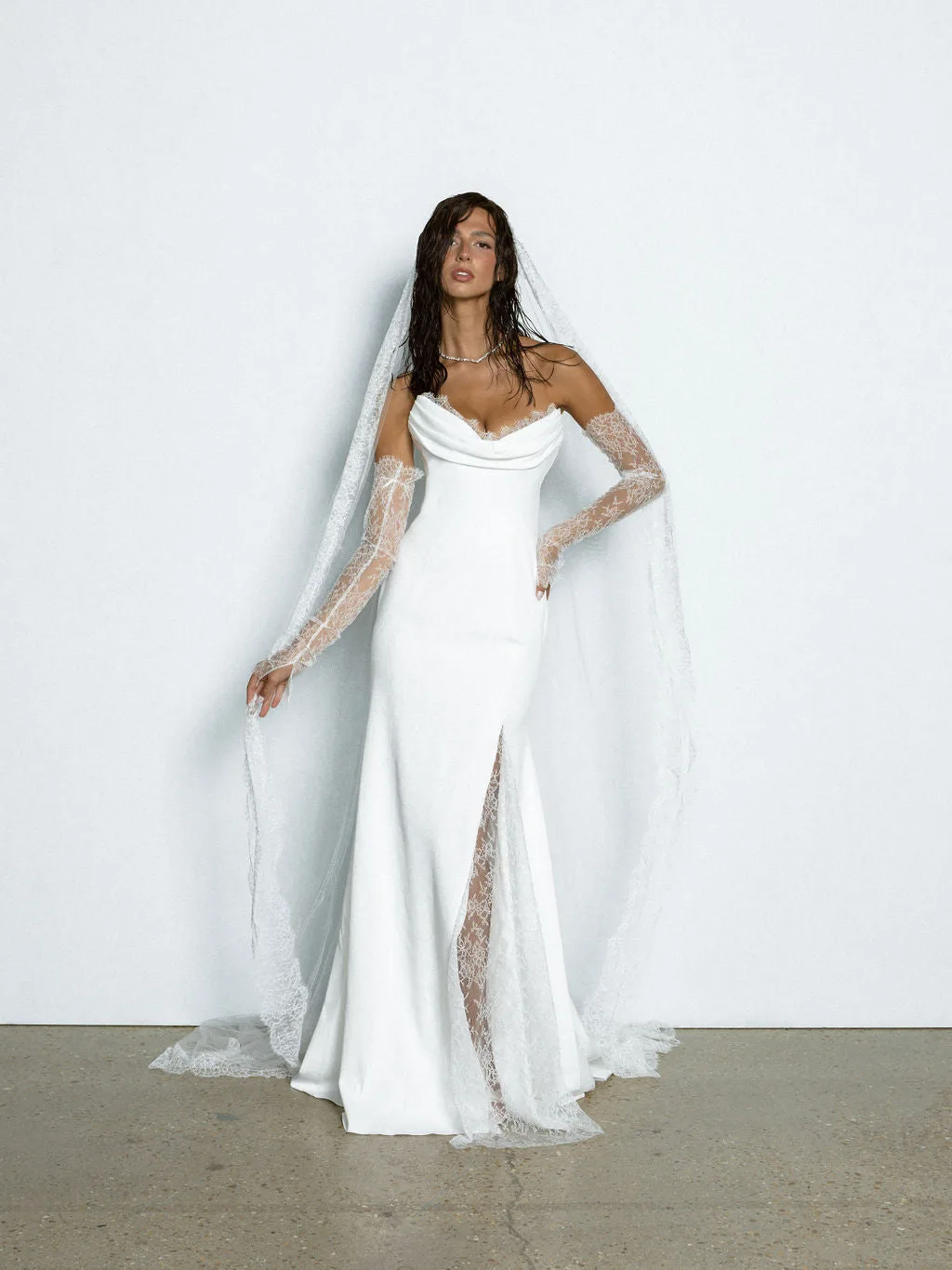
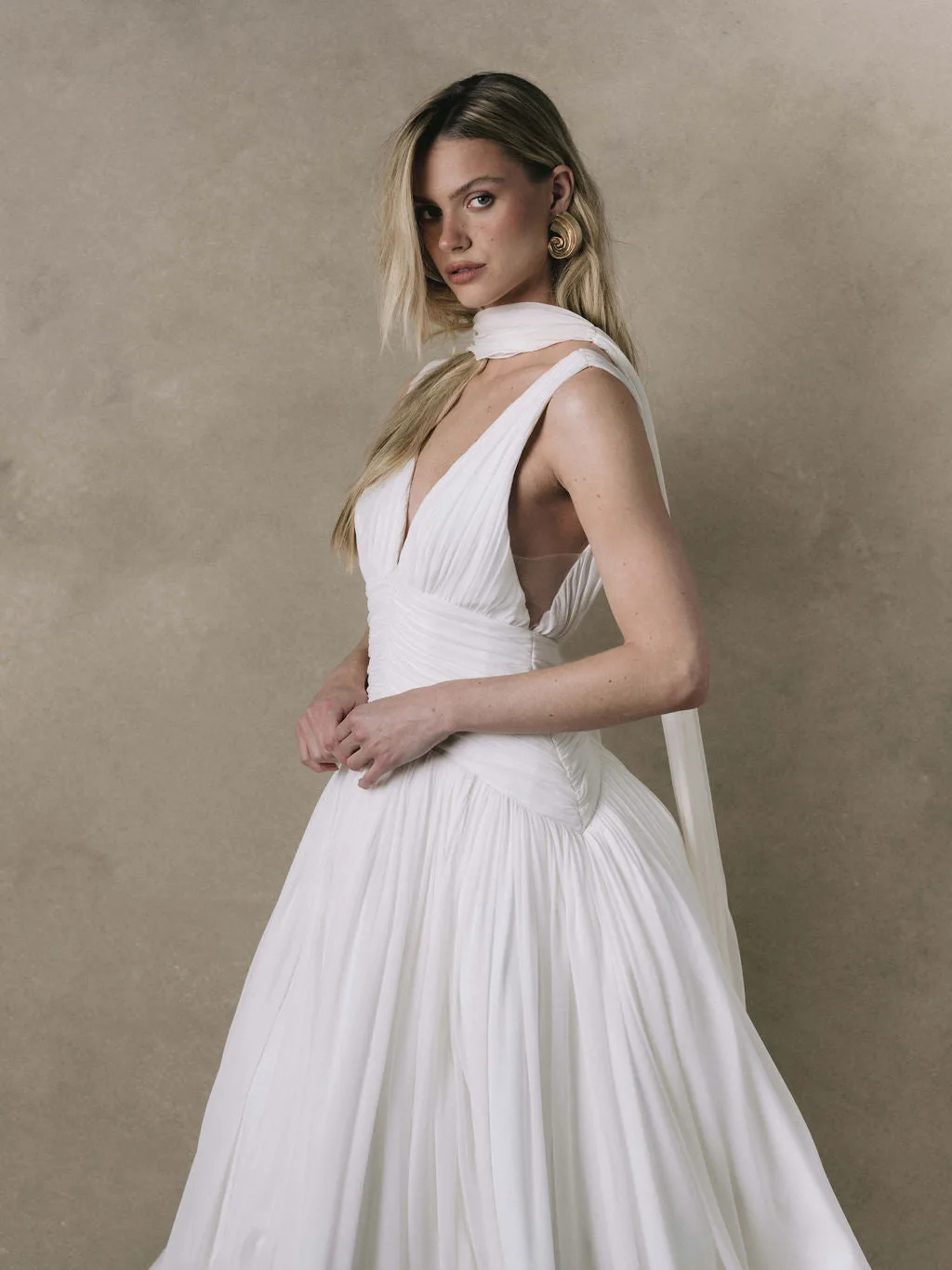
If you are early in the process, consider a silhouette that already matches your proportions. A strapless crepe dress with a draped bustier, like Divine, distributes structure differently than a sleeveless silk georgette gown with a deep V-neckline, like Daphné. Trying both shapes in your size tells you more than any measurement chart.
Fit problem diagnosis chart
- Pressure under the bust or across the ribs: Likely cause: the bodice is too small or the boning is too stiff for your torso length. Corrective action: ask the seamstress to let out the side seams or replace the boning with a softer flex. If there is no seam allowance, stop. If you cannot take a full breath after the fix, choose a different size or silhouette.
- Straps slipping or back gaping: Likely cause: the dress is too big in the upper body, not too small. Corrective action: shorten straps, take in the back seam, or add a corset back. This is usually a straightforward wedding dress adjustment. If the gap remains after two fittings, the dress is the wrong cut for your shoulder-to-bust proportion.
- Hip or thigh pinching when you sit or walk: Likely cause: the skirt or inner structure is cut too narrow, or the boning extends too low for your seated posture. Corrective action: let out the hip seam if there is allowance, or shorten the boning. If the fabric has no give, stop. If you cannot sit comfortably for five minutes, do not proceed with the alteration.
- Dress feels heavy or tugs at the shoulders: Likely cause: the skirt weight is not distributed across the bodice, often because the waist is too loose or the inner corset is not anchored. Corrective action: tighten the waist stay or add interior suspenders. If the dress still drags, the silhouette may be too heavy for your frame. Weight should sit at the waist, not pull on the shoulders.
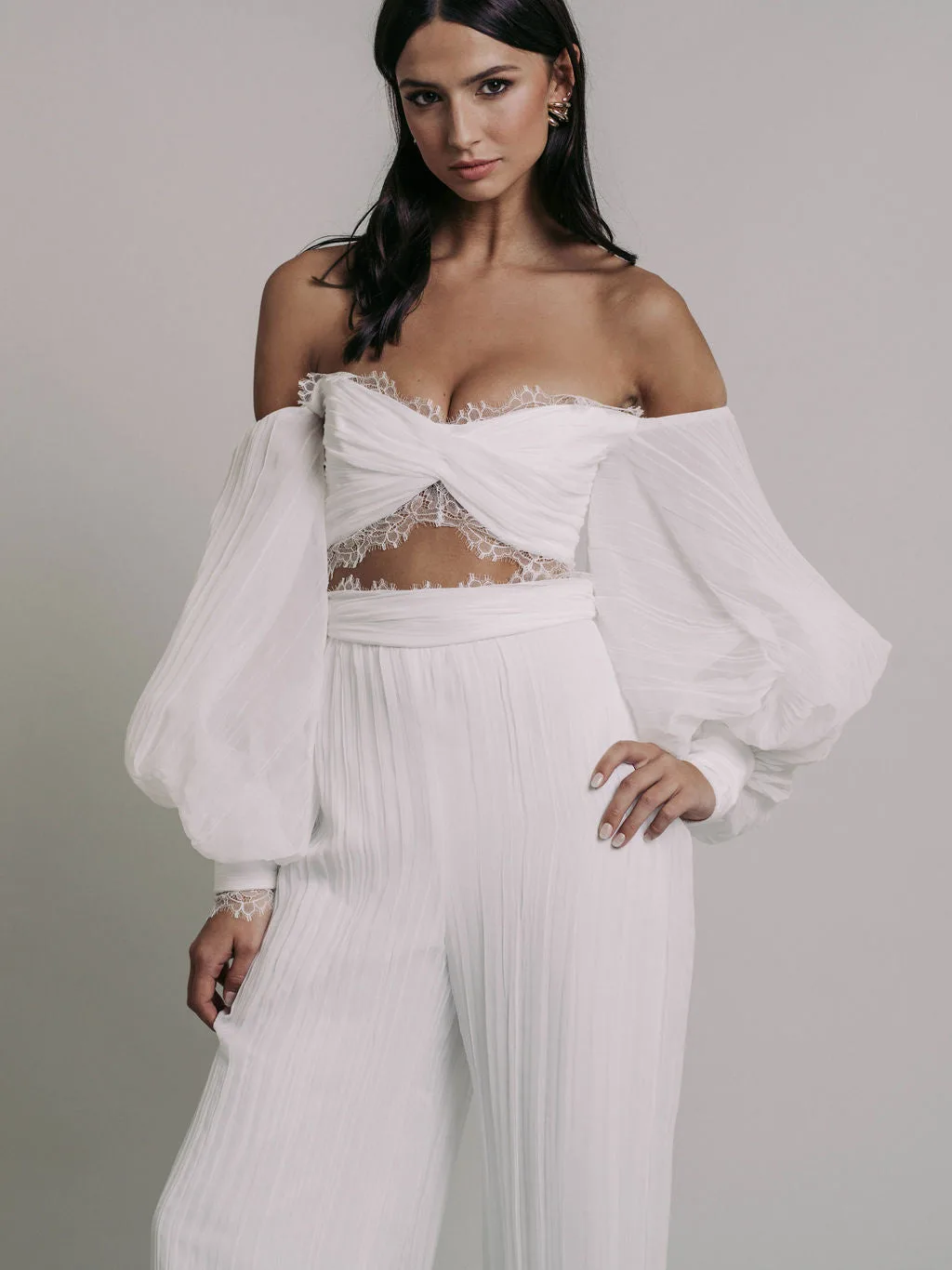
- You have had three fittings and it still hurts: Likely cause: the dress is more than one size off or the construction fights your proportions. Corrective action: stop altering. Choose another option, such as a different size, a different neckline, or a two-piece look like Sand pants with the matching Sunrise top. Three fittings without comfort is the signal to change the dress, not the seamstress.
Product facts that affect fit
- Daphné: This couture sleeveless dress is made from silk georgette, a matte, grainy fabric, with a deep V-neckline at both the front and back and modesty panels on the sides for support. The corset is boned down to the small hips and adopts an inverted V shape. The boning extends low, so pressure at the small hips is a common fit signal. If that area pinches when you sit, the corset is either too small or sitting too low for your torso.
- Divine: Divine is a strapless whalebone couture crepe dress with asymmetrical front draping, floral Chantilly lace trim at the neckline, a mermaid skirt with cut-outs, a high slit with Chantilly lace insert, a V-shaped back, and a crepe train. Strapless whalebone construction relies on a precise ribcage fit. If the dress slides down when you raise your arms, the bodice is too loose, not too tight, and the fix is taking in the side seams rather than tightening the bust.
- Sand pants: These high-waisted straight-leg pants come with a couture crepe belt adorned with pleated chiffon, secured with a zip closure at the back and finished with lace trim along the pleated edge. They are designed to be worn with the matching Sunrise top. A high waistband and separate belt create a second fit point. If the pants feel tight only when the belt is on, adjust the belt or size up the pants rather than altering the pants themselves.