Quick Answer
To solve common veil fitting problems with your wedding veil, start with the comb placement and secure it tightly. For the Verona Veil with its three combs, distribution is key to prevent slipping. For a dress like Kiss or Venus, align the veil with the gown's back details for a seamless look.
Common Veil Fitting Problems and Solutions
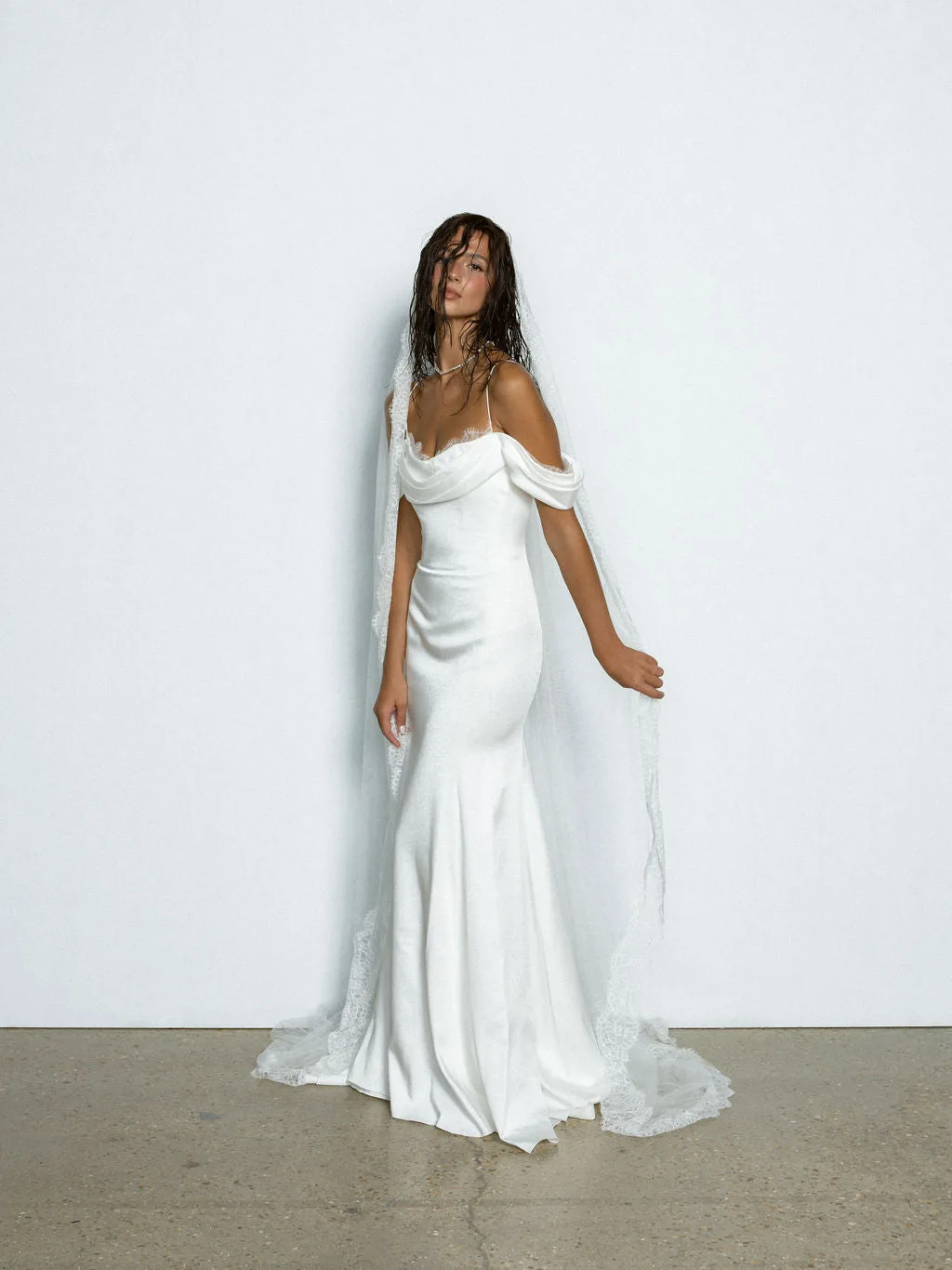
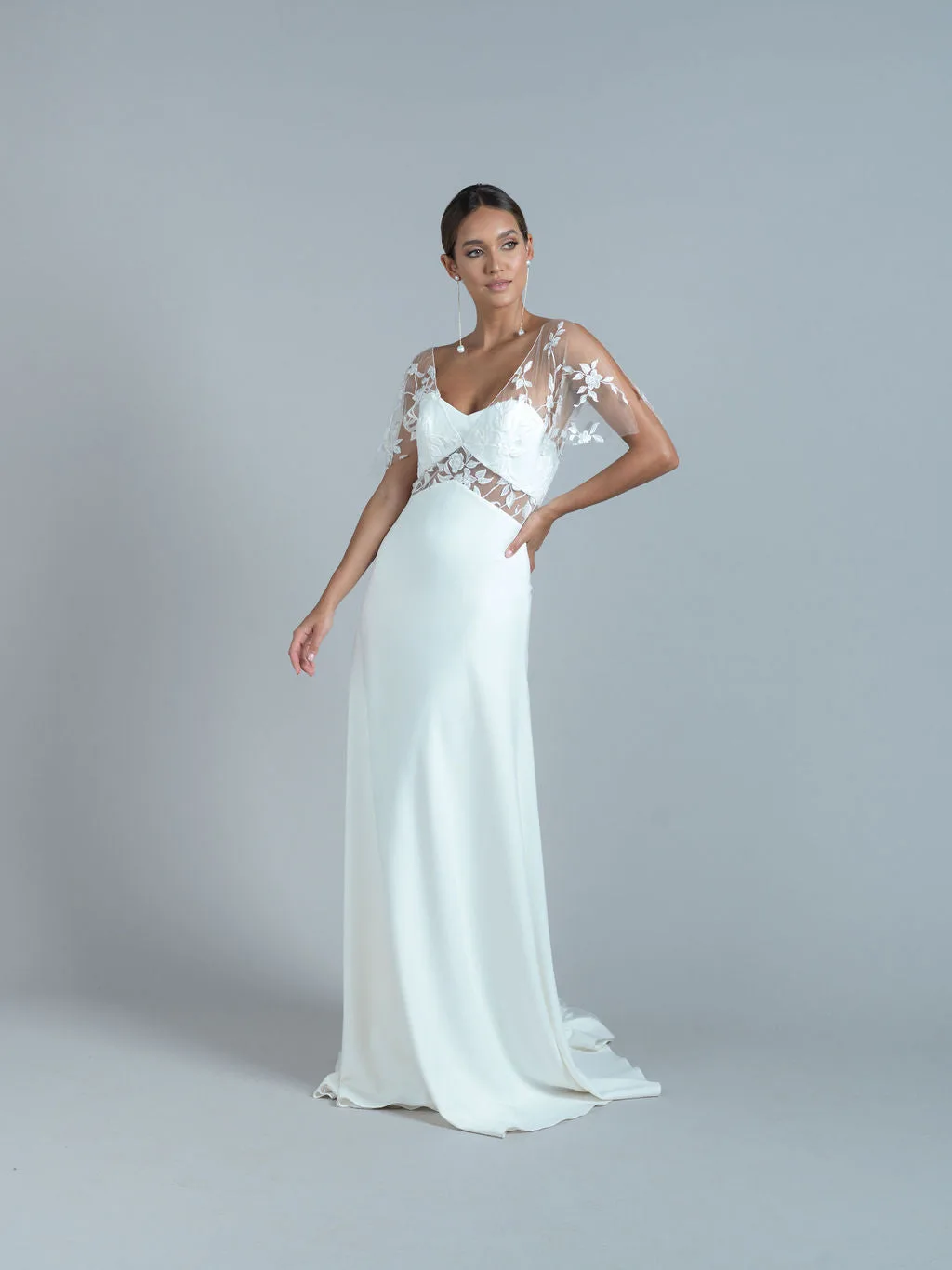
A veil that slips, bunches, or sits off-center can distract from your entire bridal look. Most issues stem from inadequate comb anchoring or mismatched placement with your dress’s back structure. For a Rime Arodaky gown like the Kiss, which features subtle transparency in its embroidered tulle, a veil that shifts can reveal the wrong part of the back. For the Venus, with its V-neckline and decorative buttons, a misaligned veil can hide those custom details.
The Verona Veil’s three silver combs are designed for stability, but if the veil length (75 cm) feels long, a slight repositioning higher on the crown can lift the hem. For slippery hair (or up-dos with minimal texture), add small hairpins between the combs to lock the veil in place without damaging the tulle.
Working with Different Dress Silhouettes
The Kiss dress is made of crepe cady with Italian embroidered tulle, so its light fabric requires a veil that doesn’t pull or weigh it down. The Verona Veil’s embroidered tulle is a natural match. Attach the three combs evenly along the waistline or lower crown to avoid pulling the delicate shoulder straps.
For the Venus dress, made of satin crepe with whalebone support, the veil can be placed at the nape of the neck to keep the V-back and falling sleeves visible. The Verona Veil’s alternately embroidered trim complements the Chantilly lace on the Venus, but ensure the veil doesn’t create bulk over the decorative buttons. A trial with a hairdresser is recommended to test the placement.
Diagnosis: Is Your Veil Fitting Issue Fixable?
- Symptom: Veil slips forward or backward after a few steps. Likely cause: Comb not anchored enough. Solution: Insert combs at an angle into a firm up-do, and cross two hairpins over each comb. If still slipping, add a small velvet headband under the veil.
- Symptom: Veil bunches or wrinkles at the top when put on. Likely cause: Combs too close together. Solution: Spread the three combs 2–3 inches apart when inserting. The Verona Veil’s combs are spaced on the netting; you can adjust them. If the veil still bunches, the hair may need a smoother base.
- Symptom: Veil hides the dress's back design (e.g., Venus buttons or Kiss transparency). Likely cause: Veil placed too high or low. Solution: For Venus, position the veil just below the nape so the buttons remain visible; for Kiss, place it at the natural waist. If the dress has a train (Venus), raise the veil hem so it doesn't compete. Stop here: if placement still hides key dress features, consider a shorter or less full veil.
Veil and Dress Details
- Verona Veil: Short veil with three combs made of embroidered tulle developed by Rime in Italy, named 'petit bouquet.' Alternately embroidered trim. Length 75 cm. Three silver combs. Handmade in France. The three combs provide extra grip for secure fitting, but their placement (spread evenly) prevents the veil from shifting. The 75-cm length avoids overwhelming the dresses' back details.
- Kiss: Dress made of crepe cady with games of transparency in Italian embroidered tulle. The veil’s tulle matches the dress fabric, but the light crepe cady means the veil must not be too heavy or pull the garment. The Verona Veil’s lightweight construction avoids this issue.
- Venus: Dress made of satin crepe with whalebones applied at the front and at the back for support. The back features a V neckline, closure, decorative buttons, and a train. The veil should sit below the V or above the buttons to not interrupt the back design. The Verona Veil’s three combs allow for precise positioning to keep the buttons visible.