Why glow serums attract so many myths
Glow is a look, not an ingredient, so it is easy to promise and hard to verify. That gap is where brightening serum expectations get inflated: a product can be pleasant, well formulated and still not deliver the instant radiance a marketing image suggests.
The useful way to judge a glow serum is to separate what the label states from what you assume. Brightening Glowing Serum gives us a concrete label to work with, so we can check six common claims against it rather than against hype.
Myth 1: Glow serum is just a highlighter in a bottle
This is the most common glow serum vs highlighter confusion. A highlighter is a cosmetic layer that reflects light and sits on the surface; a serum is applied to skin as part of a routine. They are different categories of product, even if both are sold on the word glow.
- What the label supports: Brightening Glowing Serum is applied after moisturizing, which places it in a skincare routine rather than a makeup step.
- Where the confusion comes from: The same product is also described as doubling as a great makeup remover, so it does have a cosmetic-adjacent use. That does not make it a highlighter.
- Honest limit: The supplied information does not describe any light-reflecting or tinted effect, so there is no evidence here for a highlighter-style finish.
Myth 2: A glow serum replaces your moisturizer
A serum is typically a step within a routine, not a substitute for the whole routine. The label wording matters here because it tells you where the product expects to sit.
- What the label says: Apply after moisturizing, which makes the serum a later step rather than a replacement for moisturizer.
- Why this matters for expectations: If you skip moisturizer and rely on the serum alone, you are using it outside its stated sequence, so any disappointment is not really a test of the product.
- Practical takeaway: Keep your moisturizer, then warm 1-2 pumps of serum in your palm and apply to face, neck and décolleté.
What Brightening Glowing Serum actually lists
-
Brightening Glowing Serum: Made with certified organic ingredients like moisturizing argan oil and soothing borage oil, plus antioxidants from organic cranberry and pumpkin seed oils. These are the named ingredients the label stands behind, so they are the fair basis for judging the formula rather than vague glow claims.
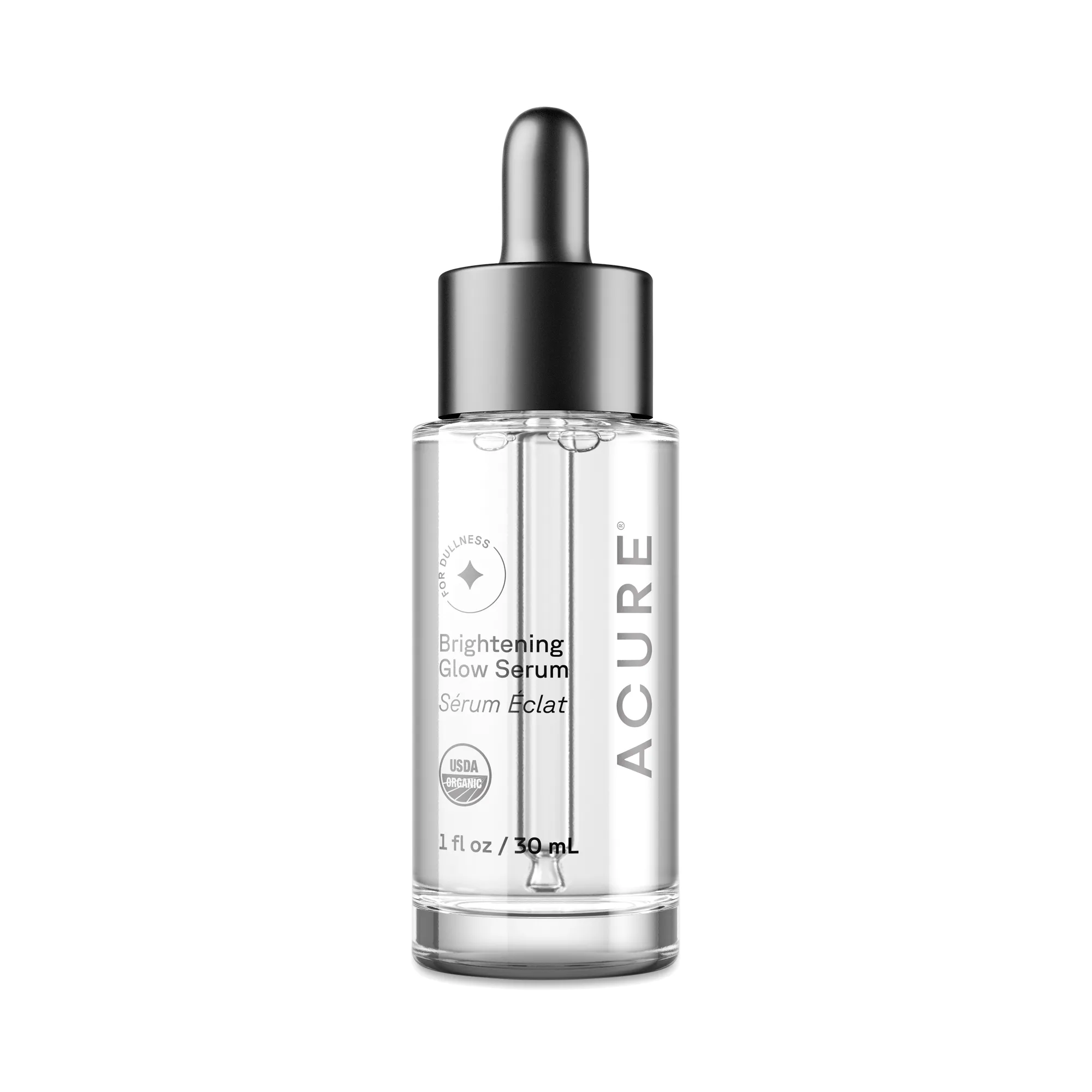
Brightening Glowing Serum
-
Brightening Glowing Serum: After moisturizing, warm 1-2 pumps in your palm and gently apply to face, neck and décolleté. The stated order and amount are the clearest guide to using it as intended, which is the only fair way to test whether it works for you.
-
Brightening Glowing Serum: Doubles as a great makeup remover. This is a second, clearly stated use, and it explains why the product can feel more versatile than a single-purpose glow serum.
-
Brightening Glowing Serum: For all skin types; vegan and cruelty-free; no parabens, sulfates, mineral oil, petrolatum or formaldehyde. These are the suitability and formulation claims the label makes, and they are checkable in a way that glow promises are not.
Myth 3: You will see a glow the first time you use it
This is where brightening serum expectations most often outrun the evidence. The supplied label describes ingredients and application, but it does not state a timeline or a guaranteed visible result.
- What is not claimed: The supplied information gives no timeframe for how long brightening serum takes to show a difference.
- What that means: Anyone promising a specific number of days is going beyond this label. Treat instant-glow claims as marketing, not product fact.
- A fair test: Use it as directed, after moisturizing, and judge your own experience over time rather than against a promised deadline.
Myth 4: Natural or organic ingredients cannot irritate skin
Organic and gentle are not the same thing. The label lists specific oils and antioxidants, and it also states the product is for all skin types, but that is a product claim rather than a personal guarantee.
- What the label supports: Certified organic argan oil and borage oil are named as moisturizing and soothing ingredients, alongside cranberry and pumpkin seed oils.
- What it does not support: The supplied information contains no patch-test results or individual suitability guidance, so it cannot tell you how your own skin will react.
- Sensible approach: If your skin is reactive, introduce one new product at a time so you can tell what caused any change.
Myth 5: More pumps means more glow
With serums, the stated amount is usually there for a reason. The label gives a specific dose, and exceeding it is an assumption rather than an instruction.
- The stated dose: Warm 1-2 pumps in your palm and apply gently to face, neck and décolleté.
- Why to follow it: The label ties the amount to the application step after moisturizing; using more is not described as improving results.
- Where the product earns its place: The same label says it doubles as a makeup remover, which is a separate use worth knowing about rather than a reason to over-apply as a serum.
Myth 6: A glow serum is only for dull or dry skin
Glow language often implies a single skin type, but the label here is broader. That does not mean it suits everyone, only that the stated suitability is wider than the marketing stereotype.
- What the label states: For all skin types.
- What is not confirmed: The supplied information does not break suitability down by concern, so it cannot tell you which specific skin issues it targets.
- How to read it: Take all-skin-types as the label's claim, and let your own experience decide whether it belongs in your routine.
How to judge a glow serum without the hype
Ask three questions before you buy: what ingredients are named, how the product is meant to be applied, and what the label does not claim. Brightening Glowing Serum answers the first two clearly, with named organic oils and antioxidants and a defined step after moisturizing. It is quiet on the third, which is normal but worth noticing.
That silence is the honest limit of this review. The supplied information does not include clinical results, a timeline, or a comparison against other serums, so no article can fairly promise you a specific glow. What you can do is use the product as labeled, keep your expectations tied to its stated ingredients and steps, and treat any stronger claim as unverified.