Treat the print as the fragile part
The Bryce Wong Mountain Migration design turns the Original Puffy Blanket into wearable art, so your care routine should protect two things at once: the high-contrast print and the synthetic insulation underneath. The supplied record confirms the materials that matter here — a recycled ripstop shell, synthetic insulation, and a PFAS-free DWR finish — but it does not include a manufacturer wash label, water temperature, detergent type, or drying setting. So the steps below are conservative habits built around those confirmed materials, not a reproduction of an official care tag.
The practical rule: clean less often, clean more gently, and never let the blanket sit damp. That protects both the print and the loft that makes the blanket warm.
What the Mountain Migration record confirms
-
Original Puffy Blanket - Bryce Wong - Mountain Migration: The Original Puffy Blanket uses a recycled ripstop shell, synthetic insulation, and a PFAS-free DWR finish. These are the three components your care choices affect: the shell surface, the insulation loft, and the water-repellent finish.
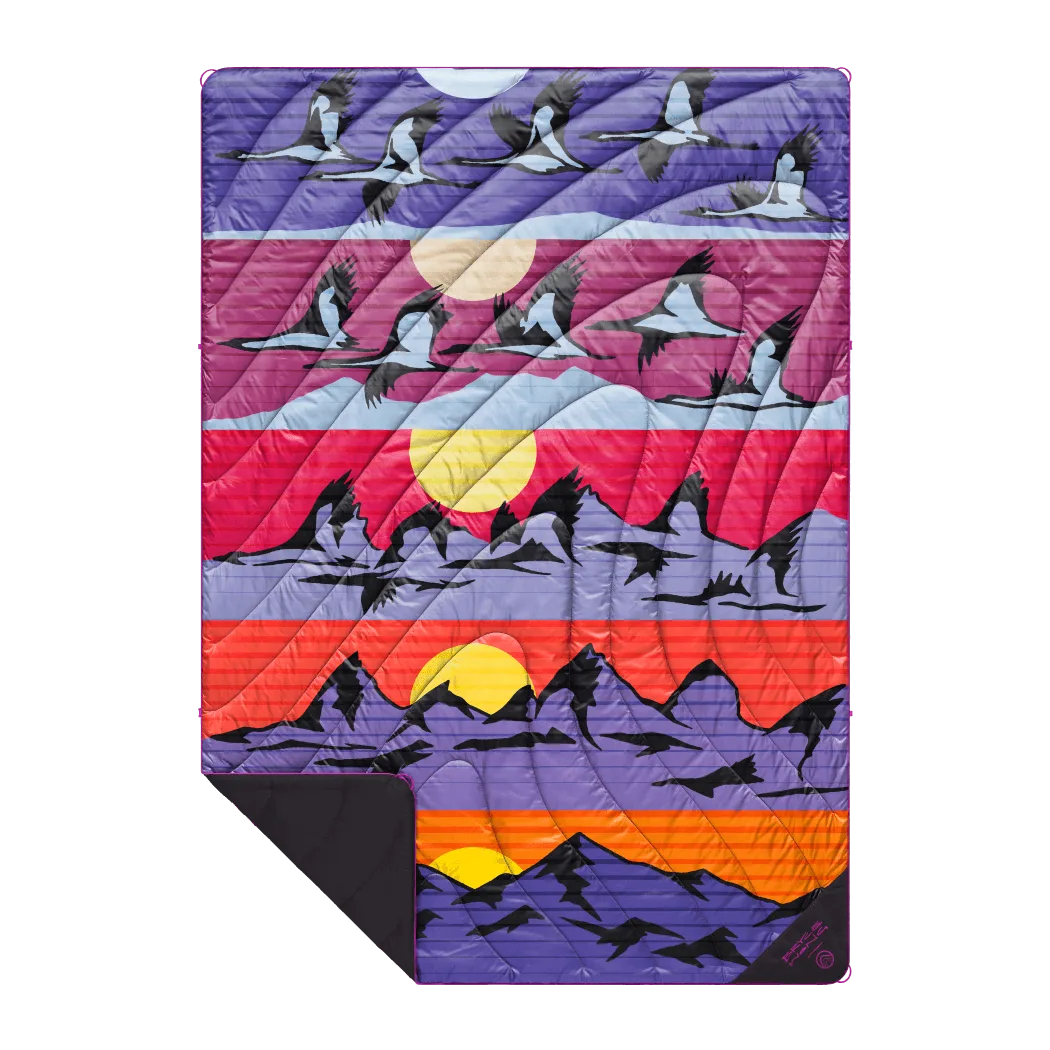
Original Puffy Blanket - Bryce Wong - Mountain Migration
-
Original Puffy Blanket - Bryce Wong - Mountain Migration: The Bryce Wong design is described as high-contrast art on a functional puffy blanket, inspired by Pacific Northwest landscapes and the "Rose City." High-contrast prints show abrasion and fade more readily, so handling and drying habits deserve extra attention.
-
Original Puffy Blanket - Bryce Wong - Mountain Migration: The available variant is 1-Person. A one-person blanket is easier to spot clean and dry than a larger blanket, which makes a low-frequency wash routine realistic.
A print-first cleaning routine
Work from the least aggressive method upward. Most marks on a camping or everyday blanket are surface soil, and a full wash is rarely the first answer.
- 1. Shake and brush dry first: Hang the blanket and shake out sand, crumbs, and loose dirt. A soft brush lifts dry soil from the ripstop shell before it turns into a smudge.
- 2. Spot clean the print with a damp cloth: Dampen a soft cloth with plain water and blot the marked area rather than scrubbing across the artwork. Work from the outside of the spot inward so you do not spread it.
- 3. Use a mild soap only if water alone fails: The supplied record does not name a detergent, so choose a mild, fragrance-free soap and test it on a small, less visible part of the print first. Rinse the cloth and blot again to remove residue.
- 4. Air dry immediately, print side up: Lay the blanket flat or hang it in the shade with air moving around it. Do not bundle it damp; trapped moisture is the main enemy of synthetic insulation and of a crisp print.
- 5. Wash the whole blanket only when spot cleaning is not enough: Because the record does not confirm machine settings, follow any care label that ships with your blanket. If none is available, use a front-loading machine on a gentle cycle with cold water and a mild soap, then dry thoroughly. Avoid fabric softener and bleach, which can affect the DWR finish and the print.
Habits that slow color fade
Fade on a printed puffy blanket usually comes from sun, abrasion, and repeated heat. You cannot eliminate all three outdoors, but you can reduce them.
- Shade the blanket when it is not in use: UV exposure is the most common cause of print fade. Drape the blanket in shade or store it out of direct sun rather than leaving it on a deck or in a car window.
- Keep it off rough ground: Ripstop is durable, but grit and rock abrade the printed surface. Put a mat or tarp underneath when you use the blanket on sand, gravel, or concrete.
- Skip high heat: Hot dryers and hot car trunks stress both the print and the synthetic insulation. Air drying in the shade is the safest default.
- Fold along different lines: Repeated creases in the same place wear the print. Rotate your fold pattern between uses and between storage seasons.
Storage that protects loft and artwork
The goal is a clean, dry, loosely packed blanket that is ready for the next trip. Compression is fine for travel, but not for months on a shelf.
- Store only when fully dry: A single damp corner can lead to mildew and a musty smell. Air the blanket for an hour before folding it away, even if it only feels slightly clammy.
- Keep it loose at home: Fold the blanket loosely into a breathable cotton or mesh bag, or simply lay it on a shelf. Avoid vacuum bags and tight compression sacks for long-term storage, which can flatten the synthetic insulation over time.
- Separate it from sharp gear: Stow the blanket away from tent poles, stakes, and tools that could snag the ripstop or scratch the print.
- Use a stuff sack for travel only: Compression is useful on the move. Loosen the sack as soon as you arrive so the insulation can recover.
What the supplied record does not settle
The product record for the Bryce Wong Mountain Migration blanket does not include a care label, washing machine temperature, detergent recommendation, drying temperature, or ironing guidance. Treat any specific setting as something to confirm on the label that comes with your blanket rather than as a Rumpl instruction. Where the record is silent, the conservative habits above — spot clean first, air dry in shade, store loose and dry — are the safest place to start.
If you are choosing between prints or sizes, the 1-Person variant is the only size confirmed in the supplied record. For a larger blanket, check the current product page rather than assuming the same care routine applies.