Quick answer
For most dogs wearing a tweed collar on everyday walks, choose a buckle fastening: it stays put once adjusted and does not rely on tension to hold. A slip fastening suits only specific handling setups where you deliberately want a collar that tightens and loosens.
How the two fastenings actually differ
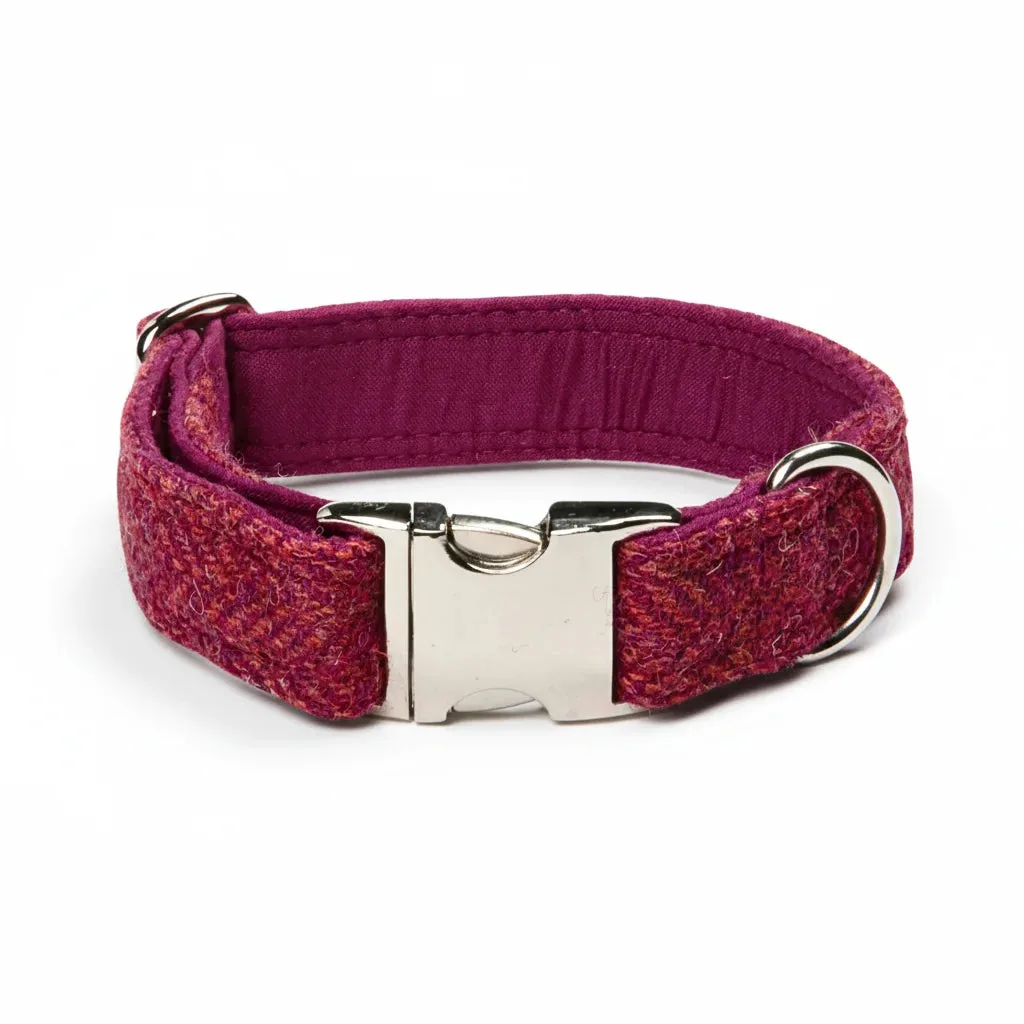
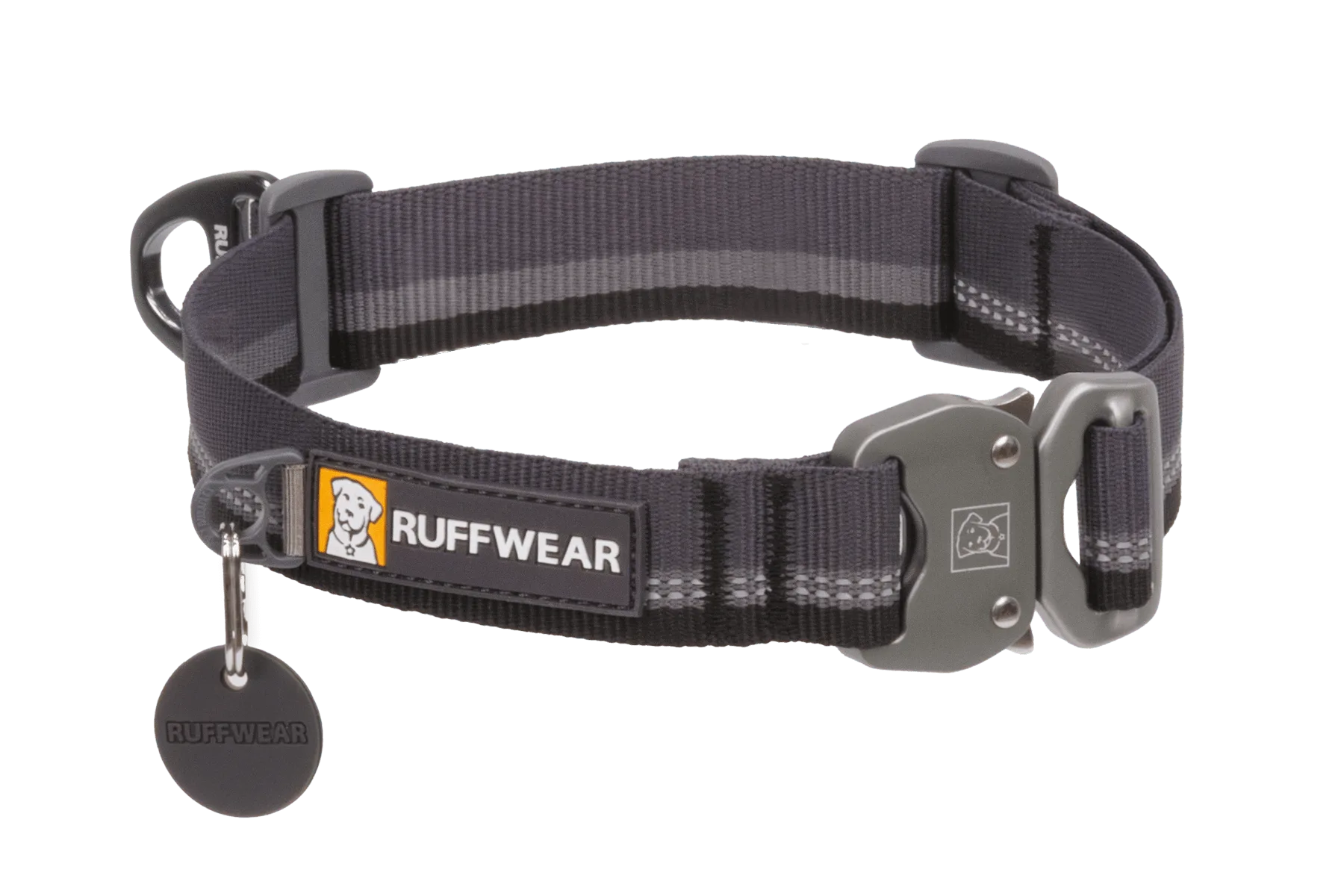
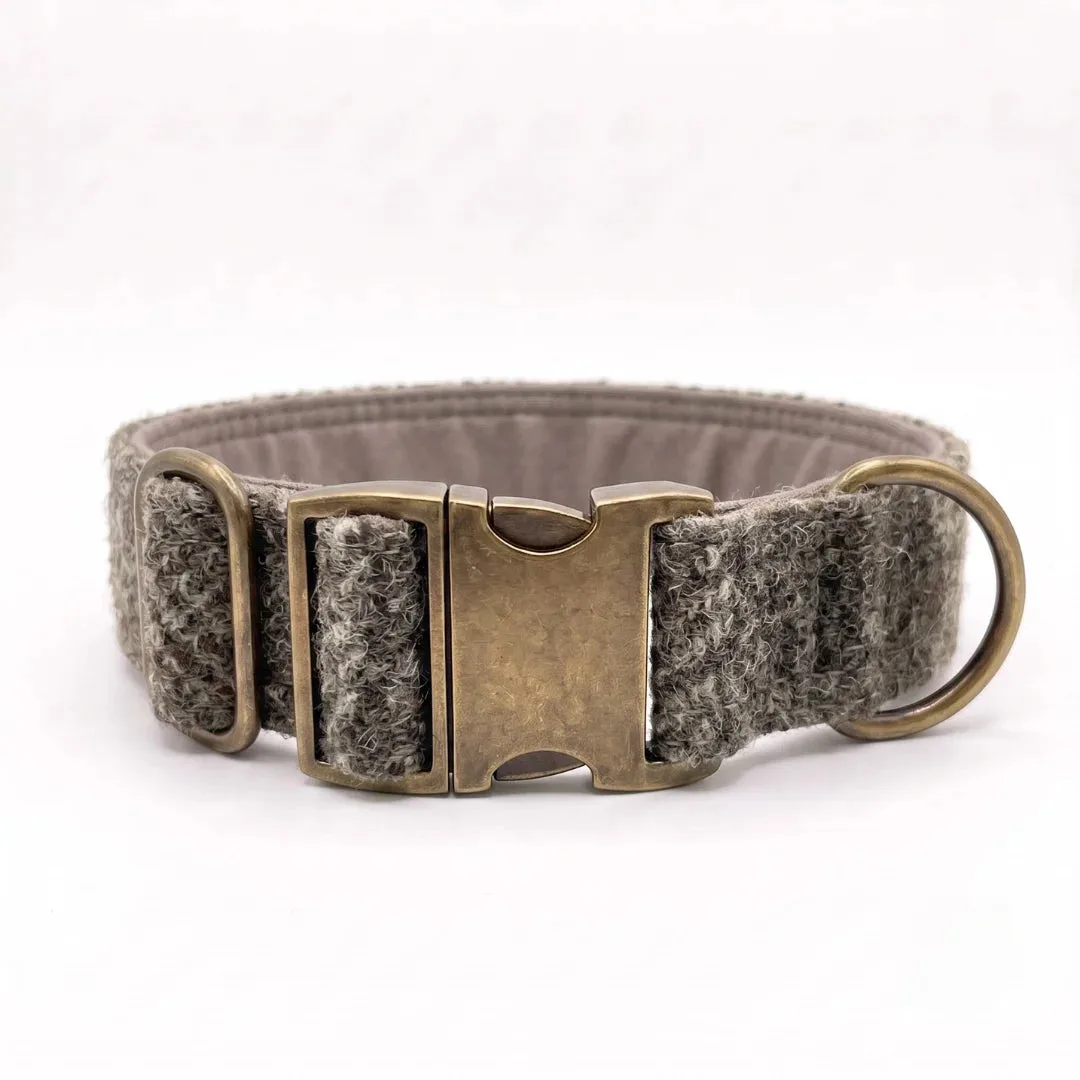
A buckle fastening closes through a metal buckle and prong, so the collar holds its set length whether your dog is pulling, resting, or off-lead. A slip fastening has no buckle; it passes over the head and tightens when the lead pulls, then loosens when pressure releases.
That mechanical difference changes almost everything else: how you put the collar on, how precisely it fits, and how much you need to think about it during a walk. For a tweed collar, the fastening also affects how the fabric sits against the neck, because a buckle collar can be adjusted once and left alone.
Security and everyday handling
Buckle collars are the more predictable choice for daily walks because the fit is fixed by the buckle position. Once you have set it, the collar goes on and comes off the same way every time. Slip collars depend on correct tension and a snug initial fit; if the collar is too loose, it can sit low or slip, and if it is too tight, it can be uncomfortable before any pressure is applied.
The trade-off is convenience: a buckle takes a few extra seconds to fasten and unfasten, while a slip collar goes on in one motion. If your dog stands patiently, that difference is minor. If your dog is excitable at the door, a buckle gives you a clear, repeatable checkpoint before you head out.
Fit and adjustment on a tweed collar
Tweed is a woven fabric, so a fastening that requires frequent sliding adjustment can wear the material more than one set once and left in place. A buckle fastening lets you choose the neck size and buckle colour at purchase, then keep the fit stable. Slip collars need a closer initial fit because the collar must be small enough to stay secure but loose enough to pass over the head.
If you are between sizes or your dog's neck measurement is uncertain, a buckle collar is more forgiving: you can fine-tune the strap position rather than relying on the slip action to compensate. Measure the neck snugly with a soft tape and add the allowance your chosen collar specifies; do not guess from a previous collar's label.
Trade-offs at a glance
- Buckle fastening: security vs speed: Choose a buckle if you want a collar that stays at the same fit all walk and does not depend on lead tension. Accept that it takes a few seconds longer to put on and remove than a slip collar. Check the buckle closes fully and the strap sits flat before every walk.
- Slip fastening: convenience vs precision: Choose a slip collar only if you are confident measuring a snug fit and your dog walks without pulling hard. Accept that a loose slip collar can sit low, and a tight one can be uncomfortable before pressure is applied. Recheck slip collar fit as your dog's coat changes with the seasons.
- Tweed care vs fastening choice: A buckle collar set once and left alone puts less repeated friction on the tweed than a slip collar that slides through its ring on every walk. If you want the tweed to stay crisp, favour the buckle. Store the collar flat and dry rather than hanging it by the buckle.
Product facts
-
Autumnal Check - Buckle Fastening Luxury Harris Tweed Dog Collar: Handmade in Yorkshire from genuine Harris Tweed with secure buckle fastening, available in neck sizes and buckle colours. The buckle holds a set fit for everyday walks, and the size and colour options let you match the collar to your dog rather than settling for one universal fit.
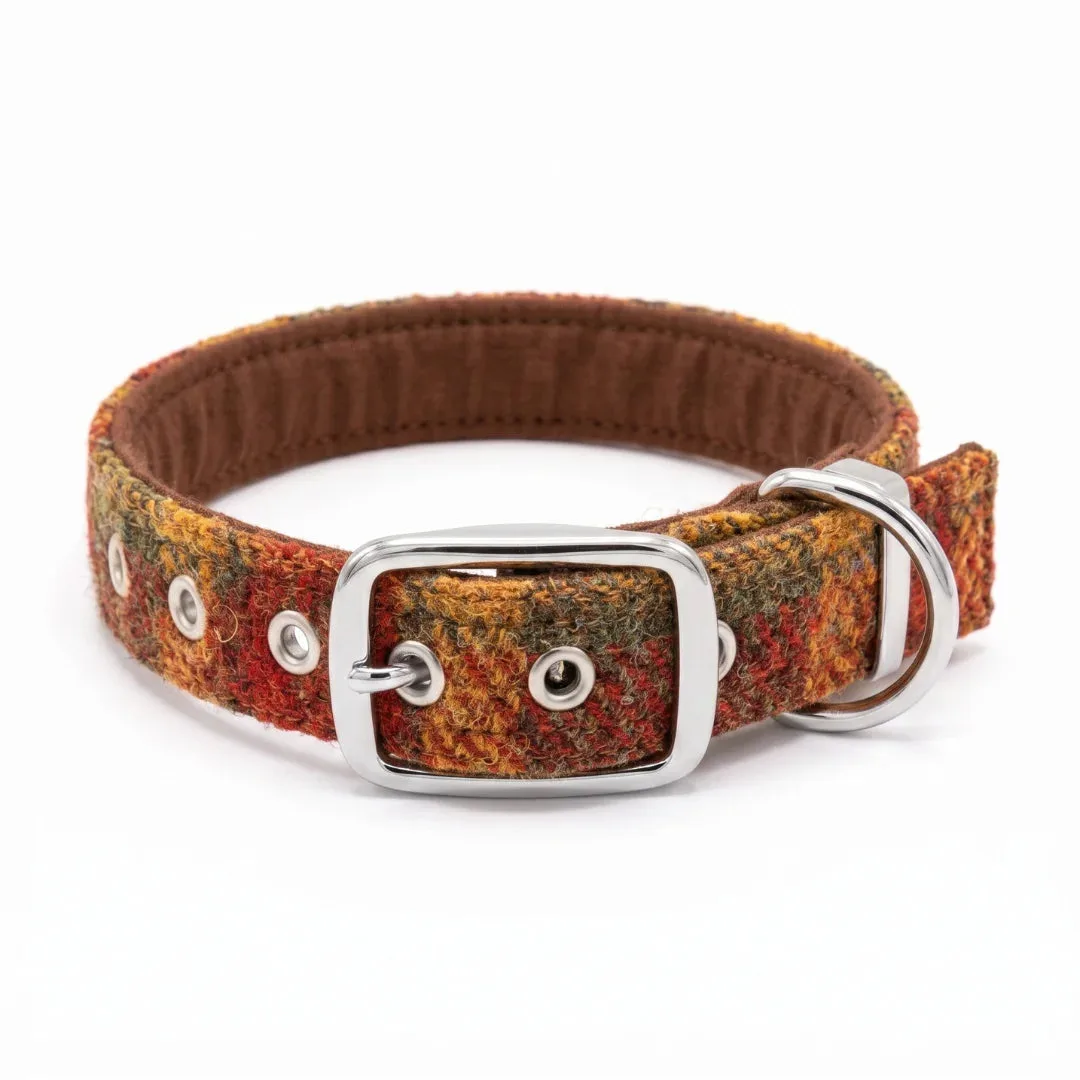
Autumnal Check - Buckle Fastening Luxury Harris Tweed Dog Collar
Which fastening suits your dog?
Best for
- Dogs on everyday lead walks where a stable, set fit matters
- Owners who want a predictable routine at the door
- Dogs whose neck measurement is known and stable
Not for
- Handlers who specifically need a collar that tightens and releases with lead pressure
- Dogs that will not stand still for a buckle
- Owners who cannot measure the neck accurately and need a slip collar's on-off simplicity