The real question behind bands vs free weights
Build Bands and free weights solve different problems in a home routine. Build Bands are resistance bands with five levels, described in the catalog as soft, durable, and easy to carry, for movement from mobility to strength work. Free weights are fixed loads you lift against gravity. The useful comparison is not which tool is stronger, but which one matches the way you want to train at home.
This article compares only what the supplied catalog confirms about Build Bands and what is generally true of free weights as a category. It does not invent load ratings, band tensions, or exercise prescriptions. Where the catalog is silent, that silence is a decision limitation, not a product flaw.
Where each tool fits in a home routine
- Progressive resistance: Build Bands offer five levels of resistance, so you can move from activation to strength work within one set of bands. Free weights progress by adding or changing fixed loads. Bands change tension through the range of motion; weights keep a constant load. Neither is automatically better, but the feel differs.
- Portability: The catalog describes Build Bands as easy to carry. Free weights are heavy and bulky by nature, so they anchor a routine to one room. If you train in different spaces or travel, bands have a practical edge.
- Beginner friendliness: Build Bands are designed to support slow, intentional movement and to deepen each exercise without overwhelming the body. That makes them a sensible starting point for bands or weights for beginners who want to learn movement patterns before adding load. Free weights can also start light, but the catalog does not supply a Build Bands load chart to compare against specific dumbbell sizes.
- Exercise range: The catalog says Build Bands are made for everything from mobility to strength work. Free weights are typically used for pressing, pulling, and carrying patterns. The two overlap, but the catalog does not list specific exercises for Build Bands, so treat any exercise list as your own programming, not a manufacturer instruction.
What the Build Bands catalog confirms
-
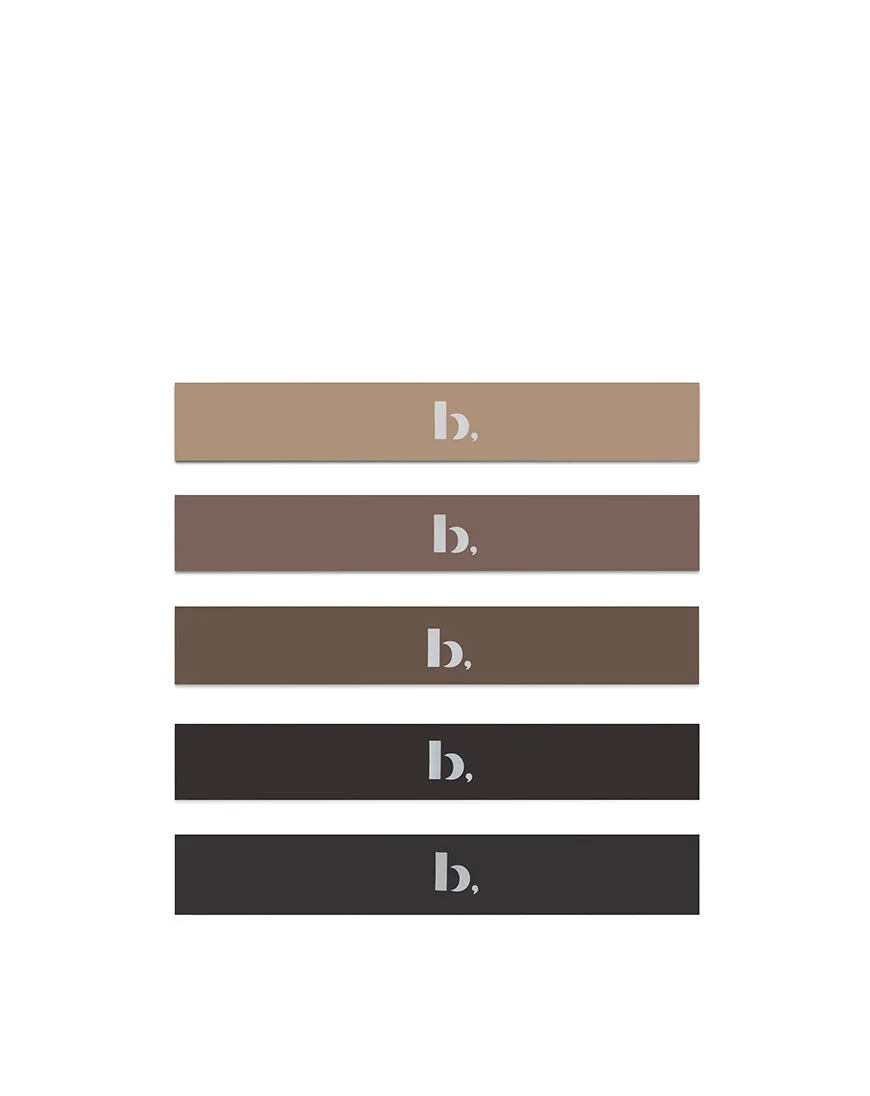
build bands: Five levels of resistance, moving from activation to strength. This is the core of the bands-versus-weights decision: one set covers a range of resistance without buying multiple fixed loads.
build bands
-
build bands: Designed to support slow, intentional movement and to deepen each exercise without overwhelming the body. This matches a beginner or recovery-oriented home routine where control matters more than maximum load.
-
build bands: Soft, durable, and easy to carry. Portability and comfort are the practical reasons to choose bands over free weights for travel or small spaces.
-
build bands: Available in neutral shades. A minor point, but useful if you want gear that blends into a shared living space.
What the catalog does not settle
The supplied evidence does not include resistance levels in pounds or kilograms, band lengths, material composition, care instructions, or a list of specific exercises. It also does not confirm whether the bands can be anchored to a door or used with handles. If you need those details to plan a program, ask the store before buying rather than assuming.
For free weights, this comparison relies on general category behavior, not a specific product record. That means any claim about a particular dumbbell set, its finish, or its weight increments would be unsupported here. Keep the comparison at the level the evidence allows.
How to choose for your home setup
- Start with your space and storage: If you train in a small apartment, share a room, or want gear that packs away, Build Bands fit that constraint better than free weights. If you have a dedicated rack or floor zone, weights are viable.
- Match the tool to your current stage: For bands or weights for beginners, Build Bands' five levels let you start at the lightest and progress without buying new equipment. Free weights require buying each load, so beginners often accumulate several pairs.
- Decide whether you need constant or variable load: Free weights load muscles evenly through a lift; bands increase tension as you stretch them. If you are unsure, try a band first to learn control, then add weights for heavier pressing and pulling patterns.
- Check what you already own: If you already have dumbbells, Build Bands add a portable complement for mobility and activation. If you own neither, bands are the lower-commitment entry point at the catalog price of USD 16.90.
An honest trade-off
Build Bands are not a replacement for heavy free weights if your goal is maximal strength. Five levels of resistance cannot match the load of a barbell or a heavy dumbbell, and the catalog does not claim otherwise. What they offer is a portable, approachable way to train from activation to strength work at your own rhythm.
Free weights offer measurable, constant load and a familiar progression, but they cost more per load, take up space, and are harder to travel with. For many home setups, the practical answer is to start with Build Bands for control and mobility, then add free weights when you need heavier resistance. The catalog supports the bands' role; it does not support claims about how much stronger you will get.