Start with your laundry rhythm, not a fixed number
A 12-pack gives you enough pairs to cover most laundry schedules, but the right rotation depends on how often you actually wash clothes—not on a one-size-fits-all rule. Before you assign days, count the days between your typical laundry loads. If you wash weekly, you need seven daily pairs plus a small buffer for travel, gym, or a missed load. If you wash every two weeks, you’ll need closer to fourteen, which a 12-pack won’t fully cover without reusing a pair.
The goal is to keep every pair in circulation rather than letting a few favorites do all the work. That’s the core of a boxer trunk rotation: each pair gets worn, washed, and rested in turn.
Set up your 12-pair rotation in four steps
- 1. Divide your 12 pairs into two groups of six: Label one group A and one group B. Wear group A for six days, then group B for six days. This simple split ensures every pair gets worn before any repeats, and it makes it obvious when laundry day is approaching.
- 2. Match each group to your laundry cycle: If you do laundry every six days, wash group A while you wear group B. If you wash weekly, you’ll have one extra day to cover—use a buffer pair from either group or plan a mid-week refresh. Adjust the group size only if your laundry interval is consistently shorter or longer.
- 3. Store the groups separately in your drawer: Use two drawer dividers or simply stack group A on the left and group B on the right. When you finish wearing a pair, place it directly into the laundry bin—not back in the drawer. This keeps clean and dirty pairs from mixing and makes restocking after laundry a two-minute task.
- 4. Rotate the starting group each cycle: After laundry day, put the freshly washed group at the back of the drawer and bring the other group forward. Alternating which group you wear first prevents the same pairs from always being on top and distributes wear more evenly over time.
How many boxer trunks per week do you actually need?
For most people, seven pairs per week covers daily wear. A 12-pack gives you five extra pairs—enough for a buffer if you skip a laundry day, pack for a short trip, or want a dedicated set for the gym. If you typically wear two pairs a day (for example, one for work and one for exercise), you’ll need fourteen per week, so a 12-pack alone won’t last a full week without washing. In that case, treat the 12-pack as a 6-day supply and plan a mid-week load, or supplement with additional pairs.
The key is honesty about your habits. Track your laundry frequency for two weeks before committing to a rotation schedule. A rotation that fits your real life is more likely to stick than an aspirational one.
What the 12 × Boxer Trunk gives you for rotation planning
-
12 × Boxer Trunk: 12 pairs per pack, available in sizes M through XXXL. Twelve pairs is enough to split into two six-day groups, which simplifies laundry scheduling. The size range matters because a rotation only works if each pair fits well enough to be worn comfortably in turn.
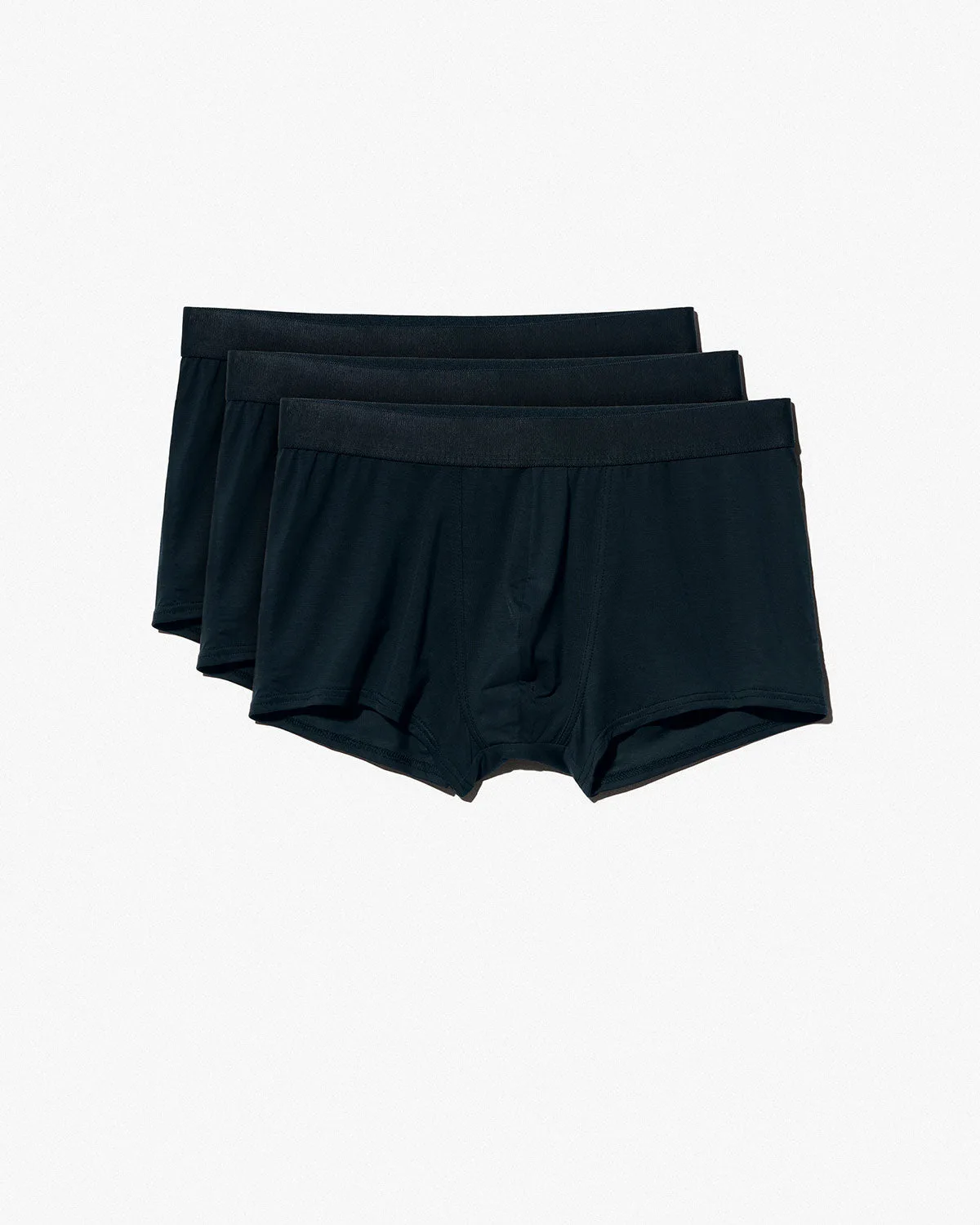
12 × Boxer Trunk
-
12 × Boxer Trunk: Made of 95% Tencel™ lyocell and 5% elastane, with a low waist, short leg, and enhanced pouch. The fabric blend and construction are consistent across the pack, so you can expect the same fit and feel from every pair—important when you’re rotating them evenly rather than favoring one.
-
12 × Boxer Trunk: No-tag construction and a signature waistband. No tags means less irritation during daily wear, which supports wearing each pair through a full day. The waistband is part of the design, so check that it sits comfortably before you commit to a rotation schedule.
Keep the rotation running with simple drawer organization
A rotation only works if your drawer supports it. These habits take seconds but make the system self-sustaining.
- Use a two-zone drawer: Designate one side for the current group and the other for the next group. When you do laundry, swap the zones. This visual cue prevents you from digging through all 12 pairs and disrupting the order.
- Fold or roll consistently: Choose one method—folded flat or rolled—and stick to it. Consistency makes it easy to see at a glance which group is running low and when it’s time to do laundry.
- Retire pairs that show wear: Inspect each pair as you fold laundry. If the waistband loses elasticity or the fabric thins, remove that pair from the rotation. A 12-pack gives you enough redundancy that one worn pair won’t derail your schedule.
Adjust the plan when your routine changes
Travel, season changes, or a new gym schedule can throw off a fixed rotation. Instead of abandoning the system, treat the 12-pack as a flexible pool. For a week with extra workouts, pull two pairs from the next group and wash them mid-week. For a vacation, pack the pairs you’d normally wear at the end of the cycle so the rotation picks up where you left off when you return.
The rotation is a tool, not a rule. Its purpose is to make sure every pair gets worn and washed in turn—so you get even wear, predictable laundry, and a drawer that never becomes a mystery pile.