Teaching economics to kids at home can feel overwhelming. Where do you start? How do you make complex ideas like supply and demand, free markets, and entrepreneurship understandable for a 6-year-old—or engaging for a teenager? The good news is that you don't need to be an economist to raise one. With the right homeschool economics curriculum, you can build a step-by-step learning path that grows with your child, using resources designed specifically for young minds.
The Tuttle Twins brand has become a trusted name in free market education for families. Their materials—from colorful storybooks to detailed economic curricula—are built around the principles of liberty, personal responsibility, and sound money. In this guide, we'll show you exactly how to layer these resources to create a cohesive, age-appropriate economics program for your homeschool, whether your child is a toddler or a teen.
Why Choose Tuttle Twins for Your Homeschool Economics Curriculum?
Many parents shy away from teaching economics because they think it's too dry or too advanced. But Tuttle Twins turns that notion on its head. Their approach uses storytelling, real-world examples, and interactive activities to make economic principles come alive. Instead of memorizing definitions, kids learn through the adventures of Ethan and Emily Tuttle, who encounter situations that mirror real economic dilemmas—like why prices change, what happens when a market is messed up, or how entrepreneurs solve problems.
What sets Tuttle Twins apart is its commitment to teaching free market economics without bias. The materials are grounded in the Austrian school of thought, emphasizing voluntary exchange, property rights, and the unintended consequences of government intervention. This makes it an ideal homeschool economics curriculum for families who want their children to understand both the "how" and the "why" behind economic freedom.
- Story-based learning that captures attention and aids retention
- Age-appropriate content from toddler board books to high school courses
- Focus on real-world application, not just theory
Step 1: Start with the Foundations for Young Learners (Ages 3-7)
Even your littlest learners can start absorbing economic concepts. The Tuttle Toddlers series introduces basic ideas like property rights, trade, and the rule of law through simple, colorful board books. For example, The Tuttle Toddlers 123s of the Bill of Rights uses numbers and rhymes to introduce foundational liberties. This is a gentle, fun way to plant seeds that will grow into a deeper understanding later.
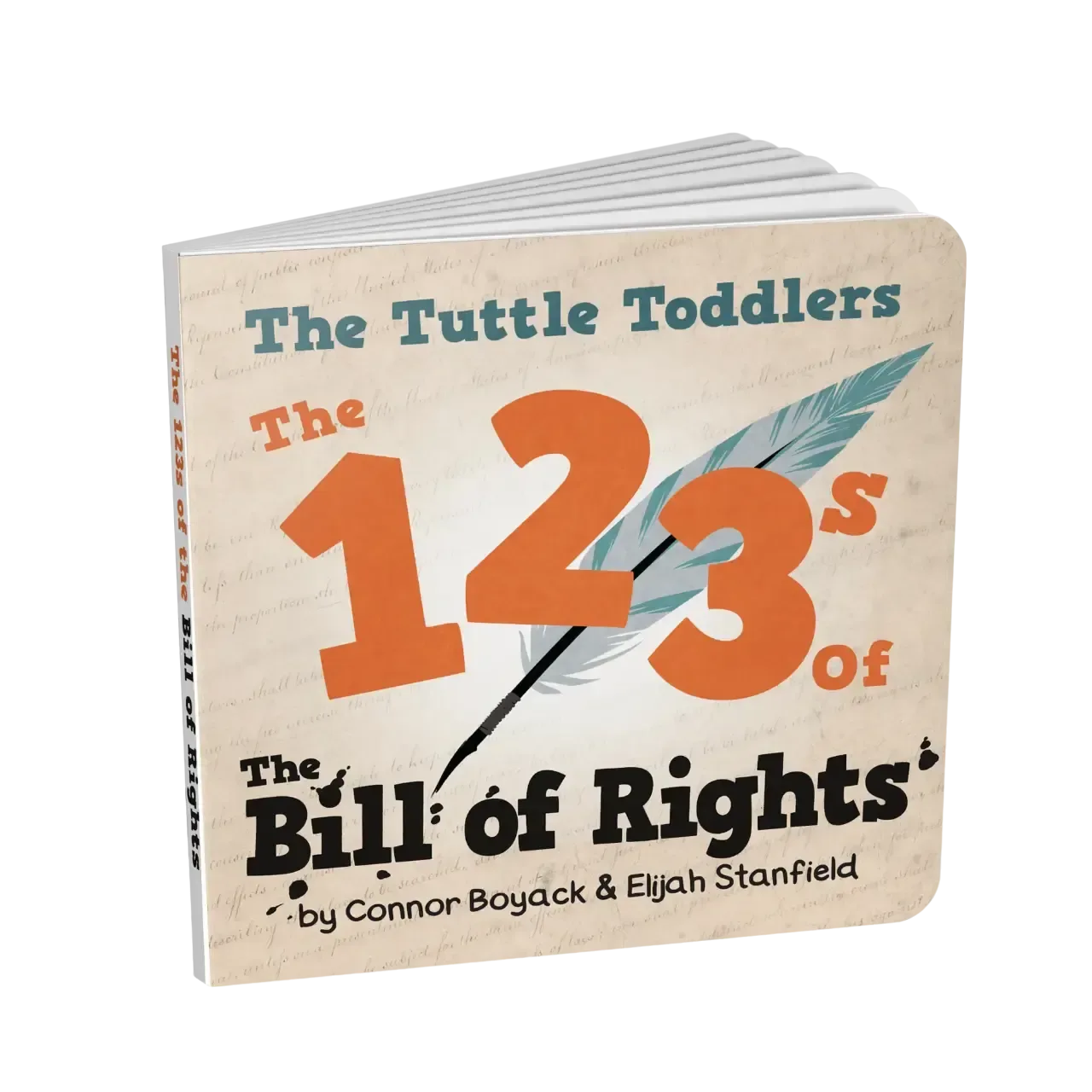
The Tuttle Toddlers 123s of the Bill of Rights
At this stage, focus on vocabulary and everyday examples. After reading a Tuttle Toddlers book, point out simple economic exchanges in your home—like trading toys or sharing snacks. You're not teaching supply curves yet; you're building a mindset that sees economics as part of everyday life. These early exposures make later, more formal lessons feel familiar rather than foreign.
- Read one Tuttle Toddlers book per week and discuss the core idea
- Use playtime to act out trades or set up a simple "store" at home
- Keep lessons short (10-15 minutes) and conversation-based
Step 2: Dive into Storybooks and Graphic Novels (Ages 7-12)
As your child grows, the Tuttle Twins storybooks become the backbone of your homeschool economics curriculum. Each book tackles a specific economic or civic concept—like the tragedy of the commons, the power of entrepreneurship, or the importance of sound money. One standout title is The Tuttle Twins and the Messed Up Market, which explores how price controls and regulations can create shortages and unintended consequences. Reading these books aloud or assigning them as independent reading opens the door to rich discussions.
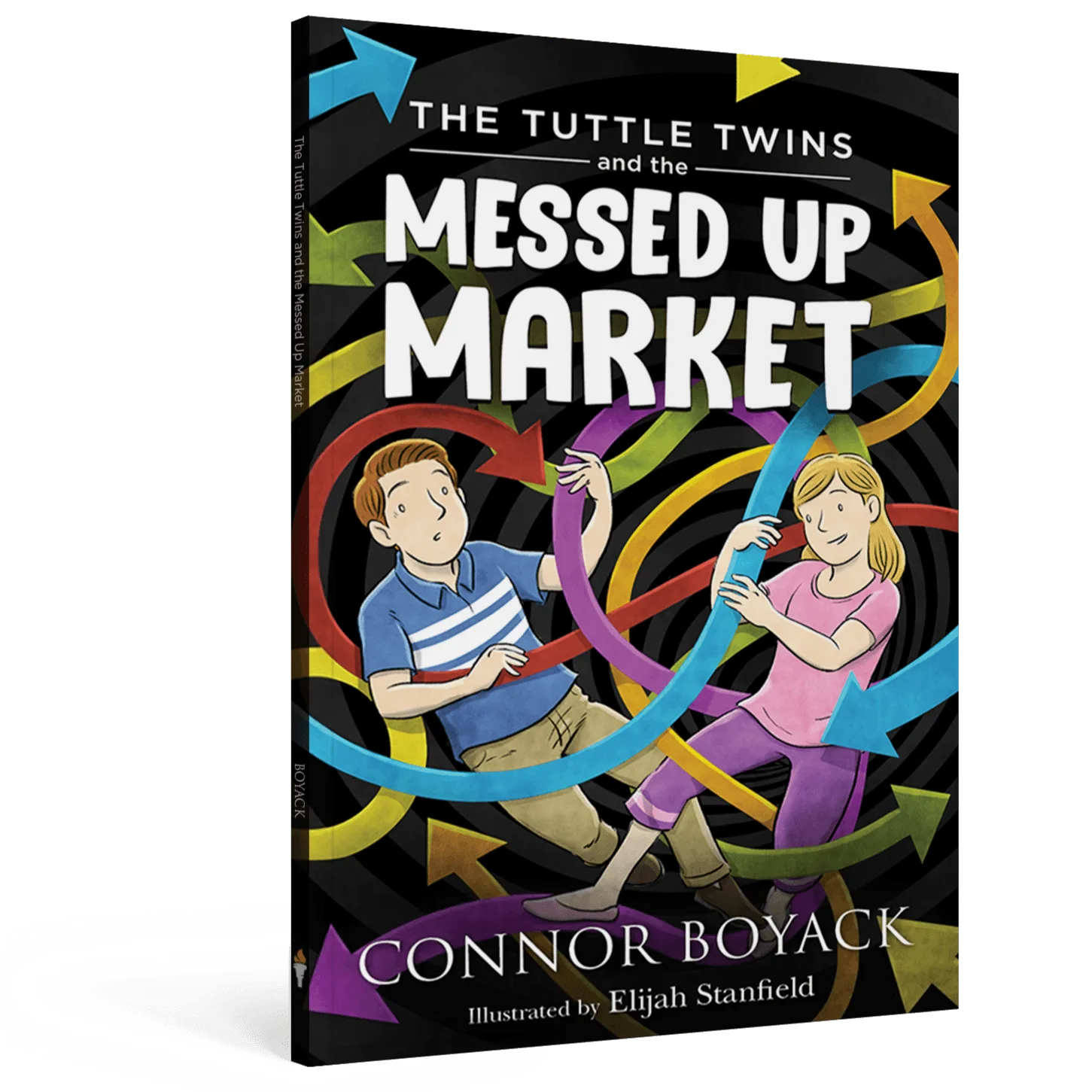
The Tuttle Twins and the Messed Up Market
To deepen learning, pair each storybook with a related activity. For instance, after reading about a messed up market, have your child create a simple supply-and-demand chart using items from their own room. Or, if the story touches on entrepreneurship, encourage them to brainstorm a small business idea. The Tuttle Twins website also offers free discussion guides for many titles, making it easy to turn story time into a full lesson.
- Assign one Tuttle Twins storybook per week and use the discussion guide
- Create a "concept journal" where kids draw or write about what they learned
- Supplement with videos or field trips (e.g., visit a local market or farm)
Step 3: Introduce Formal Economics Curriculum (Ages 12-18)
For middle and high school students, Tuttle Twins offers structured curricula that can serve as a complete high school economics credit. The Free Market Rules: Economics Curriculum (All 30 Units) covers everything from scarcity and choice to banking, inflation, and international trade. Each unit includes readings, discussion questions, and practical exercises. This curriculum is rigorous enough for college-bound students but presented in an accessible, engaging format.
If you prefer to start with a smaller commitment, the Free Market Rules Economic Curriculum (Units 1-10) provides an excellent introduction to the core principles. You can use these units as a semester-long course or spread them across a year. For younger teens or those new to economics, the Kids Markets Curriculum (PDF) offers a lighter, game-based approach that teaches supply, demand, and pricing through simulated market activities. Both options are designed to be parent-friendly, with clear instructions and minimal prep time.
- For high school credit, complete all 30 units of Free Market Rules
- Use the Kids Markets Curriculum as a fun, hands-on supplement for ages 10-14
- Pair curriculum units with current events articles to show real-world applications
Step 4: Supplement with Games, Magazines, and Real-World Practice
A well-rounded homeschool economics curriculum isn't just about books and worksheets—it should include interactive elements that make learning stick. Tuttle Twins offers a monthly subscription magazine called Tuttle Times, which delivers fresh articles, puzzles, and activities each month. Subscribing gives your child a steady stream of economic news and stories, reinforcing what they've learned in a timely, engaging way.
Games are another powerful tool. Whether it's a board game that simulates trading or an online simulation about running a business, play-based learning helps kids internalize concepts without feeling like they're studying. You can also encourage real-world practice: have your child manage a small budget, track expenses, or even start a lemonade stand. These hands-on experiences, combined with the Tuttle Twins materials, create a comprehensive and memorable economics education.
- Subscribe to Tuttle Times for monthly economics-themed content
- Use board games like Monopoly or The Farming Game to discuss land, rent, and trade
- Set up a family "economy" with chores, allowances, and spending choices
Building a homeschool economics curriculum with Tuttle Twins resources is not only possible—it's enjoyable. By starting with simple board books, moving through captivating storybooks, and culminating in a full-fledged high school course, you can give your child a deep, principled understanding of free markets. To get started, explore the Free Market Rules Economic Curriculum (Units 1-10) and see how easy it is to bring economics to life in your home.